 Save
Save I started making this on Wednesday nights when I needed something fast but didn't want to feel like I was settling. The first time, I barely had groceries—just a couple cans of tuna, some spaghetti, and a lemon rolling around in the crisper. Twenty minutes later, I was twirling lemony, garlicky pasta and wondering why I'd ever overthought dinner. It became my reset meal, the one I make when I want to feel like myself again in the kitchen.
I once made this for a friend who swore she hated canned tuna. She finished her plate before I did, then asked if there was more. We sat on my tiny balcony with our bowls, the smell of lemon and parsley drifting into the evening air, and she admitted she'd been wrong about tuna all along. That's the kind of quiet magic this dish has—it changes minds without trying too hard.
Ingredients
- Spaghetti: The long strands catch the oil and lemon beautifully, but any pasta shape works if that's what you have on hand.
- Olive oil: This is your flavor base, so use something you'd happily dip bread into—it makes all the difference.
- Garlic: Slice it thin and keep the heat gentle so it turns golden and sweet, not bitter and sharp.
- Lemon: Both the zest and juice are essential—zest gives you fragrance, juice gives you brightness.
- Tuna in olive oil: Don't drain it bone-dry, a little of that oil adds richness to the sauce.
- Red pepper flakes: Just a pinch wakes everything up without making it spicy.
- Fresh parsley: It's not just garnish, it brings a grassy freshness that balances the richness.
- Pasta water: This starchy liquid is the secret to a silky sauce that clings instead of slides.
- Salt and pepper: Taste as you go, pasta needs more seasoning than you think.
Tired of Takeout? 🥡
Get 10 meals you can make faster than delivery arrives. Seriously.
One email. No spam. Unsubscribe anytime.
Instructions
- Boil the pasta:
- Get your water rolling and salt it like the sea—this is your only chance to season the pasta itself. Before you drain, scoop out some of that cloudy, starchy water and set it aside.
- Toast the garlic:
- Let the olive oil shimmer, then add your garlic and listen for that gentle sizzle. The moment it smells sweet and nutty, you're there—don't let it brown or it'll taste sharp.
- Add the tuna and lemon:
- Flake the tuna in gently, then shower it with lemon zest and juice. Let everything warm together for a couple of minutes so the flavors start to blend.
- Toss it all together:
- Add your drained spaghetti right into the skillet and toss with tongs, adding splashes of pasta water until it looks glossy and cohesive. The sauce should coat every strand without pooling at the bottom.
- Finish and serve:
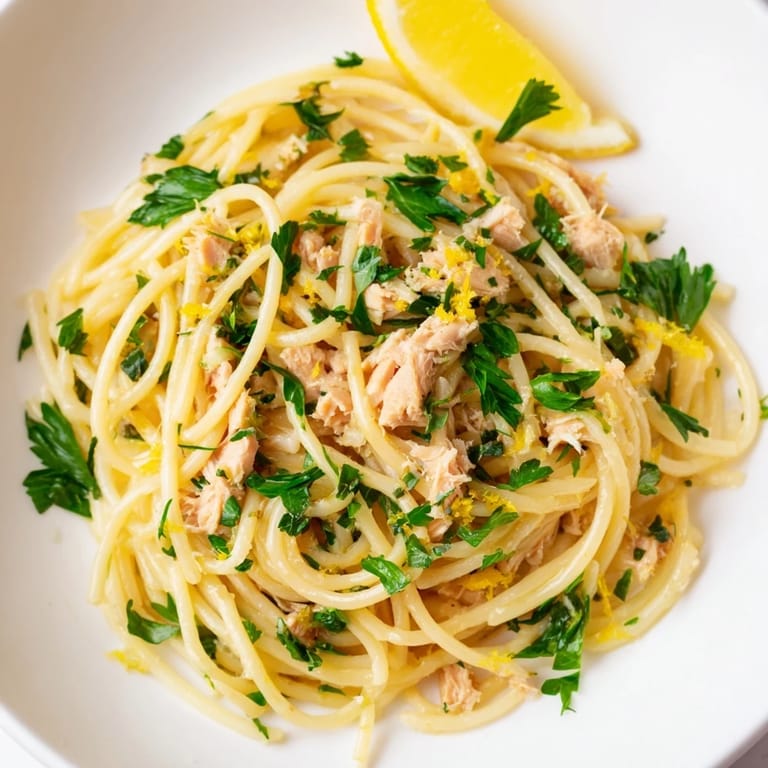
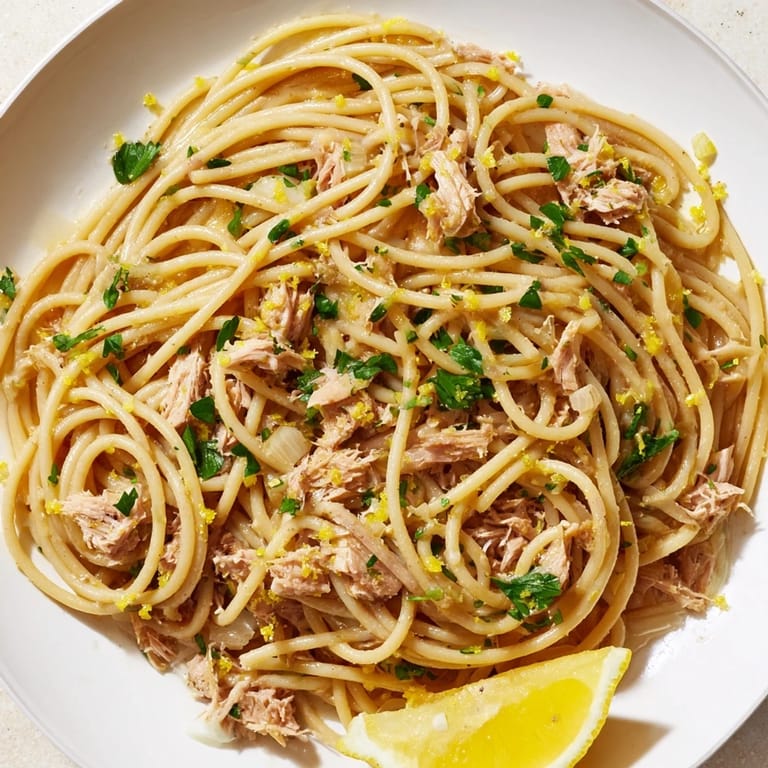
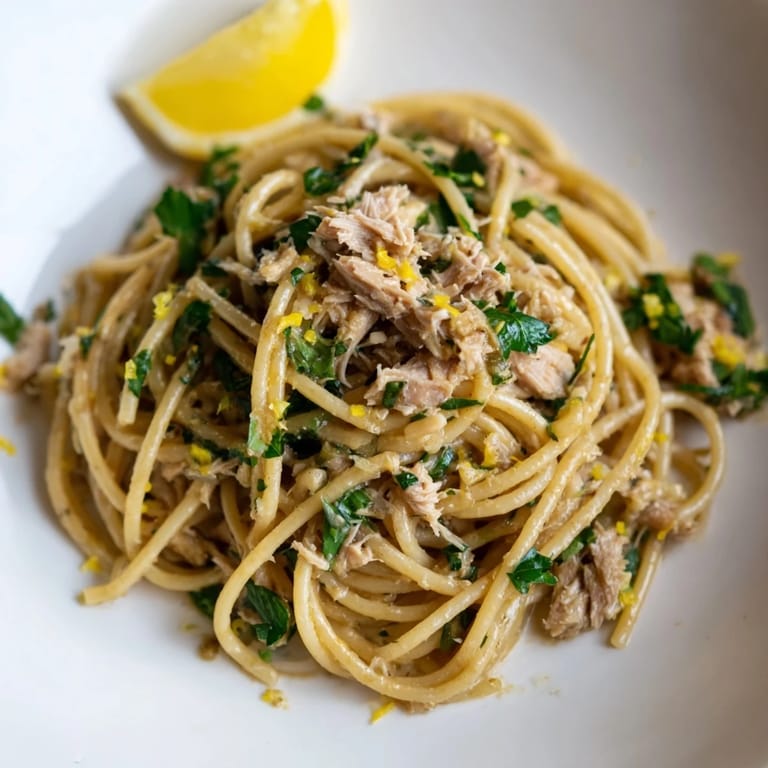
- Fold in the parsley, taste for salt and pepper, then plate it up with extra parsley on top and a lemon wedge on the side. Squeeze that wedge over your bowl just before you eat.
 Save
Save One night I made this after a long day and ate it standing at the counter, straight from the pan. The lemon hit first, then the garlic, then the tender flakes of tuna. I realized I didn't need candles or a set table to enjoy something this good. Sometimes the best meals are the ones you don't overthink, the ones that just taste like comfort and common sense.
Making It Your Own
I've tossed in halved cherry tomatoes when I had them, and their sweetness made the whole thing feel even brighter. Capers are another favorite—their briny pop cuts through the richness in the best way. You can also swap the parsley for basil if that's what's growing on your windowsill.
What to Serve It With
This is light enough that it doesn't need much—maybe a simple green salad with a sharp vinaigrette, or some crusty bread to mop up any lemony oil left on your plate. A cold glass of Pinot Grigio or sparkling water with a lemon wedge feels just right alongside it.
Storing and Reheating
Leftovers keep for a day or two in the fridge, though the pasta will soak up the sauce as it sits. When you reheat it, add a splash of olive oil or a little more lemon juice to wake it back up. Honestly, I've eaten it cold straight from the container more than once and it still tasted great.
- Store in an airtight container in the fridge for up to two days.
- Reheat gently in a skillet with a splash of water or oil to loosen the sauce.
- Cold leftovers make a surprisingly good next-day lunch.
 Save
Save This is the kind of recipe I come back to when I need to remember that cooking doesn't have to be complicated to be good. It's just pasta, tuna, lemon, and a little bit of care—and somehow, that's more than enough.
Recipe FAQs
- → How do I prevent the garlic from burning?
Cook garlic over medium heat and stir frequently, allowing it to soften and release aroma without browning to avoid bitterness.
- → Can I use fresh tuna instead of canned?
Fresh tuna can be used but requires gentle cooking to keep it flaky and tender; canned tuna offers a convenient alternative with consistent texture.
- → What does adding pasta water do to the dish?
Reserved pasta water contains starch that helps create a light sauce, helping ingredients bind and coat the spaghetti evenly.
- → Is it possible to add extra vegetables to this dish?
Yes, halved cherry tomatoes or capers can be added for extra flavor and texture, brightening the overall profile.
- → What herbs pair best with lemon and tuna in this dish?
Fresh flat-leaf parsley complements the lemon and tuna's flavors, adding freshness without overpowering the dish.