 Save
Save My kitchen smelled like a chocolate factory mixed with a protein shake the morning I first assembled this baked French toast, and honestly, I wasn't sure it would work. The combination seemed almost too ambitious—peanut butter, cocoa powder, Greek yogurt, and protein powder all in one custard—but something about it made sense on paper. When it came out of the oven with that golden, slightly crispy top and the unmistakable aroma of chocolate and roasted peanuts, my skepticism vanished completely. This dish has since become my go-to when I want breakfast to feel like dessert but still pack serious nutrition into my morning.
I served this to my sister on a lazy Sunday when she was visiting from out of state, and she actually asked for the recipe before finishing her plate. That rarely happens with my cooking experiments, so I knew I'd stumbled onto something special. The way everyone at the table went quiet for a moment after the first bite—that mix of surprise and satisfaction—told me this wasn't just another breakfast casserole.
Ingredients
- 8 cups bread cubes (stale preferred): Stale bread is your secret weapon here; it absorbs the custard without turning to mush, creating that perfect tender-but-textured crumb. I've learned that day-old brioche or whole grain bread works beautifully, and cutting them into 1-inch cubes ensures even soaking.
- 6 large eggs: These are your binding agent and primary protein source, so don't skip them or substitute with egg whites alone, as you'll lose richness and structure.
- 1½ cups milk: Low-fat or unsweetened almond milk keeps the dish lighter while maintaining creaminess; dairy milk adds richness if that's your preference.
- 1 cup Greek yogurt: This ingredient changed my game entirely—it adds tang, extra protein, and a silky texture that regular milk never achieved on its own.
- ¼ cup melted peanut butter: Creamy varieties blend smoothly into the custard, while natural peanut butter can create slight separation; warming it first helps it distribute evenly.
- ⅓ cup unsweetened cocoa powder: The unsweetened variety prevents the dish from becoming cloying, and I always sift it before whisking to avoid lumps that ruin the texture.
- ⅓ cup coconut or brown sugar: Coconut sugar dissolves smoothly and adds a subtle molasses note, but brown sugar works just as well if you want a deeper flavor.
- 2 scoops protein powder: This is what keeps this dish genuinely high-protein; chocolate or vanilla both work, though I've found vanilla lets the peanut-chocolate flavor shine without competing notes.
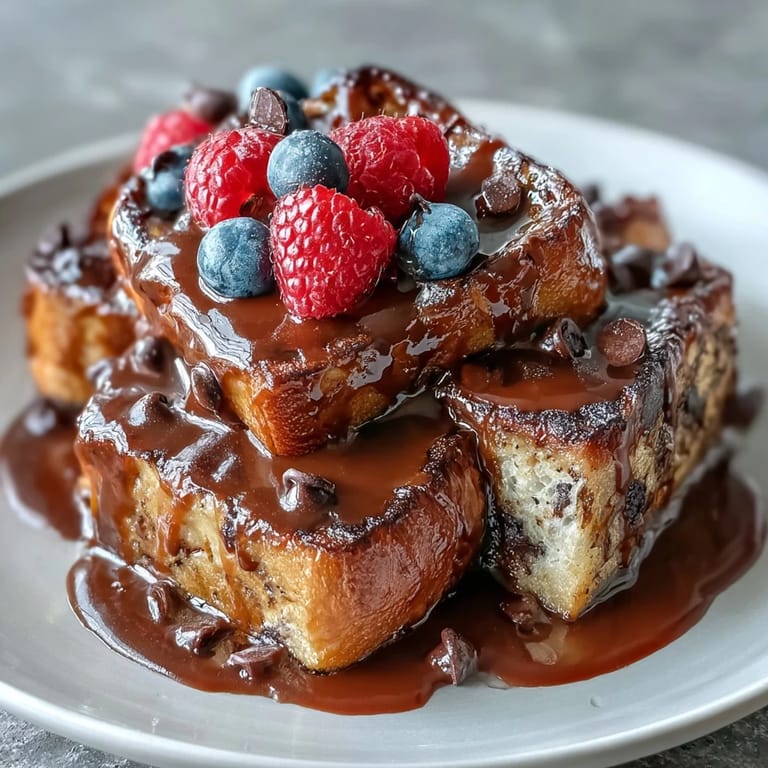
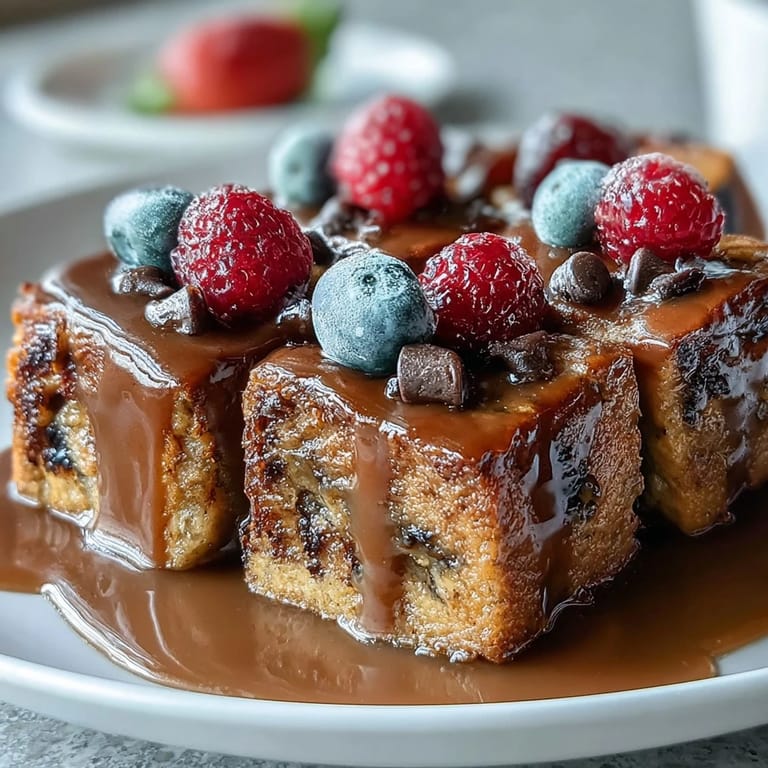
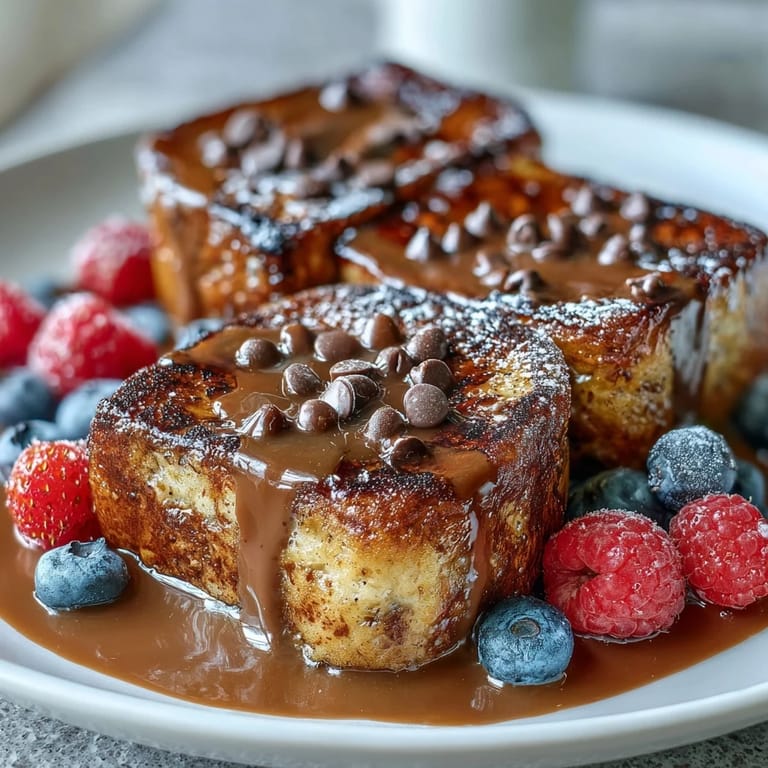
- Toppings (chocolate chips, peanut butter drizzle, berries): These finish the dish with visual appeal and textural contrast; fresh berries cut through the richness beautifully.
Tired of Takeout? 🥡
Get 10 meals you can make faster than delivery arrives. Seriously.
One email. No spam. Unsubscribe anytime.
Instructions
- Heat your oven and prepare the stage:
- Set your oven to 350°F and grease a 9x13-inch baking dish lightly so the edges won't stick. This small step prevents frustration later when you're trying to slide it onto a serving platter.
- Arrange your bread foundation:
- Spread the bread cubes in an even layer across the dish—you want them distributed so each piece gets surrounded by custard. Don't pack them too tightly or the center won't cook through properly.
- Build the custard mixture:
- Whisk eggs, milk, Greek yogurt, melted peanut butter, cocoa powder, sugar, vanilla, salt, and protein powder in a large bowl until completely smooth. This is where you take your time; lumpy cocoa powder will create gritty pockets that distract from the whole experience.
- Let the magic happen:
- Pour the custard evenly over the bread, then gently press the cubes down so they're submerged and can soak up all that chocolate-peanut goodness. Letting it rest for 10 minutes before baking allows the bread to absorb maximum liquid and cook more evenly.
- Add your finishing touch (optional):
- Sprinkle chocolate chips across the top if you want that extra decadent moment when they slightly melt during baking.
- Bake until golden and set:
- Slide it into the oven for 35 to 40 minutes; you're looking for a center that doesn't jiggle when you gently shake the dish and a top that's turned golden brown. A toothpick inserted near the center should come out clean or with just a few moist crumbs.
- Finish and serve:
- Let it cool for a few minutes so it sets slightly, then drizzle with warmed peanut butter and scatter fresh berries on top. The warmth brings all these flavors together into something that tastes restaurant-quality.
 Save
Save There's something genuinely comforting about pulling this from the oven on a quiet morning, knowing you've just made something that nourishes your body while tasting like a treat. It's the kind of breakfast that makes you feel accomplished before 9 a.m.
The Protein Powder Secret
I initially made this recipe without the protein powder just to taste the base, and while it was good, adding the powder elevated it into something my body actually craved for breakfast. The protein doesn't make it taste like a protein shake—it stays hidden behind the chocolate and peanut butter—but it transforms the dish from indulgent to genuinely nourishing. That realization stuck with me; sometimes the additions that seem unnecessary are exactly what make something work as a complete meal.
Bread Selection Matters More Than You'd Think
My first attempt used fresh brioche, and while it tasted wonderful, the texture turned slightly mushy because the bread absorbed too much liquid too quickly. Switching to day-old bread changed everything; it soaks up the custard at the right pace and maintains enough structure to create layers of texture in every bite. The type of bread also affects flavor—whole grain adds earthiness that balances the sweetness, while brioche emphasizes the richness of the chocolate and peanut butter.
Customization Beyond the Basics
Once you understand how this recipe works, you start seeing endless possibilities for tweaks. I've swapped peanut butter for almond butter when someone had a peanut allergy, and the result was subtly different but equally delicious. You could add espresso powder to deepen the chocolate, swap half the milk for coffee, or layer chopped nuts between the bread cubes before pouring the custard.
- For a vegan version, use plant-based protein powder and swap eggs for a flax egg mixture—it won't be quite as custardy but still delicious and high-protein.
- Make it the night before and refrigerate; it actually improves as the flavors meld and the bread continues absorbing liquid, then bake it cold the next morning.
- Leftovers reheat beautifully in a 300°F oven for about 10 minutes, making this an unexpected gift to your future self.
 Save
Save This recipe has become my answer to the question, "How do you make breakfast feel special without spending an hour in the kitchen?" It's proof that nourishing food doesn't have to be boring or complicated.
Recipe FAQs
- → Can I make this baked French toast ahead of time?
Absolutely. Assemble the dish the night before, cover tightly, and refrigerate. In the morning, let it sit at room temperature for 20 minutes while the oven preheats, then bake as directed. The flavors actually develop more depth when given time to soak overnight.
- → What type of bread works best for this dish?
Sturdy breads like whole grain, brioche, or challah hold up beautifully to the custard. Slightly stale bread (1-2 days old) absorbs the liquid better without becoming mushy. If using fresh bread, toast the cubes lightly for 5-10 minutes before soaking.
- → Can I substitute the protein powder?
If you prefer not to use protein powder, simply increase the Greek yogurt to 1½ cups and add 2 extra eggs. This maintains the protein content while keeping the texture creamy. Alternatively, use collagen peptides or keep it traditional without supplements—it will still be delicious.
- → How do I store leftovers?
Cool completely, then store in an airtight container in the refrigerator for up to 4 days. Reheat individual portions in the microwave for 1-2 minutes or warm in a 350°F oven for 10 minutes. The texture remains surprisingly good after reheating.
- → Is this suitable for freezing?
Yes, this freezes exceptionally well. Cut into individual portions, wrap tightly in plastic and foil, then freeze for up to 3 months. Thaw overnight in the refrigerator and reheat in the oven at 350°F for 15-20 minutes until heated through.
- → How can I make this gluten-free?
Use certified gluten-free bread and ensure your protein powder and other ingredients are gluten-free. Many GF breads work well, though they may absorb liquid faster—reduce soaking time to 5 minutes and check during baking to prevent drying out.