 Save
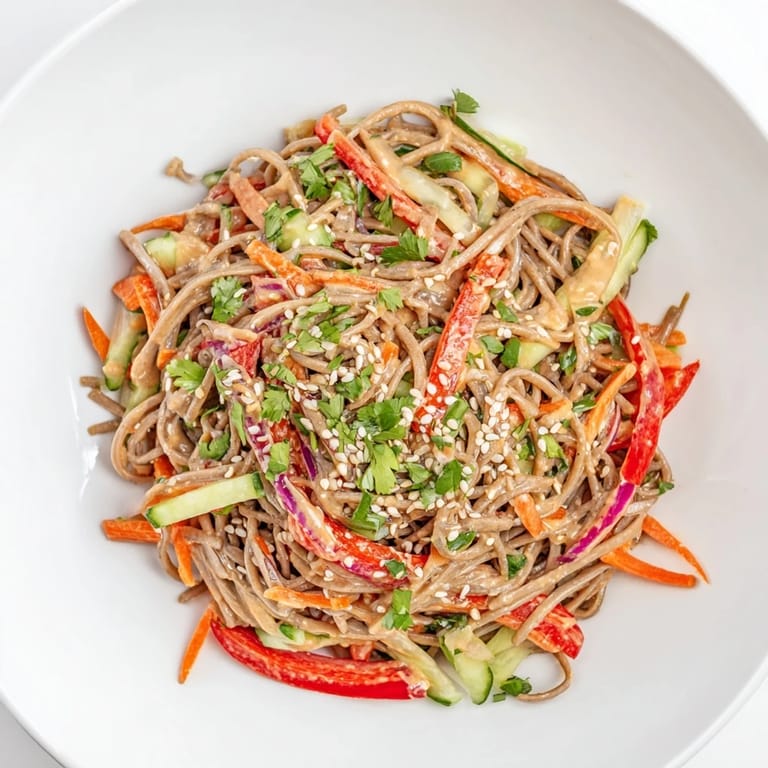
Save I discovered soba noodles on a sweltering afternoon when my neighbor brought over a container of this chilled salad, claiming it was the only thing keeping her sane through a heatwave. One bite and I understood—the nutty buckwheat, the sesame-peanut dressing with just enough ginger heat, the snap of raw vegetables. It's become my go-to when I want something that feels both indulgent and impossibly light.
I made this for a potluck once and watched people go back for thirds, which surprised me because I'd worried it might be too simple. My friend asked for the recipe right there at the table, and I realized how much joy comes from feeding people something that tastes restaurant-quality but didn't demand hours in the kitchen.
Ingredients
- Soba noodles (250 g): Look for 100% buckwheat if you're gluten-conscious; they have a delicate, almost earthy flavor that regular wheat soba can't match.
- Carrot (1 medium, julienned): The sweetness balances the savory dressing, and julienning takes a minute if you have a sharp knife or a vegetable peeler.
- Cucumber (1 small, sliced thin): Choose firm, seedless ones if you can; watery cucumbers will make the salad soggy after sitting.
- Red bell pepper (1, thinly sliced): The color is gorgeous, but it also brings a gentle sweetness that rounds out the ginger bite.
- Spring onions (2, finely sliced): Don't skip these—they add a fresh onion punch that wakes up your palate.
- Red cabbage (1 cup, shredded): It's more forgiving than green cabbage and holds its crunch for days, which is why I always overload on it.
- Smooth peanut butter (3 tbsp): Use natural peanut butter if you want less added sugar; it'll taste cleaner and let the sesame oil shine.
- Soy sauce (2 tbsp): Tamari works beautifully if you need gluten-free, and honestly, the flavor is subtly deeper.
- Rice vinegar (1 tbsp): This is gentler than regular vinegar and won't overshadow the other flavors.
- Toasted sesame oil (1 tbsp): Don't cook with it—drizzle it in at the end to preserve that nutty, toasted warmth.
- Maple syrup or honey (1 tbsp): Just enough sweetness to coax out the natural flavors without making it dessert.
- Fresh ginger (1 tsp, grated): Use a microplane for fine pieces that dissolve into the dressing.
- Garlic clove (1 small, minced): Raw garlic adds a sharp edge; if you prefer something mellower, roast it first.
- Water (1–2 tbsp): Add gradually—you want a pourable consistency that coats noodles without drowning them.
- Toasted sesame seeds (2 tbsp): Buy them already toasted or toast them yourself in a dry pan until fragrant.
- Fresh cilantro (2 tbsp, chopped): A finishing touch that feels intentional rather than obligatory.
- Red chili (1 small, thinly sliced): Optional, but it transforms this from gentle to memorable if you like heat.
- Lime wedges (for serving): A squeeze at the end brightens everything and cuts through the richness of the peanut butter.
Tired of Takeout? 🥡
Get 10 meals you can make faster than delivery arrives. Seriously.
One email. No spam. Unsubscribe anytime.
Instructions
- Boil the noodles:
- Bring a large pot of water to a rolling boil and add the soba noodles, stirring gently to prevent sticking. They'll cook in about 5–7 minutes, turning tender but still slightly chewy. Taste one to check—they should have no hard center but not be mushy either. Drain immediately and rinse under cold running water, agitating them with your fingers to wash away excess starch.
- Build the dressing:
- Scoop the peanut butter into a mixing bowl and whisk it with soy sauce, rice vinegar, sesame oil, maple syrup, ginger, and minced garlic. You'll feel the dressing come together—it should go from thick and separated-looking to smooth and glossy. Add water one tablespoon at a time while whisking until you reach a consistency that's loose enough to coat noodles but not so thin it runs off.
- Combine everything:
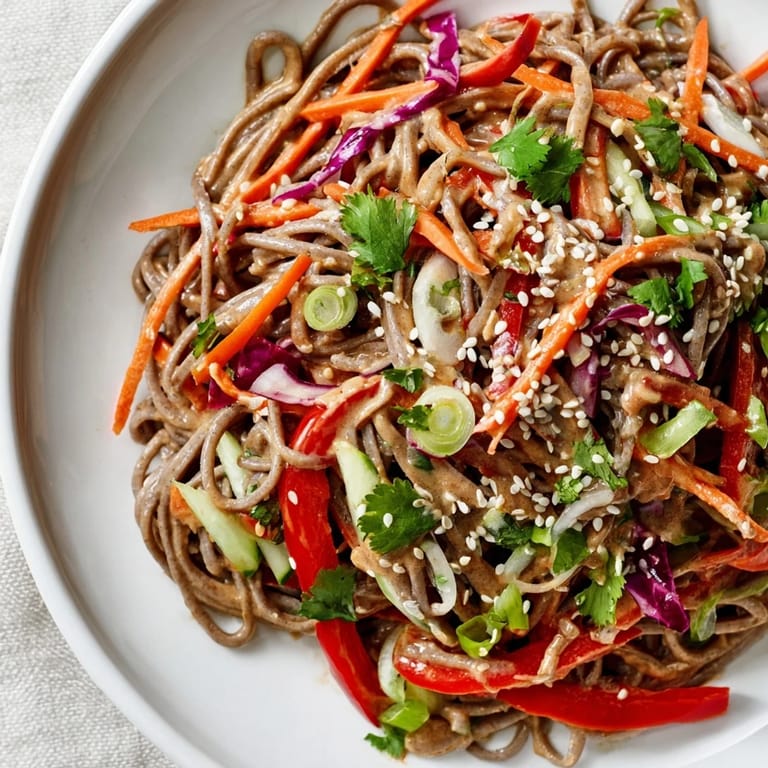
- Toss the cooled noodles with all your prepared vegetables—carrot, cucumber, bell pepper, spring onions, and cabbage—in the mixing bowl with the dressing. Use two forks or salad tongs to lift and turn everything gently so the dressing coats every strand and piece evenly.
- Plate and garnish:
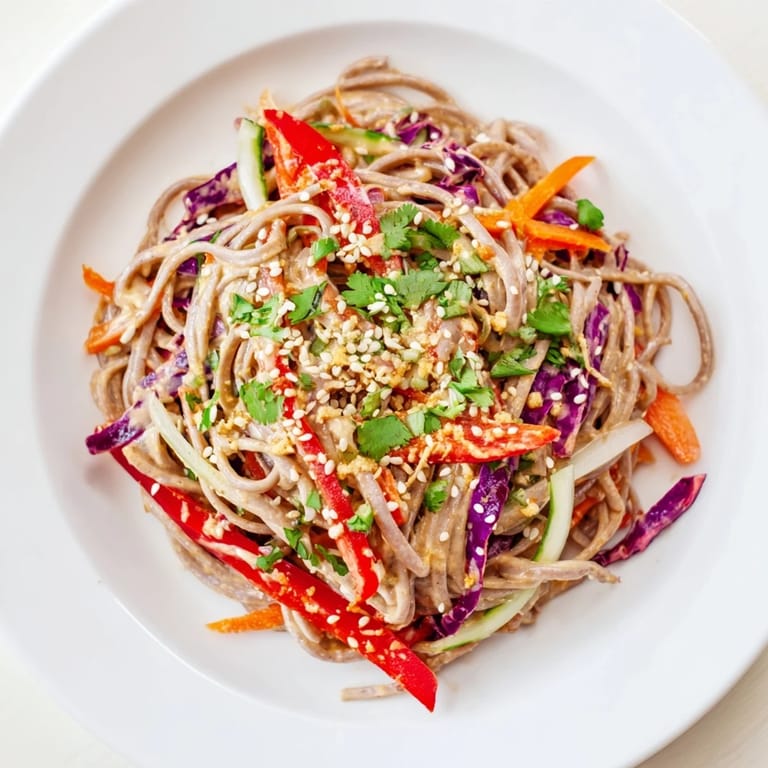
- Divide the salad among serving bowls and crown each portion with toasted sesame seeds, cilantro, and chili slices if using. Serve immediately with lime wedges alongside so everyone can squeeze their own brightness into the bowl.
 Save
Save There's something about a cold noodle salad that feels like self-care when the kitchen is the last place you want to spend time. It's the kind of dish that reminds you that cooking doesn't always mean heat and steam and effort—sometimes it's just assembly, balance, and knowing when less is more.
Make It Your Own
This recipe is a canvas more than a mandate. I've made it with tahini when I ran out of peanut butter and honestly preferred the earthier, more delicate flavor. I've added edamame for protein on days I was starving, grilled tofu for substance, even shredded rotisserie chicken when I wanted something heartier. The beauty is that the dressing works with almost anything you toss into it.
Storage and Make-Ahead Tips
This salad holds up gracefully in the fridge for up to two days—I often prep it in the morning and eat it for lunch, then again for dinner, and it tastes even better the second time around as the flavors marry. If it seems dry when you revisit it, squeeze lime juice over it or whisk in another teaspoon of sesame oil and a splash of water to revive it.
Dietary Variations and Allergen Notes
For gluten-free versions, seek out 100% buckwheat soba noodles and swap regular soy sauce for tamari—you won't sacrifice anything in flavor. Nut allergies? Use tahini alone and you'll get a creamier, more subtle dressing that's equally delicious. This dish is naturally vegan if you use maple syrup instead of honey, and it's already dairy-free from the start, which makes it perfect for feeding mixed groups without fussing.
- Always check ingredient labels for hidden allergens, especially in store-bought peanut butters and soy sauce.
- If you're cooking for someone with a severe allergy, wash your cutting board and knife thoroughly after handling allergen-containing ingredients.
- Taste as you go—everyone's tolerance for ginger and garlic is different, so adjust to match your preference.
 Save
Save This soba noodle salad is proof that the best dishes don't need drama—just clarity of flavor and respect for good ingredients. Keep it in your back pocket for those days when you need something nourishing but refuse to turn on the stove.
Recipe FAQs
- → How do I prevent soba noodles from sticking?
Rinse cooked soba noodles under cold running water immediately to stop cooking and remove excess starch. This helps keep noodles separated and prevents clumping.
- → Can I substitute peanut butter in the dressing?
Yes, tahini is a great alternative that adds a rich sesame flavor and works well for nut-free variations.
- → What gluten-free options are available for soba noodles?
Use 100% buckwheat soba noodles and tamari instead of soy sauce to maintain gluten-free status.
- → How can I add more protein to this dish?
Incorporate edamame, grilled tofu, or shredded chicken for an extra boost of protein without altering flavors drastically.
- → How long can leftovers be stored?
Store in the refrigerator for up to 2 days. Refresh with a squeeze of lime before serving to brighten flavors.