 Save
Save There's something about October that makes me crave butternut squash soup, though honestly, it sneaks onto my table year-round now. My neighbor once brought over a thermos of her version on a rainy Tuesday, and I remember being struck by how the maple syrup didn't announce itself loudly but whispered underneath the warm spices, letting the squash's natural sweetness take center stage. That soup taught me that the best comfort foods often taste like they're keeping a gentle secret. Once I figured out that roasting the squash first makes all the difference, this became my go-to when I wanted to feel both nourished and cozy. It's the kind of dish that tastes like someone truly cared.
I made this for a dinner party where everyone was supposed to bring something, and somehow I ended up with four people asking for the recipe before dessert even arrived. One guest, who claims she doesn't like squash, actually asked for seconds, which felt like a small victory. That night taught me that the best meals are the ones people don't expect to love, and this soup has that quiet power.
Ingredients
- 1 large butternut squash (about 1.2 kg or 2.5 lbs), peeled, seeded, and cubed: This is your star, so pick one that feels heavy for its size and has deep golden coloring. The flesh should be bright orange when you cut into it.
- 1 medium yellow onion, chopped: Yellow onions caramelize beautifully and add natural sweetness that complements the squash without competing with it.
- 2 cloves garlic, minced: Don't skip this even though the amount seems small, as garlic adds savory depth that keeps the soup from tasting one-note.
- 1 liter (4 cups) vegetable broth: Use a good quality broth you'd actually drink on its own, since it becomes the foundation of every spoonful.
- 250 ml (1 cup) water: This dilutes the broth just enough to let the squash shine without everything tasting too concentrated.
- 120 ml (1/2 cup) coconut milk or heavy cream: Coconut milk keeps things vegan and bright, while cream makes it feel indulgent and restaurant-quality.
- 2 tablespoons pure maple syrup: Pure syrup matters here because the artificial stuff tastes thin and one-dimensional when blended into soup.
- 1/4 teaspoon ground nutmeg: This spice is the secret that makes people say it tastes like autumn, so measure carefully and don't leave it out.
- 1/2 teaspoon ground cinnamon: Warm and grounding, cinnamon ties all the flavors together into something that feels complete and thoughtful.
- 2 tablespoons olive oil: Use a decent quality oil since you'll taste it directly in both the roasting and the sautéing.
- Salt and freshly ground black pepper, to taste: These aren't afterthoughts, they're essential for brightening and balancing all the sweetness.
- Toasted pumpkin seeds, maple syrup drizzle, and fresh thyme (optional garnish): These toppings add texture and a visual reminder that something lovely just came from your kitchen.
Tired of Takeout? 🥡
Get 10 meals you can make faster than delivery arrives. Seriously.
One email. No spam. Unsubscribe anytime.
Instructions
- Preheat and prepare:
- Get your oven to 200°C (400°F) so it's ready the moment your squash is prepped. Preheat time might seem like wasted steps, but it's what ensures your squash roasts evenly and develops that crucial caramelization.
- Roast the squash to golden perfection:
- Toss your cubed squash with a tablespoon of olive oil, salt, and pepper on a baking sheet, then spread it in a single layer. Roast for 30 to 35 minutes, turning halfway through, until the edges are deeply golden and the flesh is completely tender when you press it with a fork. This is where the magic happens, turning raw squash into something almost sweet enough to eat as is.
- Build flavor with aromatics:
- While the squash roasts, heat the remaining tablespoon of olive oil in a large pot over medium heat. Sauté your chopped onion for about 4 to 5 minutes until it turns translucent and soft, then add the minced garlic and cook for just 1 more minute until fragrant. You'll know it's right when the kitchen suddenly smells warm and inviting.
- Combine and simmer:
- Add the roasted squash to your pot along with the vegetable broth, water, maple syrup, nutmeg, and cinnamon. Stir everything together, then bring it to a boil before reducing heat and simmering gently for about 10 minutes. This quiet simmering time lets all the flavors get to know each other.
- Blend until velvety:
- Using an immersion blender, purée the soup right in the pot until it's completely smooth and has that luxurious velvety texture. If you're using a countertop blender, work in batches and be careful with the hot liquid. The transformation from chunky to silky always feels a bit like magic.
- Finish with richness:
- Stir in your coconut milk or cream and taste as you go, adjusting salt and pepper until it tastes exactly right to you. Reheat gently if needed, but never let it boil once the cream is in or it might separate.
- Serve with intention:
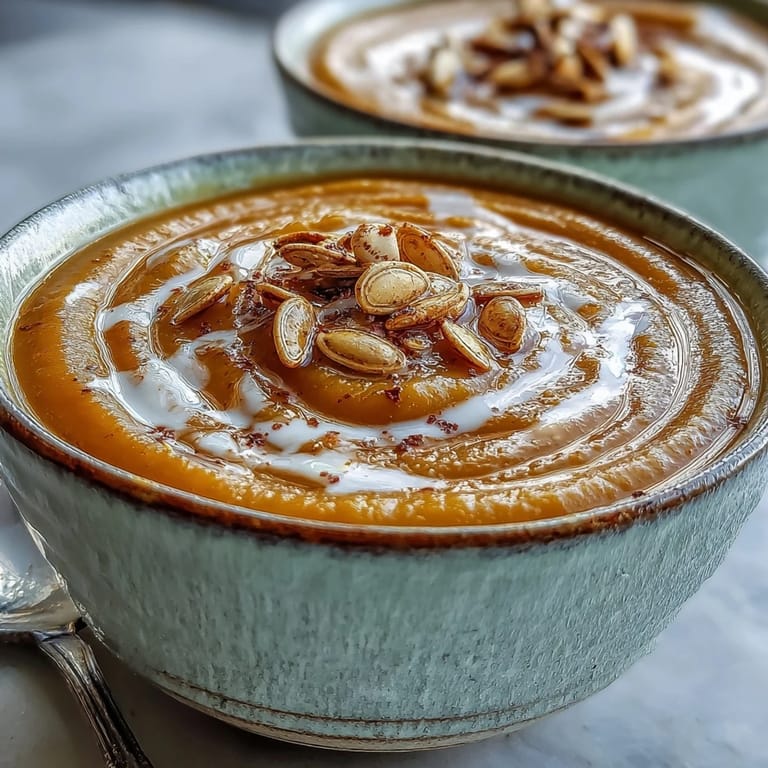
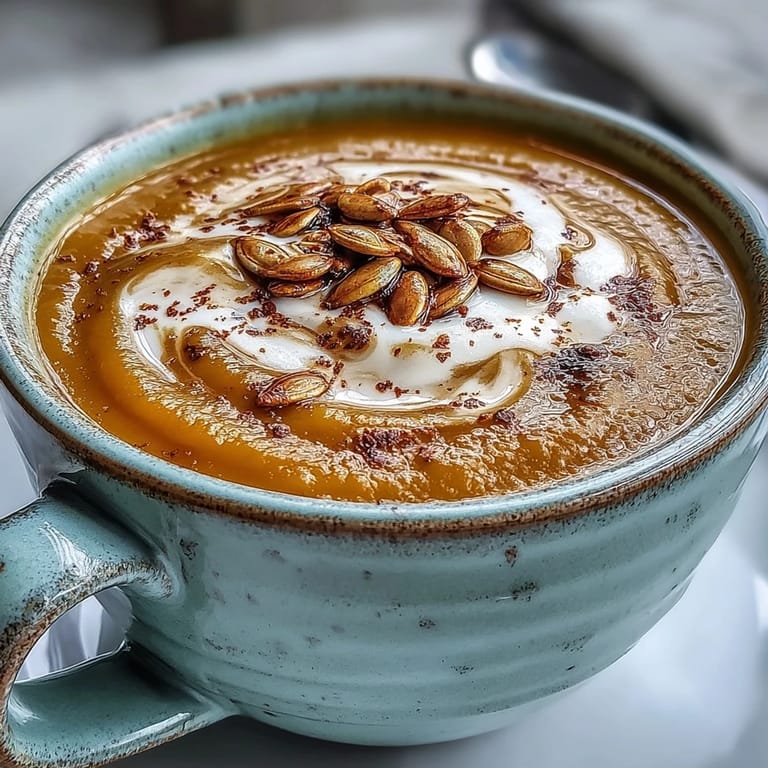
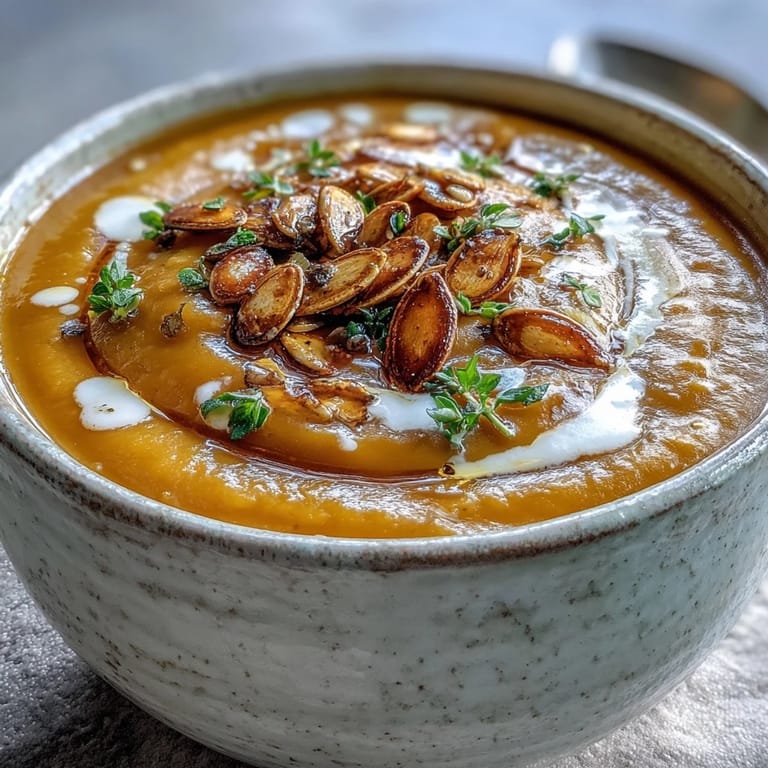
- Ladle the soup into bowls and top with toasted pumpkin seeds, a small drizzle of maple syrup, and a few fresh thyme leaves if you have them. The garnishes aren't just pretty, they add little bursts of texture and flavor with each spoonful.
 Save
Save My mom once said this soup tasted like someone bottled autumn in a bowl, and I've never forgotten that. It became the dish I make when someone needs comfort without being fussed over, and somehow it always arrives at exactly the right moment.
The Roasting Secret Nobody Talks About
Most recipes tell you to roast the squash, but they don't tell you that turning it halfway through makes a real difference in how evenly it caramelizes. I learned this by accident when I forgot to turn a batch and ended up with one side golden and the other pale, which actually still made good soup but taught me something about intention. The few extra seconds it takes to stir and flip your pan halfway through is absolutely worth it for the depth of flavor you get.
Why Blending Matters More Than You'd Think
An immersion blender feels like the lazy choice compared to a countertop blender, but it actually gives you more control over texture because you can blend a little and stop exactly when it's the consistency you want. Some people like their butternut squash soup completely silky smooth, while others prefer a hint of texture, and that's where an immersion blender becomes your secret weapon. The countertop blender works too, but you lose that fine control, so work in smaller batches and don't rush.
Customization That Doesn't Feel Like Cheating
This soup is incredibly forgiving, which is one of my favorite things about it. Once you understand the basic structure, you can pivot based on what you have on hand or what you're craving. A tiny pinch of cayenne pepper adds a whisper of heat that makes people ask what the secret is, but you can also play with the spice ratio by adding a bit more cinnamon if you like warmth without kick.
- Add a splash of apple cider vinegar at the very end for brightness that cuts through the richness in the best possible way.
- Stir in crispy sage leaves instead of thyme for an earthier, more savory take on the whole thing.
- A touch of fresh ginger adds complexity and makes the soup feel more sophisticated without announcing itself loudly.
 Save
Save This butternut squash soup has become my answer to almost every occasion that calls for something warm and nourishing. It's humble enough to feel like home cooking and elegant enough to serve at a dinner table where you want people to feel truly cared for.
Recipe FAQs
- → Can I make this ahead of time?
Yes, prepare up to 3 days in advance and store refrigerated. Reheat gently over low heat, adding a splash of broth or cream if needed to restore consistency.
- → What's the purpose of roasting the squash first?
Roasting caramelizes the natural sugars in butternut squash, creating deeper flavor and sweetness that boiling alone cannot achieve. This extra step transforms an ordinary bowl into something exceptional.
- → Can I freeze leftovers?
Absolutely. Cool completely, then transfer to airtight containers leaving space for expansion. Freeze up to 3 months. Thaw overnight in the refrigerator before reheating.
- → How can I make it vegan?
Simply use coconut milk instead of heavy cream. Check that your vegetable broth is certified vegan. The result remains creamy and satisfying without any dairy.
- → What can I serve alongside?
Crusty bread, garlic knots, or a simple green salad with vinaigrette complement the rich texture perfectly. Grilled cheese sandwiches also make an excellent pairing.
- → Can I use frozen squash?
Frozen butternut squash works in a pinch, though fresh delivers superior flavor and texture. If using frozen, skip roasting and add directly to the pot with broth.