 Save
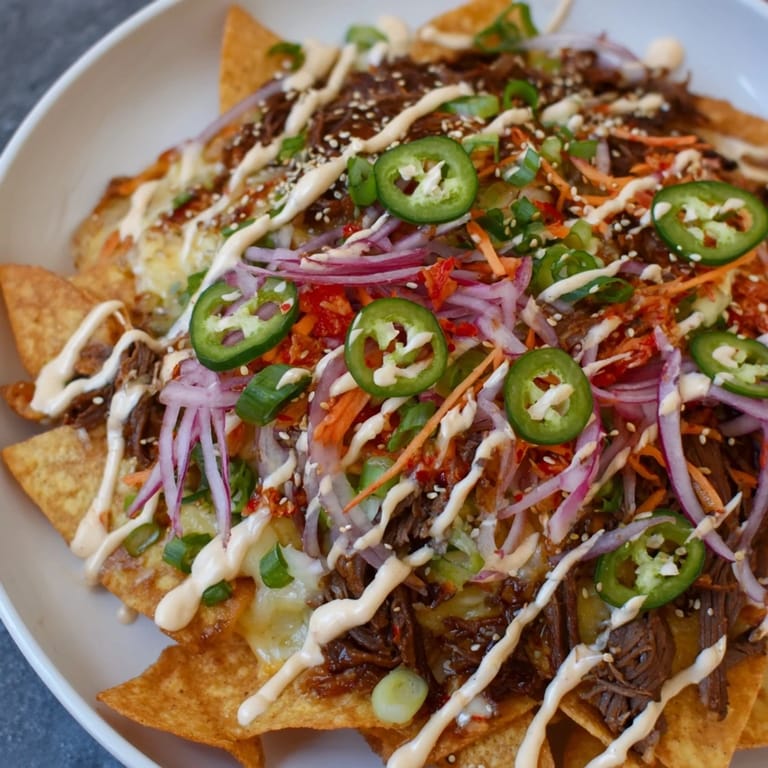
Save The first time I made Korean BBQ nachos was completely by accident. I had leftover gochujang-marinated beef from a weeknight dinner, a bag of tortilla chips calling from the pantry, and suddenly I was layering them together like some kind of fusion experiment. What came out of the oven was crispy, spicy, and so unexpectedly good that my kitchen smelled like a Seoul street market mixed with a taco truck. My friends demolished the entire tray before asking what I'd even made. That moment taught me something important: the best dishes often come from happy mistakes and not being afraid to mix culinary traditions.
I remember making this for a dinner party where everyone was skeptical about 'Korean nachos' until they tasted them. The look of pleasant confusion on their faces—that moment when they realized spicy beef and melted cheese and fresh vegetables actually belong together—was worth every minute of prep. Someone asked if I'd found the recipe online, and I loved being able to say I'd created it myself. That's when I understood why people love fusion food: it's not about breaking rules, it's about discovering new conversations between flavors.
Ingredients
- Flank or sirloin steak (300g / 10 oz), thinly sliced: The thinness is everything here—it means the beef cooks fast and absorbs the marinade like a sponge, so don't skip the slicing step.
- Gochujang (2 tbsp): This Korean chili paste is the soul of the dish, bringing deep, slightly sweet heat that regular chili powder can't match.
- Soy sauce, brown sugar, sesame oil, garlic, ginger, rice vinegar, black pepper: Together they create a balanced marinade that's spicy but not one-dimensional—the brown sugar rounds out the heat and the ginger adds brightness.
- Tortilla chips (200g / 7 oz): Use a sturdy chip that holds up to weight and heat without shattering the moment you touch it.
- Mozzarella and Korean cheese blend (100g each / 3.5 oz): The combination melts beautifully and creates those gorgeous golden pockets that make nachos irresistible.
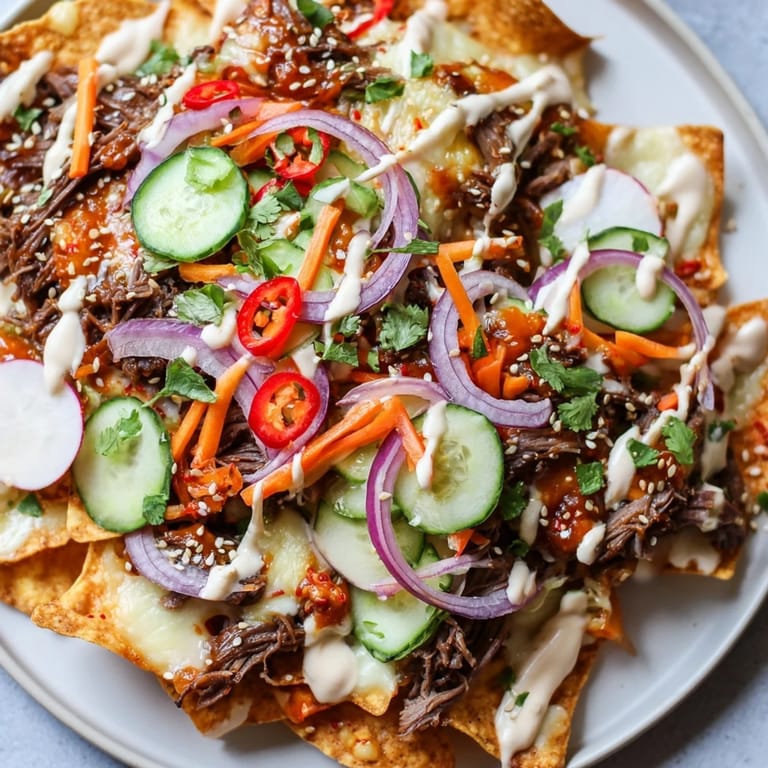
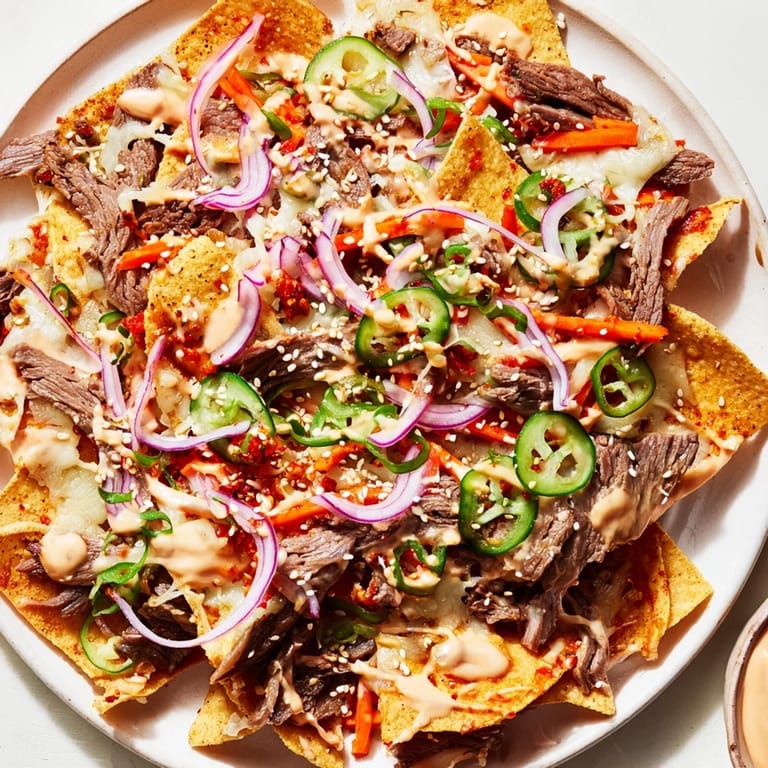
- Fresh vegetables (red onion, carrot, cucumber, scallions, optional red chili): These add crunch and brightness that cuts through the richness—don't skip them or your nachos will feel one-note.
- Toasted sesame seeds, kimchi, fresh cilantro or shiso, sriracha or gochujang mayo: These final garnishes transform the dish from good to unforgettable, so treat them as essential, not optional.
Tired of Takeout? 🥡
Get 10 meals you can make faster than delivery arrives. Seriously.
One email. No spam. Unsubscribe anytime.
Instructions
- Make the marinade and season the beef:
- Whisk together gochujang, soy sauce, brown sugar, sesame oil, minced garlic, ginger, rice vinegar, and black pepper in a bowl until smooth and fragrant. Toss in your thinly sliced beef and let it sit for at least 20 minutes—the flavors need time to sink in, and honestly, this waiting period is when you can prep all your vegetables so you're not scrambling later.
- Sear the beef until caramelized:
- Heat your skillet over medium-high heat until it's hot enough that a drop of water sizzles immediately. Working in batches so you don't overcrowd the pan, sear the marinated beef for 2–3 minutes per batch until the edges are golden and caramelized—you want that slightly charred, umami-rich crust. Set the cooked beef aside on a clean plate.
- Build your nacho foundation:
- Line a baking tray with parchment paper and spread the tortilla chips in a single, slightly overlapping layer. Sprinkle half of your shredded cheese over the chips, then scatter the cooked beef on top, and finish with the remaining cheese—this three-layer approach ensures every chip gets some coverage and melts evenly.
- Bake until the cheese is bubbling and golden:
- Pop the tray into a preheated 200°C (400°F) oven for 6–8 minutes, watching carefully so the chips crisp up without burning. You'll know it's done when the cheese is completely melted, slightly browned in spots, and smells absolutely incredible.
- Layer on the fresh toppings and serve:
- Pull the nachos out and immediately scatter the raw vegetables—red onion, carrot, cucumber, scallions, and chili if using—along with the sesame seeds. These go on hot because they soften slightly from the heat but stay crisp and fresh. Top with chopped kimchi and herbs, drizzle with sriracha mayo or gochujang mayo, and serve with lime wedges for squeezing.
 Save
Save I love this dish because it represents everything I believe about cooking: that traditions don't need to stay in their lane, that bold flavors deserve playfulness, and that the best meals are the ones that spark conversations. Korean BBQ nachos became my signature move, the thing people ask me to make again and again.
Why This Fusion Works
When I first thought about combining Korean BBQ with nachos, I worried it might feel gimmicky. But after making it a few times, I realized that both dishes share the same DNA: they're about layering flavors and textures, building something communal that people gather around, and not being afraid of bold, confident seasonings. Gochujang and crispy fried carbs belong together the same way garlic and butter do. The fresh vegetables keep everything from feeling heavy, and the contrast between warm cheese and cool, crunchy vegetables is the same contrast that makes any great nacho great.
Timing and Prep Strategy
I've learned that the secret to stress-free Korean BBQ nachos is prep work. Get all your vegetables cut and ready before you even touch the marinade, because once the beef hits the skillet, you're in a rhythm and you don't want to break it by suddenly realizing you haven't julienned your carrots. If you're cooking for guests, you can actually marinate the beef hours ahead—it only gets better as it sits. The actual assembly and baking happens in about 10 minutes, so it's perfect for a dinner party where you want to seem calm and collected.
Making It Your Own
One of my favorite things about this recipe is how flexible it is without becoming wishy-washy. I've made it with chicken when beef felt too heavy, swapped in marinated mushrooms for vegetarian friends, and even added crispy tofu in cubes one memorable night. The backbone—the gochujang marinade, the cheese, the fresh vegetables—those stay constant and keep everything tasting unmistakably Korean BBQ nachos. The magic happens when you trust that foundation but feel free to adapt what goes inside it.
- Try adding avocado slices or a drizzle of spicy mayo between the cheese layers for extra richness.
- Kimchi isn't just a garnish—a spoonful of its liquid adds serious complexity, so don't be shy about getting it on there.
- If you're serving this to a crowd, assemble everything except the fresh toppings ahead of time, then garnish right before serving so everything stays vibrant and crisp.
 Save
Save This recipe changed how I think about entertaining because it proved that impressive food doesn't have to be complicated. Korean BBQ nachos remind me that the best cooking happens when you respect traditions but don't let them lock you in—it's a dish that tastes like confidence and feels like home.
Recipe FAQs
- → How is the beef marinated for this dish?
The beef is thinly sliced and soaked in a mix of gochujang, soy sauce, brown sugar, sesame oil, garlic, ginger, rice vinegar, and black pepper, allowing it to absorb spicy and savory flavors before cooking.
- → Can I substitute the beef with another protein?
Yes, grilled chicken, tofu, marinated mushrooms, or jackfruit can replace beef for different dietary preferences while still maintaining the dish's flavor profile.
- → What types of cheese are used?
This dish combines shredded mozzarella and a Korean cheese blend, often mozzarella-cheddar or pizza cheese, to achieve a rich, melty topping.
- → What vegetables are included for freshness?
Thinly sliced red onion, carrot, cucumber, scallions, and optionally red chili provide a fresh and crunchy contrast to the rich beef and cheese layers.
- → How is the dish finished before serving?
After baking, it’s topped with chopped kimchi, fresh herbs like cilantro or shiso, toasted sesame seeds, and an optional drizzle of sriracha or gochujang mayo, plus lime wedges for a tangy finish.
- → What drink pairings work well?
This flavor-packed dish pairs nicely with a crisp lager or chilled soju to complement the spiciness and richness.