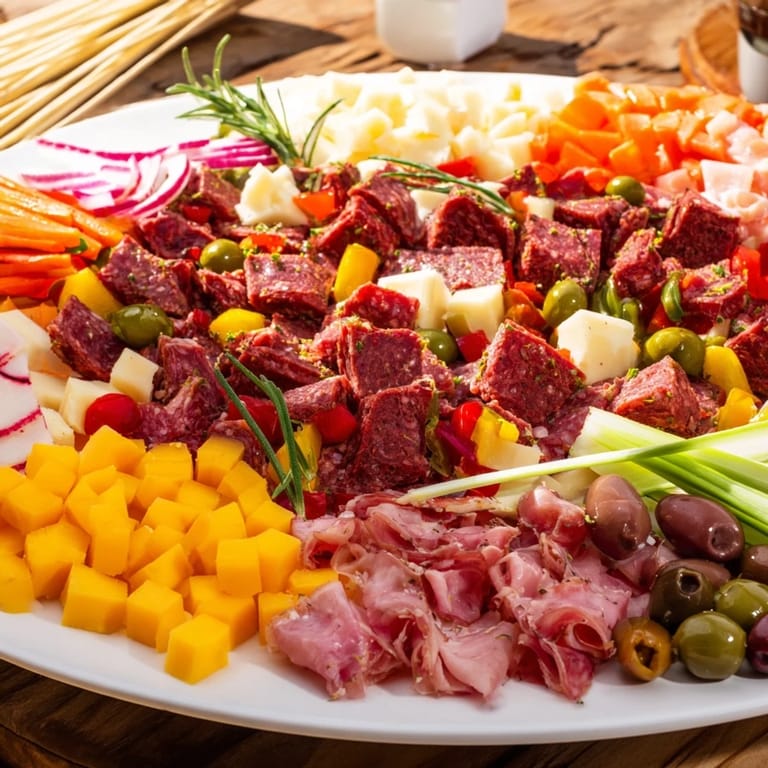
 Save
Save I discovered the magic of a proper charcuterie arrangement on a sun-soaked afternoon in a Tuscan kitchen, watching an elderly chef casually layer cured meats and aged cheeses on a wooden board like she was painting a masterpiece. That moment taught me that sometimes the most impressive dishes require no cooking at all—just intention, quality ingredients, and an eye for beauty. When I brought this concept home and adapted it for keto, my kitchen became a gallery of flavors, and my friends stopped asking for complicated recipes entirely.
I'll never forget the dinner party where I nervously unveiled my first keto power plate—I'd worried the presentation would feel too simple without pasta or bread. Instead, my friend picked up a slice of aged cheddar wrapped in prosciutto, took a bite, and closed her eyes in pure satisfaction. That's when I realized this wasn't a compromise; it was something better. Now it's my go-to when I want to celebrate good food and good company without apology.
Ingredients
- Sliced roast beef (120 g): The umami anchor of your platter—look for beef that's been slow-roasted and sliced thin enough to drape elegantly. If your butcher counter doesn't have it, ask them to slice it fresh; it makes a difference in both texture and flavor.
- Sliced smoked turkey (120 g): This brings a subtle smokiness and lighter touch to balance the heavier cured meats. Choose quality smoked turkey from a real butcher or deli counter, never the pre-packaged kind that tastes like chemicals.
- Prosciutto (120 g): The star player that needs no introduction—buy it sliced paper-thin and use it within a day or two for best texture. This is where you don't compromise; good prosciutto elevates everything around it.
- Sliced salami (100 g): Pick a salami with visible marbling and complex spice notes. I prefer Spanish or Italian varieties that have depth rather than just salt and fat.
- Aged cheddar, cubed (100 g): The older the better—aged cheddar has crystals and complexity that young cheddar can't match. Cut it into generous cubes so it invites people to pick it up.
- Gruyère, sliced (100 g): Nutty, slightly sweet, and somehow elegant—Gruyère brings sophistication without trying too hard. Slice it just before serving to keep it fresh.
- Manchego, sliced (100 g): This Spanish cheese adds visual richness with its golden color and brings a subtle sweetness that balances the salty meats beautifully.
- Cherry tomatoes, halved (1 cup): These provide brightness and acidity that cuts through the richness. Choose ripe tomatoes—pale ones are pointless and will make your platter look tired.
- Cucumber, sliced (1 cup): The cooling, refreshing element that keeps people going back for more. I slice mine on a slight bias to make them feel more intentional.
- Radishes, sliced (1 cup): Their peppery bite and crisp texture add an element of surprise. Many people overlook radishes until they taste them here.
- Baby bell peppers, sliced (1 cup): Different colors create visual drama while adding sweetness that rounds out savory elements. Slice them lengthwise for elegant strips.
- Celery sticks (1 cup): The crisp, herbaceous foundation that feels fresh and clean. Cut them into finger-friendly lengths so people actually eat them.
- Green and black olives (1/2 cup total): These are your flavor jewels—choose good olives with pits still in if possible, as they signal quality. The contrast of colors matters here.
- Fresh parsley, chopped (2 tbsp): The final flourish that brings everything together with a hint of herbaceous freshness. Use it as a garnish, never buried.
- Extra virgin olive oil (2 tbsp): This is your finishing touch—a quality olive oil with character makes all the difference in the final bites.
- Freshly ground black pepper: Ground fresh right before serving—pre-ground pepper tastes like sawdust and deserves no place on a beautiful board.
Tired of Takeout? 🥡
Get 10 meals you can make faster than delivery arrives. Seriously.
One email. No spam. Unsubscribe anytime.
Instructions
- Start with Your Canvas:
- Lay out your large platter on your work surface and take a moment to visualize how you want it to look. Think of it like creating a painting where you're balancing color, texture, and negative space. The best boards have rhythm and don't look too crowded.
- Cluster the Meats:
- Arrange all your cured meats in organized groups, keeping each type together so people can see what they're choosing. Fold some slices into loose waves, lay others flat—this creates visual interest and makes the meats feel abundant. Leave small gaps between clusters so nothing feels squished.
- Position Your Cheese:
- Place your cheese groupings beside and between the meats, deliberately alternating shapes and colors. A cube of aged cheddar next to a slice of Gruyère next to some Manchego creates a visual rhythm that makes people want to taste across the varieties. Think about warm and cool tones balancing each other.
- Fill with Vegetables:
- This is where your platter comes alive with color and freshness. Fill the remaining spaces with your vegetables, clustering similar items together for structure—all the tomatoes in one area, all the cucumber slices nearby, the bell peppers creating a bright stripe. This organization makes the board feel intentional, not random.
- Scatter Your Olives:
- Place olives throughout the board as little flavor surprises and color pops. I like to nestle them between other ingredients so people discover them as they explore.
- Final Touches:
- Lightly drizzle your vegetables with excellent olive oil—you're not drowning them, just giving them a gentle sheen. Grind fresh black pepper over the vegetables and some of the meats. Finish with a scattered handful of fresh parsley over the top, letting it fall naturally across the board. Step back and look at it—does it feel balanced and inviting?
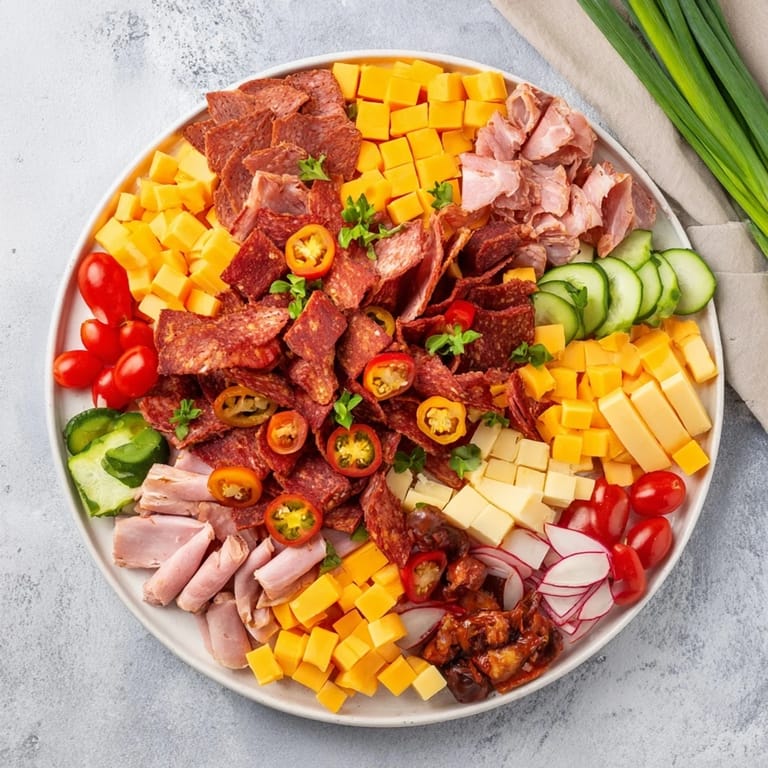 Save
Save There was a moment during a work gathering when someone I barely knew stood in front of my platter with a plate in hand, and I watched them build combinations of meat, cheese, and vegetable that I'd never thought of. It reminded me that sharing food—especially food that invites people to participate and explore—creates connection in the quietest, most genuine way.
Building Flavor Combinations
The secret to making this more than just a pretty board is understanding how flavors play together. The salty richness of prosciutto melts against the sweetness of a cherry tomato and the crunch of a radish. The umami depth of aged cheddar becomes something entirely new when paired with the herbaceous snap of celery. Gruyère's nutty warmth complements the pepper bite you get from radishes. This isn't random arrangement—it's creating a conversation on a plate where every element elevates the others. Spend a moment tasting combinations as you arrange, and adjust your clustering so that people naturally encounter these flavor bridges.
Presentation and Serving
The way food looks affects how it tastes—it's not shallow, it's science. A platter that's been thoughtfully arranged tells people, 'I respect you enough to care about this moment.' Your cuts matter: uniform slices suggest care, while a variety of thicknesses on meats and cheeses creates visual dynamism. Let your knife be sharp so cuts are clean, not jagged. Consider the height variation too—fold some meats, lay others flat, cube the cheeses, slice others. This three-dimensional approach keeps eyes and interest moving across the board.
Variations and Customization
This formula is endlessly adaptable to what you love and what you have access to. In spring, I add fresh asparagus and strawberries. In autumn, I swap in roasted Brussels sprouts, walnuts, and apple slices. Don't be afraid to experiment—the structure stays the same, but your personal touch makes it unique. If someone's vegetarian, load up their section with extra cheeses and nuts. If you're cooking for someone with a specific preference, this format makes it easy to create space for their needs without complicated modifications. The beauty of a platter is that it welcomes flexibility.
- Try smoked salmon instead of turkey for a completely different flavor profile that still keeps you in keto territory
- Pickled vegetables add brightness and complexity if fresh vegetables feel too simple
- Add nuts like almonds or marcona almonds for crunch and an elevated feel
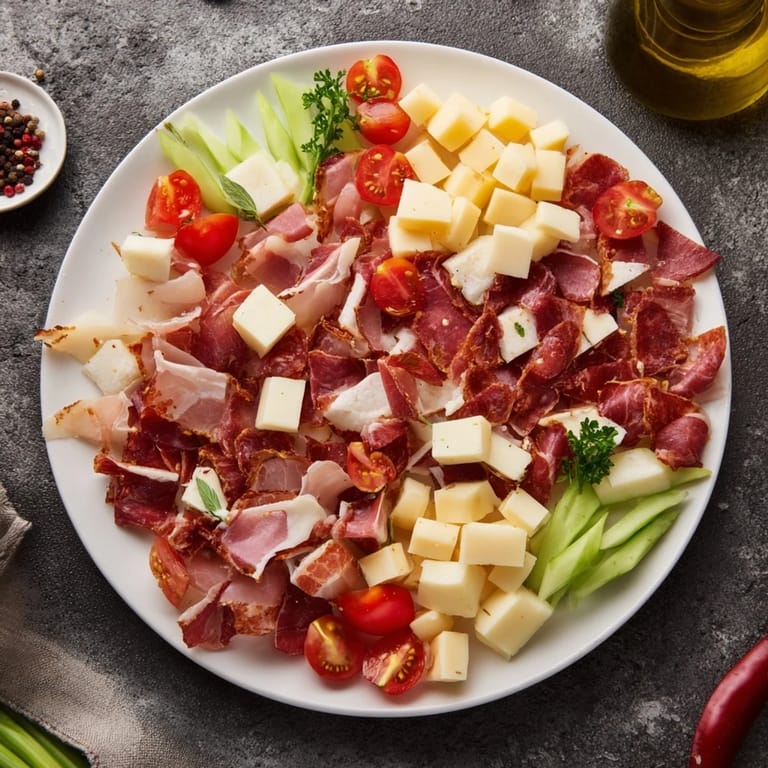 Save
Save A keto power plate taught me that sometimes the most nourishing meals come from simply choosing the best of what's available and presenting it with intention. It's proof that you don't need complicated cooking to feed people something memorable.
Recipe FAQs
- → What meats are included in the keto power plate?
The plate features sliced roast beef, smoked turkey, prosciutto, and salami arranged in clusters for visual appeal.
- → Which cheeses complement the meats in this dish?
Aged cheddar, Gruyère, and Manchego slices are included to provide rich, varied flavors alongside the meats.
- → How are the vegetables prepared and arranged?
Non-starchy vegetables like cherry tomatoes, cucumber, radishes, baby bell peppers, and celery are sliced and grouped to add freshness and texture.
- → What finishing touches enhance the flavors?
Green and black olives scattered throughout, a drizzle of extra virgin olive oil, fresh parsley, and a sprinkle of black pepper enhance flavor complexity.
- → Can any substitutions be made for dietary preferences?
Yes, meats and cheeses can be swapped to taste, such as using roast chicken or Emmental. Pickled vegetables or fresh herbs also add variety.