 Save
Save I remember the first time I assembled a proper platter for my cousin's birthday gathering. I'd been worried about feeding a crowd on a tight budget, but as I arranged those generous piles of ham, turkey, and creamy cheeses across my grandmother's old serving tray, something magical happened. Guests kept coming back, building their own little combinations, and suddenly our kitchen felt less like a place where we were stretching dollars and more like somewhere abundance was being celebrated. That's when I realized a great platter isn't about expensive ingredients or fancy presentation—it's about generosity and invitation.
Last spring, when my sister brought her new partner home for the first time, I made this exact platter. As they stood around the table talking and laughing, building little sandwiches and sampling different combinations, I watched them relax into the gathering. There was something about the informal nature of it—the freedom to pick and choose, to create something uniquely theirs—that made everyone comfortable. That's the real magic of a well-built platter.
Ingredients
- Sliced cooked ham (200 g): The salty foundation of your platter. Buy the good stuff at the deli counter if you can—it costs nearly the same but tastes remarkably different. Pre-packaged works fine too, and honestly, no one judges.
- Sliced turkey breast (200 g): The lighter option that people reach for when they want something gentler. It also helps stretch the meat selection without breaking the budget.
- Sliced salami (150 g): This is your flavor accent. A little goes a long way, and it adds visual interest with those beautiful circular slices.
- Mild cheddar, sliced (200 g): The crowd-pleaser cheese. It's approachable, pairs with everything, and doesn't intimidate anyone's palate.
- Swiss cheese, sliced (150 g): Those beautiful holes make it visually striking, and it has a gentle sweetness that contrasts nicely with the sharp items.
- Cream cheese (100 g): Your spreadable element. It lets people create little bites on crackers, which somehow makes the platter feel more interactive and fun.
- Carrots, sliced into sticks (2 large): The bright crunch that cuts through all the richness. Always slice them the day before if you're prepping ahead—they stay crisper.
- Cucumber, sliced into rounds (1): The cooling element. People don't realize how much they appreciate this until there's none left.
- Red bell pepper, sliced (1): Pure color and sweetness. It's the most photographed item on the platter, so don't skimp.
- Cherry tomatoes (1 cup): Leave them whole—they're easier to grab and they add jewel-like pops of color everywhere.
- Assorted budget-friendly crackers (400 g): The unsung hero that prevents anyone from leaving hungry. Stack them high and in multiple spots.
- Baguette, sliced (1): A little bread goes a surprisingly long way. Toast the slices lightly if you want them to hold up better to spreads.
- Hummus (1 cup): Your vegetarian anchor and the thing that makes everyone feel like they're eating something a little healthier.
- Green olives (1/2 cup): The salty, briny surprise. Some people skip them entirely, but the ones who love them really love them.
- Pickles (1/2 cup): Another fermented element that adds complexity and appeals to adventurous eaters.
Tired of Takeout? 🥡
Get 10 meals you can make faster than delivery arrives. Seriously.
One email. No spam. Unsubscribe anytime.
Instructions
- Gather your stage and imagine the flow:
- Take a moment to look at your platter or tray and think about how people will move around it. If it's going on a table where folks approach from all sides, you'll want to arrange things so nothing is trapped in the middle where it can't be reached. If it's on a kitchen counter against a wall, you can be more linear with your arrangement. This mental rehearsal saves you from rearranging mid-party.
- Build your meat foundation:
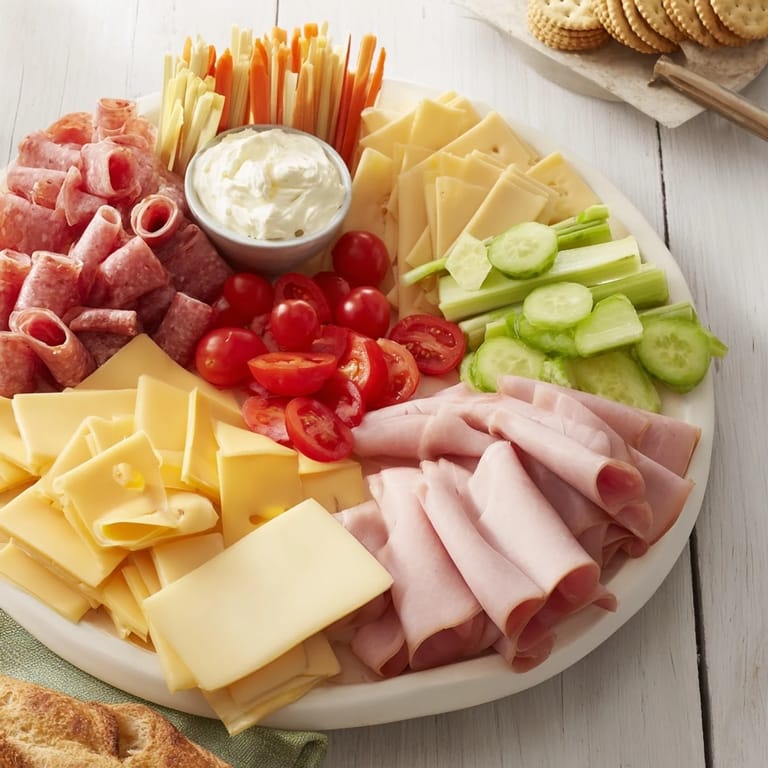
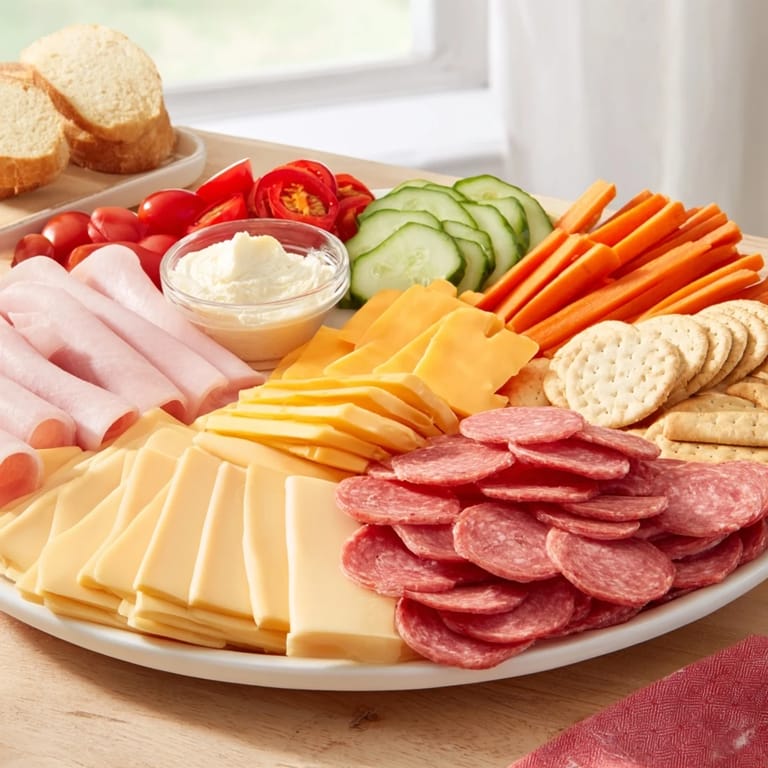
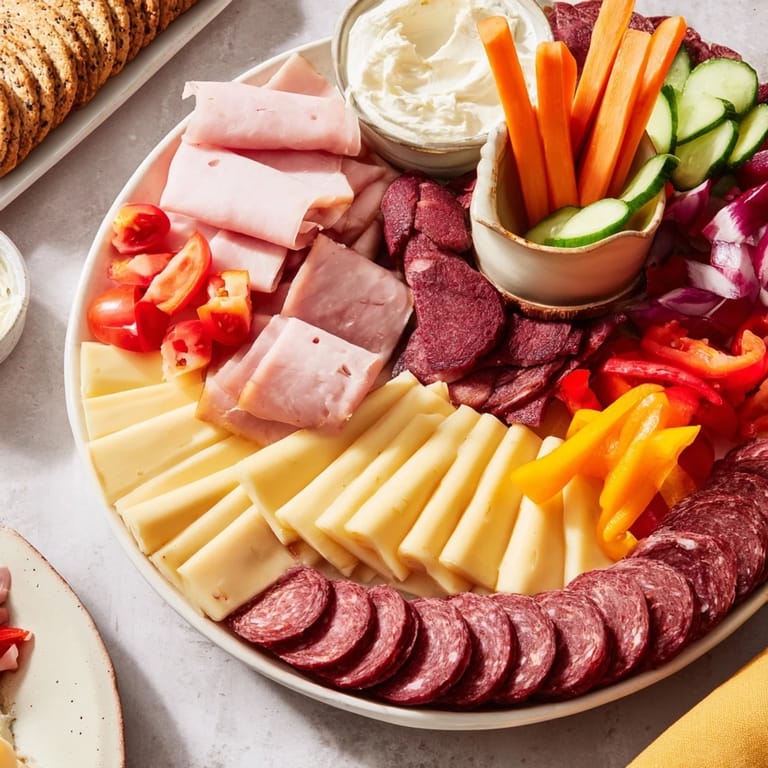
- Start with the sliced meats in generous piles at different corners or sections of your platter. Don't fold or fan them too precisely—rustic and abundant-looking is more inviting than architectural. The ham, turkey, and salami create natural flavor zones so guests can choose based on their mood.
- Fan out the cheeses for easy grabbing:
- Lay the cheddar and Swiss slices slightly overlapping, like they're fanned open for browsing. This arrangement is more practical than stacked, and it looks intentional without being fussy. Leave some space around them so people can easily slide individual slices away.
- Create vegetable abundance in heaps:
- Don't arrange vegetables in neat rows like they're for display. Pile them generously in accessible heaps, grouping carrots together, cucumbers together, tomatoes in their own section. This rustic approach actually makes them more tempting to eat because they feel abundant and casual.
- Place your bowls strategically:
- Set small bowls of cream cheese, hummus, olives, and pickles around the perimeter so they don't block access to anything else. People should be able to grab a cracker, dip it, and have a complete bite without playing platter tetris.
- Stack the crackers and bread for height and ease:
- Create high stacks of crackers and baguette slices in multiple spots around the platter. This tall arrangement draws the eye, makes the platter look more abundant than it actually is, and ensures no one has to dig or stretch to find a vehicle for their bites. The height variation also makes the overall presentation more interesting.
- Serve with the spirit of sharing:
- Place this in the center of where people naturally gather. Step back and watch how they interact with it. The best platters are the ones where people feel free to create their own little moments—a slice of turkey with a bit of cheese and a pickle, a cracker spread with cream cheese and topped with a tomato. Your job is just to make sure there's enough of everything to keep the magic going.
 Save
Save Years ago, I made this platter for a potluck where I felt out of place among people cooking elaborate dishes. One woman told me later that she'd skipped the complicated casseroles and come back to my table three times because it was the only thing that felt like real food—like someone cared enough to include everything she might want. That moment taught me that sometimes the simplest offerings are the most generous ones.
Building the Perfect Arrangement
The secret to a platter that people actually enjoy is understanding that you're not arranging food—you're creating an experience. Think of it like setting a stage where everyone gets to be the star, building exactly what they crave in that moment. Colors should naturally vary across the platter, so no one section looks overwhelmingly heavy or boring. Warm tones (the ham, cheddar, tomatoes) should balance cool tones (the Swiss cheese, pickles, cucumbers, olives). Height variation matters more than precision—those tall stacks of crackers next to low piles of sliced meats create visual interest that makes people want to explore.
Budget Hacks That Nobody Notices
This is genuinely one of the most budget-conscious dishes you can make that doesn't feel budget-conscious at all. Buy store-brand crackers instead of name brands—I promise you can't taste the difference when they're surrounded by other flavors. The deli counter is your friend here, because you can buy exactly what you need instead of wasteful pre-packaged quantities. A single baguette goes surprisingly far when sliced, and that one 100g block of cream cheese spreads across dozens of crackers. Some people add things like sliced apples or grapes, which are cheap seasonally and make the platter feel more upscale than it is. The real money-saver is the confidence in your arrangement—make it look intentional and abundant, and everyone assumes you spent more than you did.
Making It Feel Special
Even though this is simple to execute, there are touches that elevate it from ordinary to memorable. Lightly toast the baguette slices so they're sturdy enough to hold a spread without getting soggy. Arrange some items on small wooden boards or tiered serving pieces if you have them—it breaks up the flatness of a single platter and makes everything feel more curated. If you have time, arrange small sprigs of fresh herbs (parsley, dill, or rosemary) around the platter just for color and aroma. These little details cost almost nothing but make people feel cared for.
- Fresh herbs scattered around add elegance and make people think you're fancier than you are
- Arranging items in odd numbers and odd groupings looks more intentional than perfectly symmetrical layouts
- A small handwritten label for anything special (like homemade hummus or imported olives) makes the ordinary feel curated
 Save
Save A good platter isn't just food on a board—it's an invitation to slow down and enjoy each other's company. It says you trusted people enough to let them choose what they want, and you cared enough to make sure there was something for everyone.
Recipe FAQs
- → What meats are included in this spread?
The spread features sliced cooked ham, turkey breast, and salami, providing a variety of flavors and textures.
- → Can this platter be adapted for vegetarians?
Yes, omit the meats and add extra cheese, roasted vegetables, or plant-based deli slices for a vegetarian-friendly version.
- → What types of cheeses are recommended?
Mild cheddar, Swiss cheese, and cream cheese are used to offer a balanced range of flavors and creamy textures.
- → How should the vegetables be prepared?
Vegetables like carrots, cucumber, red bell pepper, and cherry tomatoes should be sliced or arranged in bite-sized sticks or rounds for easy grabbing.
- → Are there any suggested accompaniments?
Extras such as hummus, green olives, pickles, and a variety of crackers and sliced baguette enhance the platter and offer contrasting flavors.
- → How long does it take to prepare this spread?
The entire spread can be assembled in about 20 minutes, with no cooking required, making it quick and convenient.