 Save
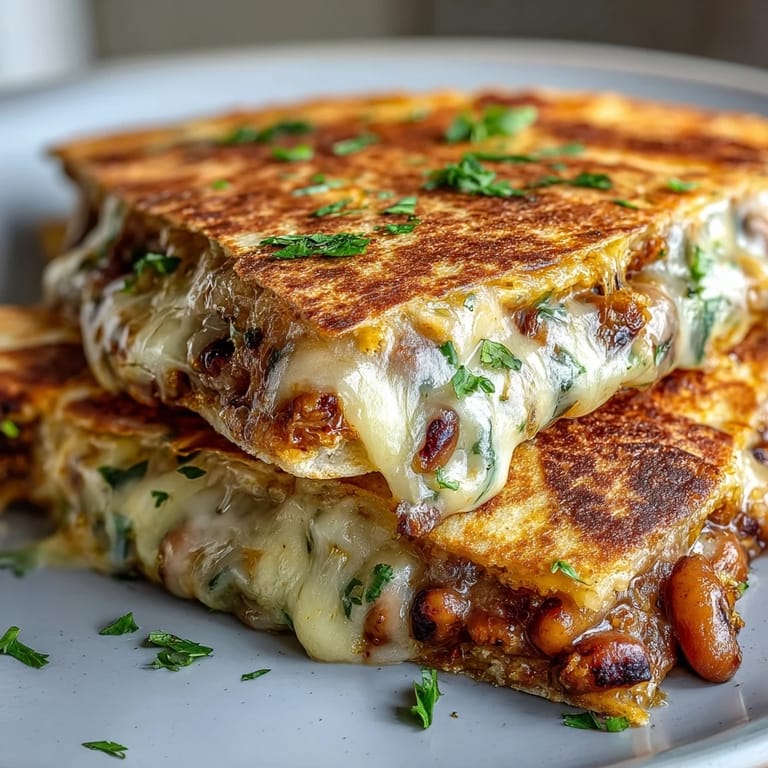
Save My neighbor handed me a container of black-eyed peas one afternoon, insisting I do something interesting with them beyond the usual side dish. I stood there with a can of black-eyed peas and half a block of cheddar, wondering what would happen if I treated them like a proper filling instead of an afterthought. Twenty minutes later, I had a golden, crispy quesadilla that tasted nothing like what I expected—better, actually. It became the kind of lunch I started making on purpose, not by accident.
I made these for a group of friends who were skeptical about black-eyed peas in anything other than a bowl with collard greens. Watching them bite into one and pause—really pause—before saying it was delicious felt like small victory. Now they ask for the recipe, and I love that something so simple shifted their whole perspective.
Ingredients
- Black-eyed peas: Use canned and drained for speed, or cook dried ones the night before if you have time—the flavor deepens and the texture becomes creamy without turning to mush.
- Olive oil: Just enough to soften the onion and garlic without making everything greasy or heavy.
- Onion and garlic: These two build the aromatic foundation that makes the filling taste intentional rather than plain.
- Ground cumin and smoked paprika: They whisper warmth and earthiness into every bite—don't skip either one.
- Fresh lime juice: This brightens everything at the last moment, waking up flavors that might otherwise feel flat.
- Fresh cilantro: Optional, but it adds a peppery freshness that feels necessary once you taste it.
- Flour tortillas: Eight-inch ones are perfect for folding without tearing, and they crisp up beautifully when buttered.
- Cheddar or Monterey Jack cheese: Choose whichever melts smoothly in your kitchen—I lean toward Monterey Jack because it's forgiving and has a mild sweetness.
- Butter or neutral oil: Butter gives better flavor and color, but oil works if you prefer a lighter touch.
Tired of Takeout? 🥡
Get 10 meals you can make faster than delivery arrives. Seriously.
One email. No spam. Unsubscribe anytime.
Instructions
- Sauté the aromatics:
- Warm olive oil in a skillet over medium heat and add your diced onion, letting it soften and turn translucent around the edges. Once it's golden enough to smell sweet, add the garlic and listen for that tiny sizzle that means you're cooking it just right.
- Toast the spices:
- Stir in the black-eyed peas with cumin and smoked paprika, cooking just long enough for the spices to wake up and the peas to heat through. You'll know it's ready when the whole mixture smells warm and inviting.
- Mash with intention:
- Pull everything off the heat and mash coarsely with a fork or potato masher—you want some texture left, not a smooth purée. Finish with a squeeze of lime juice and a scatter of cilantro if you're using it.
- Build your quesadillas:
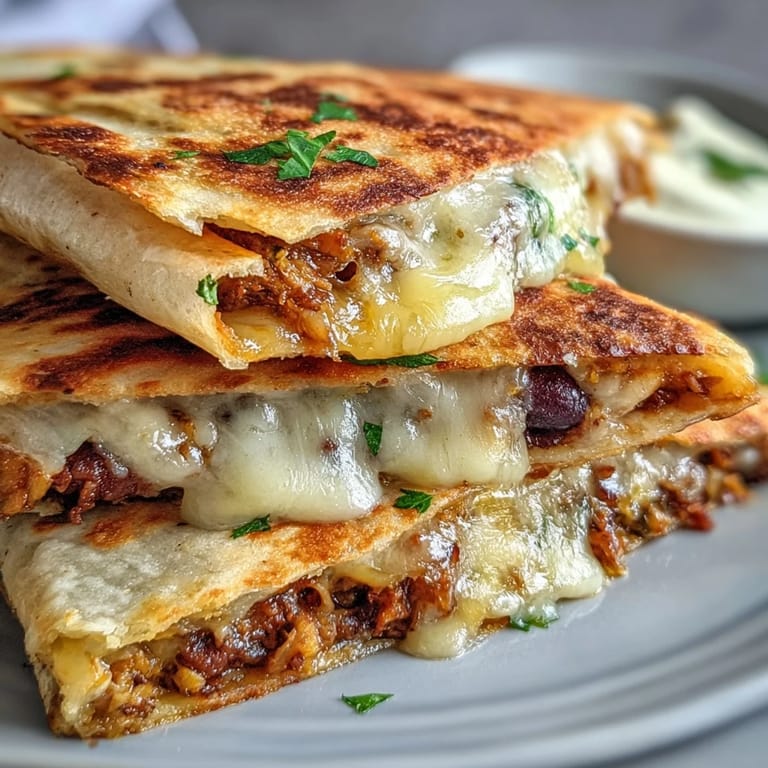
- Lay out four tortillas and divide the filling across half of each one, then top with cheese and fold in half like you're tucking it in for a nap. The cheese should peek out slightly at the fold.
- Pan-fry to golden:
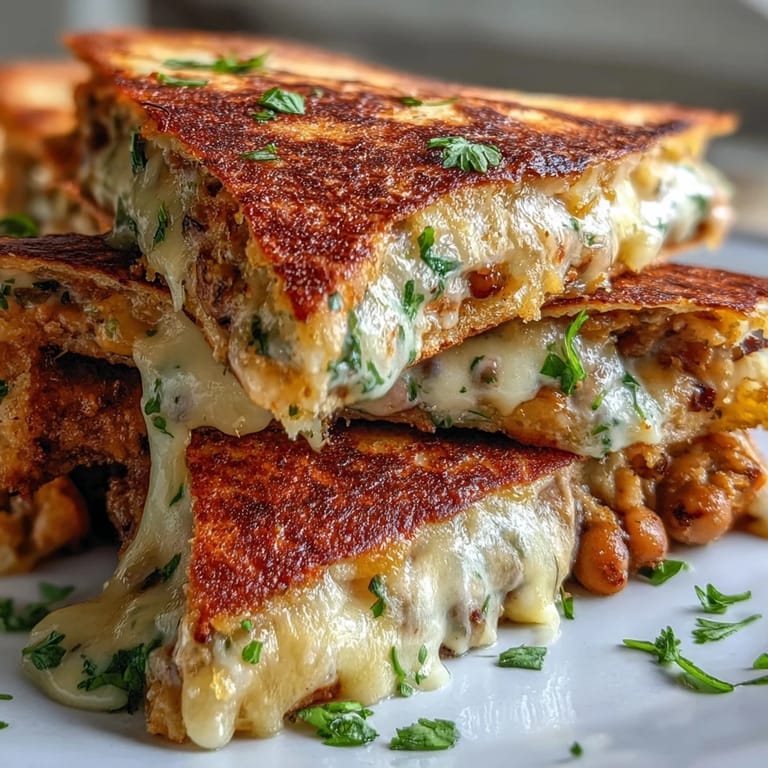
- Melt butter in your skillet over medium heat and place one or two quesadillas in, cooking each side for two to three minutes until the tortilla turns golden brown and crackles slightly when you move it. The cheese inside will soften first, then start to ooze out the edges, which is exactly what you want.
- Serve while warm:
- Slice into wedges and serve immediately with salsa, sour cream, or guacamole waiting on the side. The quesadilla loses something once it cools, so eat these right away.
 Save
Save My son, who claims to dislike anything with beans, ate two of these without comment and asked for more. I didn't tell him until later what he'd just eaten, and instead of protest, he shrugged and asked when I was making them again. Sometimes the best food moments happen when nobody's paying attention to what they're actually eating.
Why Black-Eyed Peas Belong in Quesadillas
There's something about the way black-eyed peas transform when you mash them with cumin and lime—they stop feeling like a Southern side dish and become something luxurious and filling. Their mild, slightly nutty flavor doesn't compete with cheese or the tortilla; instead, it adds substance and protein without heaviness. Once you make them this way, you understand why every cuisine that discovered beans made them essential.
The Texture That Matters
A smooth, pureed bean filling feels wrong in a quesadilla because it becomes too dense and loses its identity. The moment you leave those peas coarsely mashed with visible texture, they stay interesting and hold together without becoming gluey or heavy. I learned this when I over-mashed a batch and ended up with something that felt more like bean paste—still delicious, but missing the satisfying bite that makes these special.
Variations and Customizations
Once you understand the basic formula, these quesadillas become endlessly flexible. Sautéed bell peppers or jalapeños slip in easily between the filling and cheese, adding heat or sweetness without disrupting anything. Whole wheat or corn tortillas change the flavor profile slightly, making it earthier or more authentic to different traditions you might want to explore.
- Try roasted red peppers mixed into the filling for a subtle sweetness that echoes the smoked paprika.
- A handful of fresh spinach wilts right into the warm filling and adds iron without changing the taste much.
- If you're cooking for someone dairy-free, quality vegan cheese melts better than it used to, and the rest of the recipe stays exactly the same.
 Save
Save These quesadillas taught me that humble ingredients deserve respect and creativity, and that sometimes the best meals come from happy accidents in the kitchen. Make them once and they become your thing, too.
Recipe FAQs
- → Can I use dried black-eyed peas instead of canned?
Yes, soak and cook dried black-eyed peas according to package directions until tender before using. One 15-ounce can equals about 1½ cups cooked peas.
- → What cheese works best in these quesadillas?
Cheddar and Monterey Jack both melt beautifully and complement the earthy black-eyed peas. Pepper Jack adds a nice kick if you prefer some heat.
- → How do I store leftovers?
Store cooled quesadillas in an airtight container in the refrigerator for up to 3 days. Reheat in a skillet over medium heat to restore crispiness.
- → Can I make these ahead of time?
Prepare the black-eyed pea filling up to 2 days in advance and store it refrigerated. Assemble and cook the quesadillas just before serving for best texture.
- → What toppings go well with these quesadillas?
Try fresh pico de gallo, sliced avocado, guacamole, sour cream, or a squeeze of fresh lime juice. Pickled jalapeños add a nice tangy contrast.
- → How do I make these gluten-free?
Use certified gluten-free corn or flour tortillas. Check that your cheese and other ingredients are gluten-free as well.