 Save
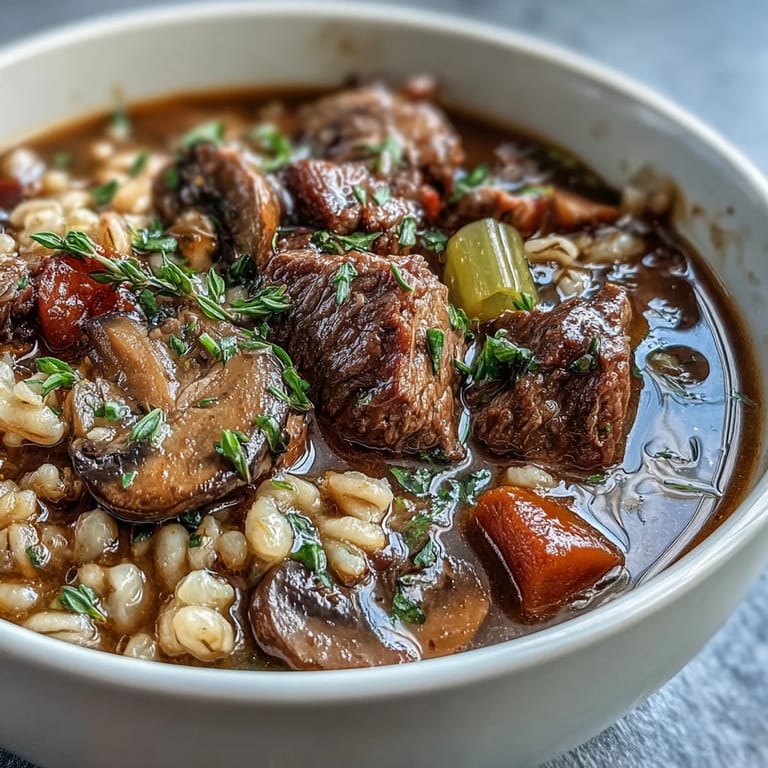
Save There's something about the smell of pancetta crisping in a heavy pot that makes you forget it's still technically morning. I was testing soups for a dinner party I'd invited myself to help with, and this beef and barley soup kept calling me back—not because it was fancy, but because it tasted like someone had actually cooked it for hours, letting every ingredient earn its place in the bowl. The barley gave it substance without feeling heavy, and those mushrooms turned the broth into something almost silky. One spoon and I knew this was the one.
I made this for a friend who'd just moved into a new apartment on the coldest day of November, and watching her face light up when she realized it was beef and barley—her grandmother's favorite—felt better than any store-bought housewarming gift ever could. She ate two bowls standing at her kitchen counter, still unpacking boxes, and that moment reminded me why this soup matters.
Ingredients
- Beef chuck roast: Cut into small cubes—this cut has enough marbling to stay tender during the long simmer, and it breaks down into almost silky pieces that melt on your tongue.
- Pancetta: The smoky, salty backbone of the whole thing; if you render it first and set it aside, those fat drippings are liquid gold for browning the beef.
- Baby bella mushrooms: Earthier than buttons but more forgiving than wild varieties, they release their umami into the broth as they cook.
- Pearl barley: Rinse it first—this small step prevents starch cloudiness and gives you a clearer, more elegant broth.
- Yellow onion, carrots, and celery: The holy trinity that builds flavor; I usually dice them fairly uniform so they soften at the same rate.
- Garlic: Fresh and minced, added after the softer vegetables so it doesn't burn and turn bitter.
- Beef broth: Low sodium lets you control the salt level as you go, and it lets the beef and mushroom flavors shine.
- Tomato paste: A tablespoon or two adds depth and a subtle sweetness that balances the earthy mushrooms.
- Bay leaves, thyme, and rosemary: These dried herbs are sturdy enough for a two-hour simmer without losing their character.
- Olive oil: Use it to build flavor in layers—first for the pancetta, then for the beef, then for the vegetables.
- Fresh parsley: A bright finish that cuts through the richness and reminds you spring exists somewhere.
Tired of Takeout? 🥡
Get 10 meals you can make faster than delivery arrives. Seriously.
One email. No spam. Unsubscribe anytime.
Instructions
- Render the pancetta and get your pot seasoned:
- Heat a large Dutch oven or heavy pot over medium-high heat with one tablespoon of olive oil, then add diced pancetta and let it sizzle and crisp for about 3 to 4 minutes. The fat that renders out becomes the foundation for everything else, so don't rush this step—you want those pieces fully browned and some texture to them.
- Sear the beef in batches:
- Season your beef cubes generously with salt and pepper, then sear them in the fat left behind by the pancetta, working in batches so you don't crowd the pot and steam the meat instead of browning it. This takes about 5 to 6 minutes per batch, and you'll see that gorgeous mahogany crust that seals in the juices and creates depth of flavor.
- Build the aromatic base:
- Add the remaining olive oil, then sauté the onion, carrots, and celery together until they're softened and the kitchen smells like comfort, about 5 minutes. Stir in the minced garlic and cook for just a minute until it becomes fragrant—this is when your sense of smell tells you things are on track.
- Add the mushrooms and let them work their magic:
- Slice those baby bellas and stir them into the pot, cooking for 6 to 8 minutes while stirring occasionally—they'll first release moisture, then begin to brown, and that's when the umami really kicks in. You'll notice the broth starting to take on color and depth just from the mushrooms releasing their goodness.
- Deglaze and build the broth:
- Stir in the tomato paste and cook it for a full minute to remove any raw edge, then return the beef and pancetta to the pot along with the barley, bay leaves, thyme, rosemary, beef broth, and water. Bring everything to a boil, which should take about 5 minutes and will signal that the pot is now a full, active kitchen project.
- Low and slow is the secret:
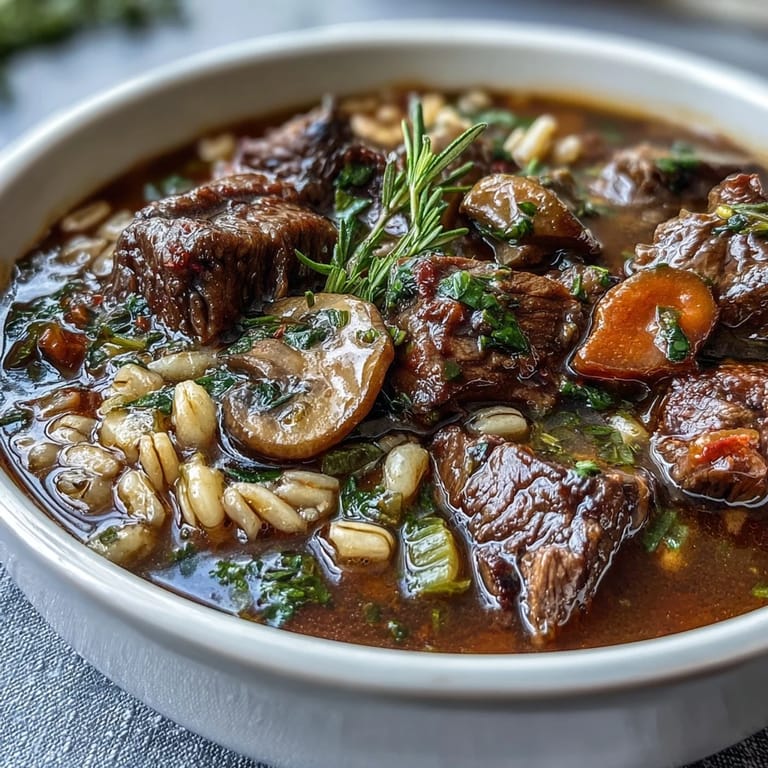
- Once it reaches a boil, reduce the heat to low, cover the pot, and let it simmer gently for about an hour and a half, stirring every 20 minutes or so to make sure nothing sticks to the bottom. The beef will gradually become tender enough to break with a spoon, and the barley will soften from its nutty firmness into something creamy while still holding its shape.
- Finish and adjust:
- Remove the bay leaves, taste the soup, and adjust the seasoning with salt and pepper until it tastes right to you—this is your chance to make it personal. Ladle it into bowls and scatter fresh parsley over the top if you want that final brightness.
 Save
Save There was a moment last winter when my neighbor came by unexpectedly just as I was ladling this into bowls, and instead of eating alone, we sat at my kitchen counter and talked for two hours while the soup stayed warm in the pot between us. She told me stories I'd never heard before, and I realized that this kind of food—the kind that simmers and fills time and space—creates the exact conditions where people open up and remember why they like each other.
Why This Soup Gets Better With Time
Make this soup a day ahead if you can; the flavors deepen and intertwine overnight as the barley continues to absorb the broth and the herbs fully integrate into every element. I actually prefer it reheated the next day, when everything feels more cohesive and the beef is even more tender. Store it in the fridge in a covered container for up to four days, or freeze it for up to three months—just thaw it overnight before reheating.
Variations That Keep It Interesting
Once you've made this version a few times, you'll start seeing possibilities everywhere. For a richer, deeper version, swap half the beef broth for mushroom broth, or add a splash of dry red wine right before the long simmer—it adds a subtle complexity that makes people ask what that flavor is. If you want to go gluten-free, swap the pearl barley for brown rice or farro, though you'll need to adjust the cooking time accordingly since rice tends to soften faster than barley. Some people add a splash of balsamic vinegar or Worcestershire sauce in the final minutes, which adds another layer of savory depth without being obvious.
The Pancetta Question and Other Swaps
Pancetta is specific for a reason—it renders beautifully and adds a smoky, refined pork flavor that bacon can match in spirit but not quite in nuance. That said, if you only have bacon, use it; the soup will still be delicious, just slightly less complex. For a completely different direction, try guanciale if you can find it at a good butcher, or skip the pork entirely and add another tablespoon of olive oil plus a pinch of smoked paprika to catch that missing depth. I once made this with sausage browned and crumbled, and it created an entirely different but equally comforting version.
- If you're in a hurry, you can shorten the simmering time to 45 minutes, but the beef won't be quite as tender and the barley will still be slightly firm, so only do this if you absolutely must.
- Taste the broth before adding the beef back in—sometimes the tomato paste makes it slightly acidic, and a pinch of sugar can balance that if needed.
- Fresh parsley at the end isn't just decoration; it's a flavor reset that brightens everything and keeps the soup from feeling heavy.
 Save
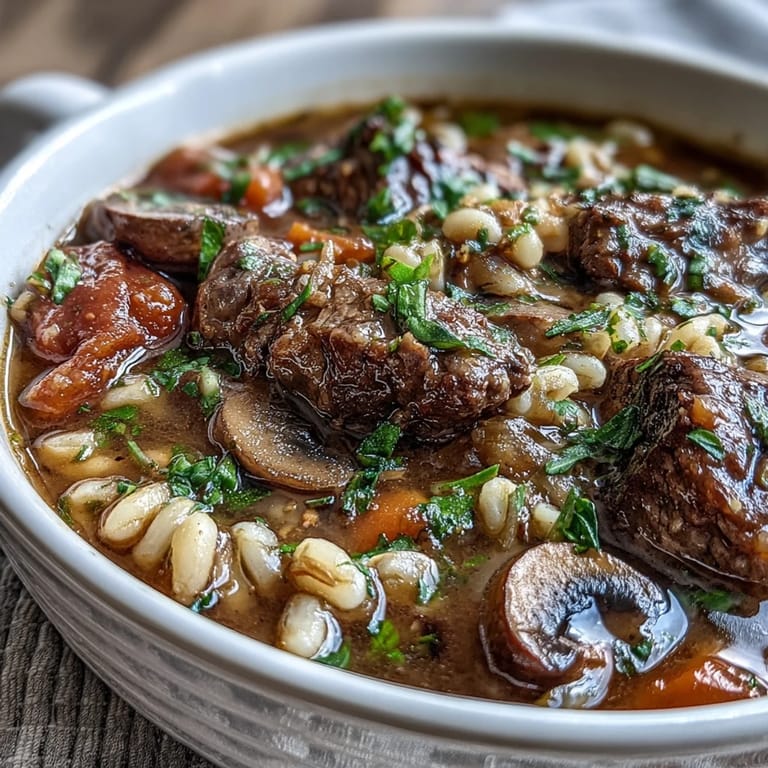
Save This soup asks very little of you except patience and a willingness to let time do the work, and in return it gives back comfort that feels earned rather than rushed. Make it when you need grounding, when someone needs care, or when you simply want your kitchen to smell like home.
Recipe FAQs
- → How long does beef and barley soup need to simmer?
Simmer for approximately 1.5 hours on low heat until the beef becomes fork-tender and the pearl barley is fully cooked through.
- → Can I make this soup ahead of time?
Absolutely—the flavors actually improve after sitting in the refrigerator for a day, making it an excellent option for meal prep.
- → What cut of beef works best?
Beef chuck roast is ideal because it becomes tender during long simmering, though you can substitute with other stewing cuts like round or brisket.
- → Is this soup gluten-free?
Traditional pearl barley contains gluten, but you can substitute with brown rice, quinoa, or other gluten-free grains while adjusting the cooking time accordingly.
- → Can I freeze leftovers?
Yes, it freezes well for up to 3 months. Allow it to cool completely before transferring to airtight containers, leaving some space for expansion.
- → What can I use instead of pancetta?
Thick-cut bacon makes an excellent substitute, or you can omit it entirely for a lighter version while still maintaining deep flavor from the beef and mushrooms.