 Save
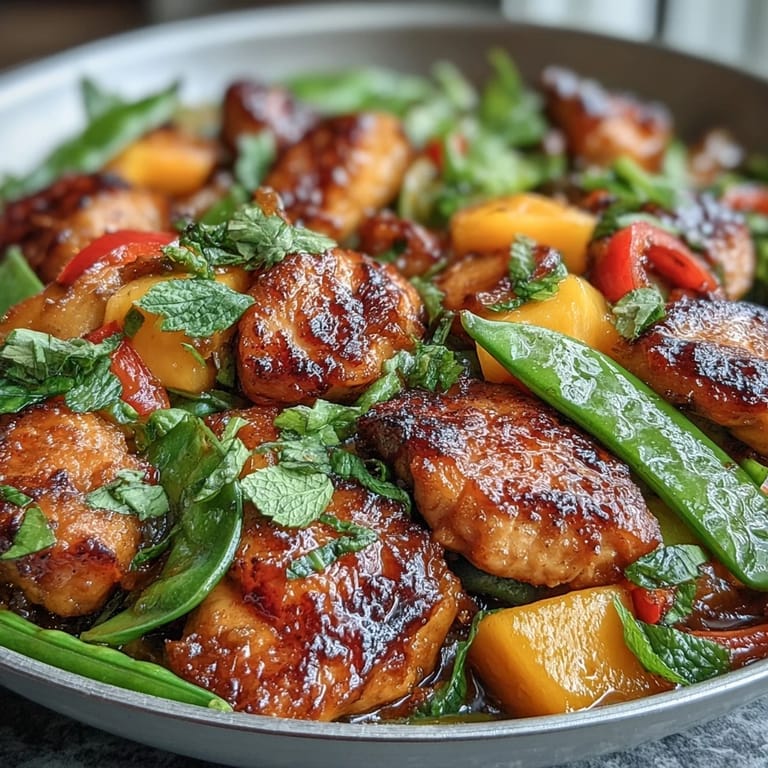
Save There's a moment in my kitchen on Tuesday evenings when I'm standing at the stove with the wok heating up, and the smell of garlic hitting hot oil hits me before I've even started cooking. That's when I reach for the mango, for the turmeric, for this stir-fry that somehow turned into my answer to everything from a rushed weeknight to feeding friends who didn't know they were craving something this bright. It came together almost by accident, mixing what I had in my fruit bowl with spices I was experimenting with, and it became the dish I keep making.
I made this for my sister last summer when she was going through a phase of trying to eat lighter, and I watched her face when she took that first bite—the surprise that something so colorful could also be so satisfying. She asked for the recipe before she'd even finished her plate, and now she texts me photos of her versions with variations I never would have thought of. That's when I knew this wasn't just my favorite anymore.
Ingredients
- Boneless, skinless chicken breast (500 g): Slicing it thin means it cooks fast and stays juicy, and honestly, it's the secret to not overdrying it when you're working with high heat.
- Soy sauce: Use the gluten-free version if you need to, but don't skip the depth it brings to both the marinade and the sauce.
- Lime juice: Fresh, always—the brightness is what ties everything together and keeps it from feeling heavy.
- Turmeric powder: This is your golden thread, giving warmth and that earthy note that makes people ask what you did differently.
- Honey: Just enough to round out the flavors and add a subtle sweetness that doesn't compete with the mango.
- Mango (1 large, ripe): The ripeness matters because you want it to stay whole but be tender, not mushy—taste it before you cut it up.
- Snap peas (150 g): They stay crisp and give you that satisfying bite, and they cook so quickly you barely have time to blink.
- Bell peppers (1 red, 1 yellow): The colors aren't just for show; they each bring a slightly different sweetness, and together they make the whole dish feel celebratory.
- Garlic and red onion: These are your aromatics, building the flavor base before everything else joins the party.
- Fish sauce (optional): If you use it, go easy—a tablespoon is enough to deepen everything without announcing itself.
- Neutral oil (2 tbsp): Canola or sunflower work best because they won't compete with the other flavors.
- Fresh cilantro and sesame seeds: The garnish is where you finish the story, adding freshness and texture right before you eat.
Tired of Takeout? 🥡
Get 10 meals you can make faster than delivery arrives. Seriously.
One email. No spam. Unsubscribe anytime.
Instructions
- Coat your chicken in golden promise:
- Combine the chicken with soy sauce, lime juice, turmeric, honey, and black pepper in a bowl and let it sit for 10 minutes. You'll see the turmeric start to coat each piece, and the chicken will begin absorbing all those flavors before it even hits heat.
- Build your sauce quietly:
- Mix the soy sauce, fish sauce if you're using it, lime juice, and honey in a small bowl and set it aside. This is your safety net—once everything's in the wok, you'll be moving fast, so having this ready means you're not scrambling.
- Cook the chicken until it just surrenders:
- Heat one tablespoon of oil in your wok over medium-high heat until it shimmers, then add the marinated chicken and stir-fry for 3 to 4 minutes until just cooked through. Don't walk away—you'll hear it sizzle and pop, and you'll know when it's time to move it to a clean plate.
- Wake up your aromatics:
- Add the remaining oil to the pan, then add your minced garlic and sliced red onion and sauté for about 1 minute until the smell hits you and your kitchen suddenly feels alive. This is the moment everything shifts.
- Give the vegetables their moment:
- Add the bell peppers and snap peas and stir-fry for 2 to 3 minutes until they're tender-crisp—you want them to still have a voice, not be silent and soft. The peppers will brighten slightly, and the snap peas will stay that gorgeous green.
- Bring it all back together:
- Return the chicken to the pan, scatter in the mango cubes, and pour your prepared sauce over everything. Toss it all together and stir-fry for 2 more minutes until the sauce coats everything and the mango is warmed through.
- Finish with intention:
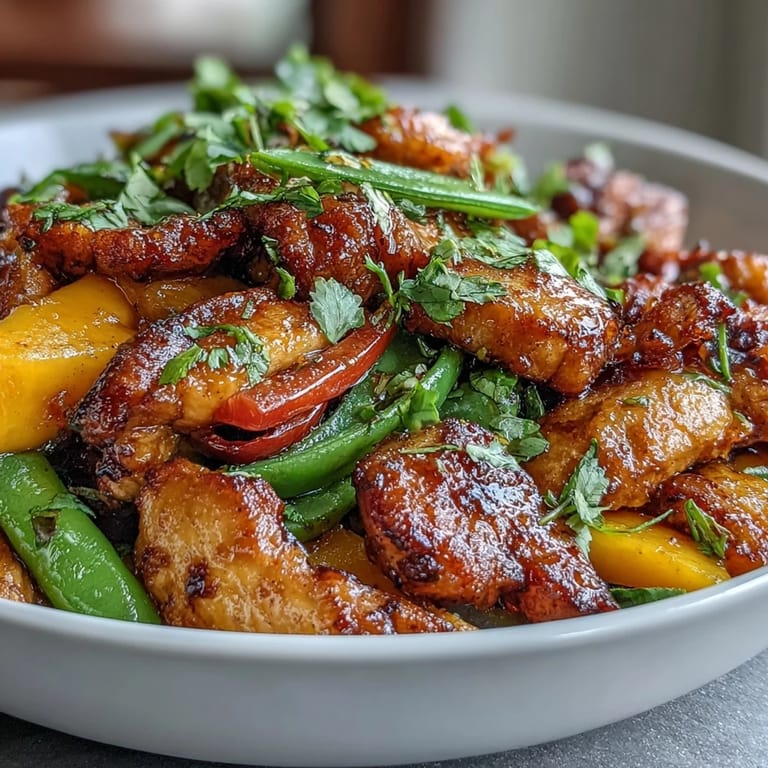
- Remove from heat and garnish with fresh cilantro and toasted sesame seeds if you're using them. Serve immediately over steamed rice or quinoa while everything is still hot and the colors are singing.
 Save
Save What gets me most about this dish is how it changed the way my partner thinks about weeknight cooking—he thought healthy meant sacrifice, and then one night he tasted this, and suddenly he understood that vibrant and nourishing could be the same thing. Now he asks for it specifically, which is its own kind of love language.
When Heat and Timing Are Everything
The wok needs to be genuinely hot before anything goes in, and that's non-negotiable if you want that slight char and the vegetables to stay crisp. I learned this the hard way by being too gentle, too cautious, and ending up with soft, sad peppers instead of the snappy, alive vegetables this dish deserves. Once you get the heat right, everything moves quickly, which is actually the point—high heat, short cooking time, and you're done before anyone's even set the table.
The Secret That Changed Everything
Slicing the chicken thin was the revelation that made this work because thick pieces mean you have to cook longer, and longer means drier. When I switched to thin slices, the chicken stayed tender, cooked fast, and actually had room in the pan to brown instead of just sitting there steaming in its own moisture. It sounds simple, but that one change turned this from good to something I actually look forward to eating.
Making It Your Own
This recipe is a foundation, not a fence, and some of my favorite versions have come from playing with what I have on hand. I've added fresh chili for heat, used pineapple when the mangoes looked sad, and even swapped in tofu for the chicken and watched it turn into something my vegetarian friends actually wanted to eat. The turmeric and lime are your anchors—everything else can shift depending on your mood or what's in your kitchen.
- If you want heat, slice fresh chili or add a pinch of chili flakes, but start small because it builds as you eat.
- A crisp Sauvignon Blanc or jasmine tea pairs beautifully and cleans your palate between bites.
- Serve it over rice, quinoa, or even cauliflower rice if you're going that direction—the sauce is what makes it sing regardless.
 Save
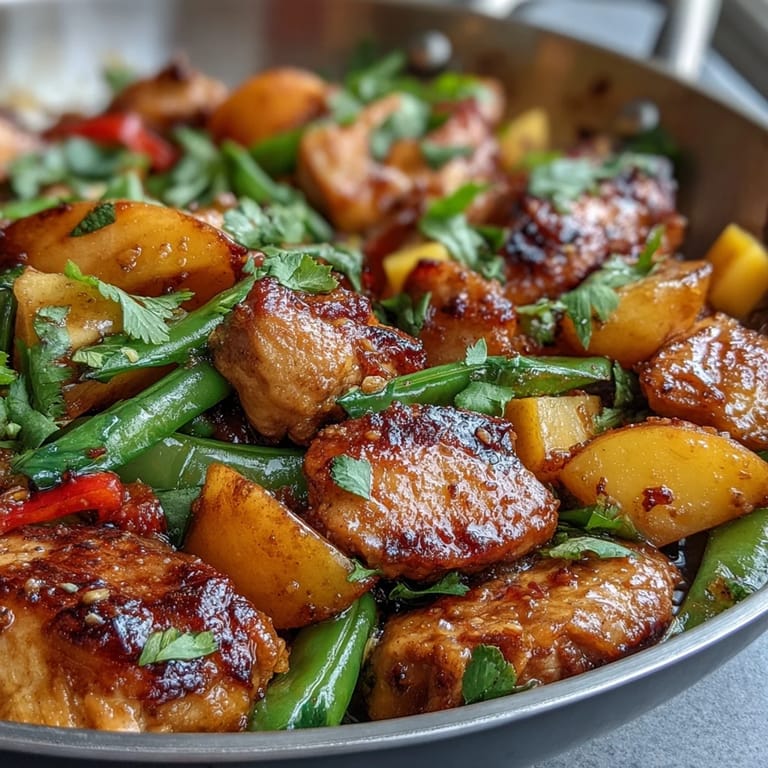
Save There's something about the way this dish feels on the table—colorful, warm, alive—that makes people slow down and actually taste their food. Make it once, and I promise you'll find yourself reaching for it again.
Recipe FAQs
- → How long should I marinate the chicken?
Marinate the chicken for about 10 minutes to let the turmeric, lime, and honey flavors infuse without losing tenderness.
- → Can I substitute mango with another fruit?
Pineapple works well as a substitute, offering a similar sweetness and texture to complement the spices.
- → What cooking oil is best for stir-frying?
Use neutral oils like canola or sunflower that tolerate high heat without affecting flavor.
- → How do I keep the snap peas crisp?
Stir-fry snap peas quickly over high heat for 2-3 minutes to maintain their tender-crisp texture.
- → Can this dish be made vegetarian?
Yes, substitute chicken with firm tofu for a satisfying plant-based alternative.