 Save
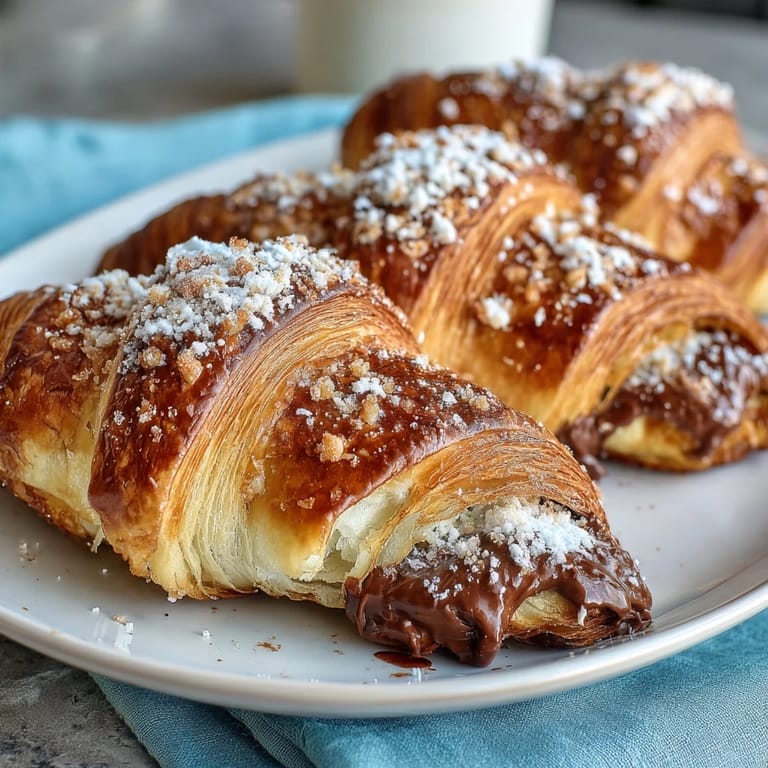
Save There's something deeply romantic about sourdough croissants—the marriage of slow fermentation and meticulous lamination, of tangy culture and European butter, all folded into layers so delicate they shatter at the first bite. When you tuck batons of bittersweet dark chocolate into each golden triangle, you create a pastry that whispers of Parisian mornings and patient craft. These sourdough chocolate croissants ask for time and attention, but reward you with a complexity no instant dough can match: a crisp, caramelized shell that gives way to a tender, airy crumb shot through with ribbons of melted chocolate.
Save Making sourdough croissants is a lesson in patience and precision. The overnight fermentation not only builds flavor but also allows the gluten to relax, making lamination smoother. As you fold butter into dough again and again, you're creating a pastry architecture—thin sheets of dough separated by even thinner sheets of butter that puff and separate in the oven's heat. The result is a croissant that's both rustic and refined, with a crumb that pulls apart in soft, buttery wisps and a crust that crackles under your fingers.
Ingredients
Tired of Takeout? 🥡
Get 10 meals you can make faster than delivery arrives. Seriously.
One email. No spam. Unsubscribe anytime.
- 500 g bread flour
- 100 g active sourdough starter (100% hydration)
- 220 ml whole milk (cold)
- 60 g granulated sugar
- 10 g fine sea salt
- 30 g unsalted butter (softened)
- 1 large egg (for egg wash)
- 250 g unsalted European-style butter (cold, for laminating)
- 120 g high-quality dark chocolate (at least 60% cocoa), cut into 12 batons or sticks
Instructions
- Make the Dough
- In a large bowl or stand mixer, combine flour, sourdough starter, milk, sugar, salt, and softened butter. Mix until a rough dough forms. Knead for 4–5 minutes until smooth and slightly elastic. Cover and let rest at room temperature for 30 minutes.
- Bulk Fermentation
- Place dough in a lightly oiled bowl, cover, and bulk ferment at room temperature for 2–3 hours, performing 2 stretch-and-folds at 1-hour intervals. Refrigerate overnight (8–12 hours).
- Prepare Butter Block
- Place cold butter between two sheets of parchment paper. Pound and roll into a 20 x 20 cm (8 x 8 inch) square. Refrigerate until firm.
- Laminate the Dough
- On a lightly floured surface, roll dough into a 30 x 30 cm (12 x 12 inch) square. Place butter block in the center, fold dough over to encase butter. Roll out to 60 x 20 cm (24 x 8 inch) rectangle. Fold into thirds (letter fold). Chill for 30 minutes. Repeat rolling and folding twice more, chilling 30 minutes between each turn.
- Shape Croissants
- Roll dough out to a 60 x 30 cm (24 x 12 inch) rectangle, about 4 mm thick. Cut into 12 long triangles (base about 10 cm). Place a chocolate baton at the wide end of each triangle, then roll tightly toward the tip. Place on parchment-lined baking sheets, tip side down.
- Final Proof
- Cover loosely and proof at room temperature for 4–5 hours, or until doubled and very puffy. (If kitchen is cold, proof in a slightly warm, draft-free spot.)
- Bake
- Preheat oven to 200°C (400°F). Beat egg with 1 tbsp water and gently brush croissants. Bake for 18–22 minutes until deep golden brown and crisp.
- Cool
- Transfer to a wire rack and let cool at least 15 minutes before serving.
Zusatztipps für die Zubereitung
Temperature control is everything when laminating croissant dough. If the butter gets too soft, it will merge with the dough rather than staying in distinct layers; if it's too cold, it will crack and break. Work quickly, and don't hesitate to pop the dough back in the fridge if it starts to feel warm or sticky. Keep your work surface lightly floured but not over-floured, as excess flour can interfere with the layers. When rolling, apply even pressure and always roll away from yourself in smooth, confident strokes. During the final proof, look for croissants that are visibly puffed and jiggly—this indicates the layers have separated and are ready to bake into airy perfection.
Varianten und Anpassungen
For a citrus twist, add finely grated orange zest to the dough during mixing—the bright notes complement dark chocolate beautifully. You can also experiment with different chocolates: try milk chocolate for a sweeter version, or a blend of dark and white chocolate for visual and flavor contrast. If you prefer plain croissants, simply omit the chocolate and shape the dough as usual. For a savory variation, skip the chocolate and instead fill with ham and Gruyère before the final proof. A light sprinkle of flaky sea salt on top of the egg wash before baking adds a sophisticated, sweet-salty finish that enhances both the butter and chocolate.
Serviervorschläge
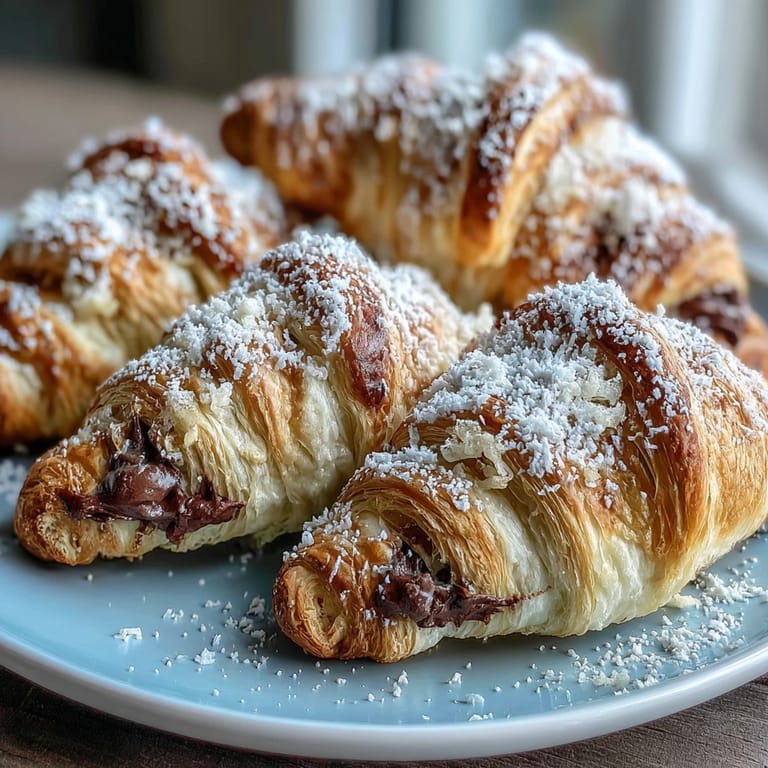
Serve these sourdough chocolate croissants warm from the oven alongside a strong espresso or a bowl of café au lait for a classic French breakfast. They're also stunning on a brunch table with fresh fruit, Greek yogurt, and a selection of jams. For an indulgent dessert, dust the croissants with powdered sugar and serve with vanilla ice cream or lightly sweetened whipped cream. If you have leftovers (unlikely!), slice them in half and toast lightly in a skillet with a bit of butter for a decadent bread pudding base, or turn them into a croissant French toast that will make any morning feel like a celebration.
 Save
Save These sourdough chocolate croissants are more than a recipe—they're a meditation on craft, a celebration of time-honored technique, and a delicious reminder that the best things in life are worth waiting for. When you pull that first tray from the oven and hear the gentle crackle of the crust, when you break open a croissant and watch the steam rise from layers upon layers of buttery dough and molten chocolate, you'll know that every fold, every chill, every patient hour was worth it. Bake these for someone you love, or bake them for yourself as an act of delicious devotion.
Recipe FAQs
- → What makes the dough flaky and layered?
The flakiness comes from laminating the sourdough dough with cold butter through repeated folds and chilling, creating distinct buttery layers.
- → How long should the dough ferment before baking?
The dough undergoes a bulk fermentation of 2–3 hours at room temperature followed by 8–12 hours chilling to develop flavor and texture.
- → What type of chocolate works best for filling?
High-quality dark chocolate with at least 60% cocoa content is ideal for a rich and balanced flavor.
- → Can I add any flavor enhancements to the dough?
Yes, adding orange zest to the dough or sprinkling flaky sea salt on top before baking provides a subtle, complementary brightness.
- → How should croissants be stored if not eaten immediately?
For best freshness, consume the same day. To reheat, gently warm them in the oven to restore crispness and softness.