 Save
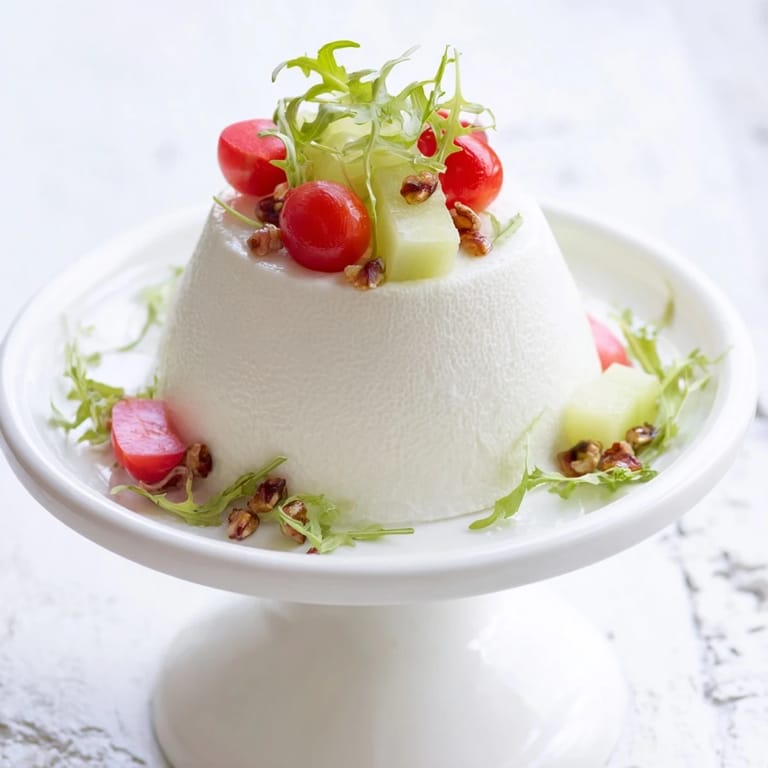
Save The first time I arranged vegetables in concentric circles pointing toward a cheese wheel, I was trying to impress someone who'd always dismissed salad as an afterthought. Something about the geometry clicked—the way a ripe Brie could become the focal point of an entire table, with arugula and tomatoes creating these visual pathways leading right to it. That dinner taught me that a salad could be architectural, almost theatrical, yet somehow feel completely natural once you started building it.
I made this for a dinner where everyone was supposed to bring something, and the energy felt a bit flat until I unveiled the platter. Watching people lean in closer, realizing the design was deliberate and the cheese was right there at the heart of it all—that's when the whole table seemed to relax. Suddenly it wasn't just salad, it was an experience.
Ingredients
- Baby arugula: Use the peppery leaves as your radiating lines; they're delicate enough to arrange but sturdy enough to hold their shape through serving.
- Cherry tomatoes, halved: Halving them creates little flat surfaces that catch the light and makes the geometry feel more intentional.
- Cucumber, thinly sliced: Slice just before assembly so they stay crisp and don't weep water onto the board.
- Watermelon radish, thinly sliced: This is your secret weapon for visual drama—those pink and white stripes do the heavy lifting.
- Pomegranate seeds: Scatter these last; they roll slightly, so embrace the imperfection as it adds energy to the design.
- Toasted walnuts: Toast them yourself if you can; the smell alone makes the whole thing feel homemade.
- Extra-virgin olive oil: Don't skimp here—quality oil makes the dressing taste like you actually know what you're doing.
- White balsamic vinegar: It's milder and won't turn everything brown; clarity matters when you're working with color.
- Honey: Just a touch, enough to round out the sharpness without making it sweet.
- Dijon mustard: This emulsifies the dressing and keeps it from separating across the board.
- Artisanal cheese wheel: Choose one that's soft enough to spread but structured enough to sit proudly—room temperature tastes infinitely better than cold.
Tired of Takeout? 🥡
Get 10 meals you can make faster than delivery arrives. Seriously.
One email. No spam. Unsubscribe anytime.
Instructions
- Set your stage:
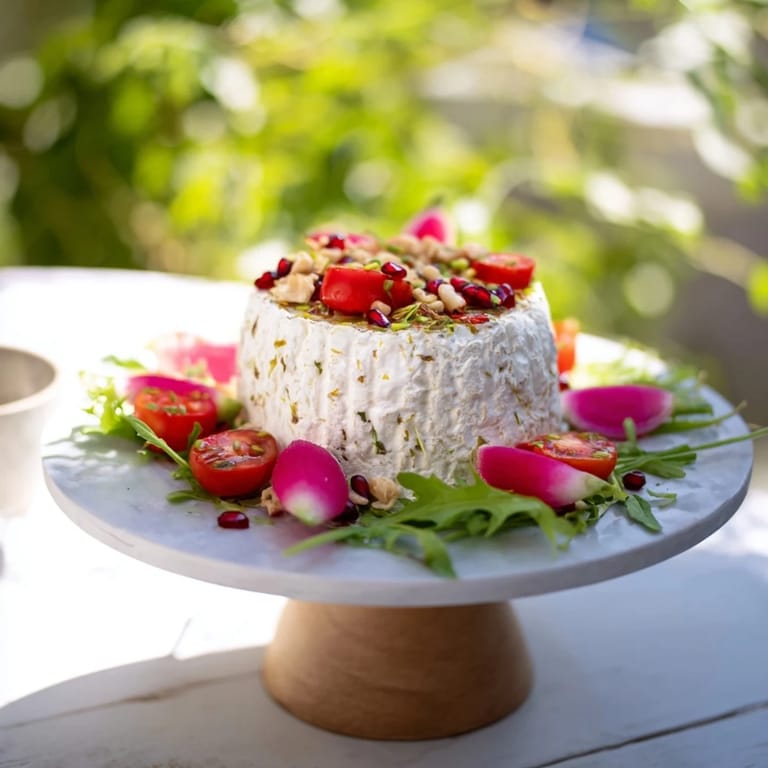
- Place the cheese wheel slightly off-center on your serving board, maybe on a tiny pedestal or just directly on the surface. This is your north star; everything else radiates from here.
- Create your arugula rays:
- Sweep the arugula outward in soft, arc-like lines pointing toward the cheese. Don't overthink it—think more like brushstrokes than military precision.
- Layer in the vegetables:
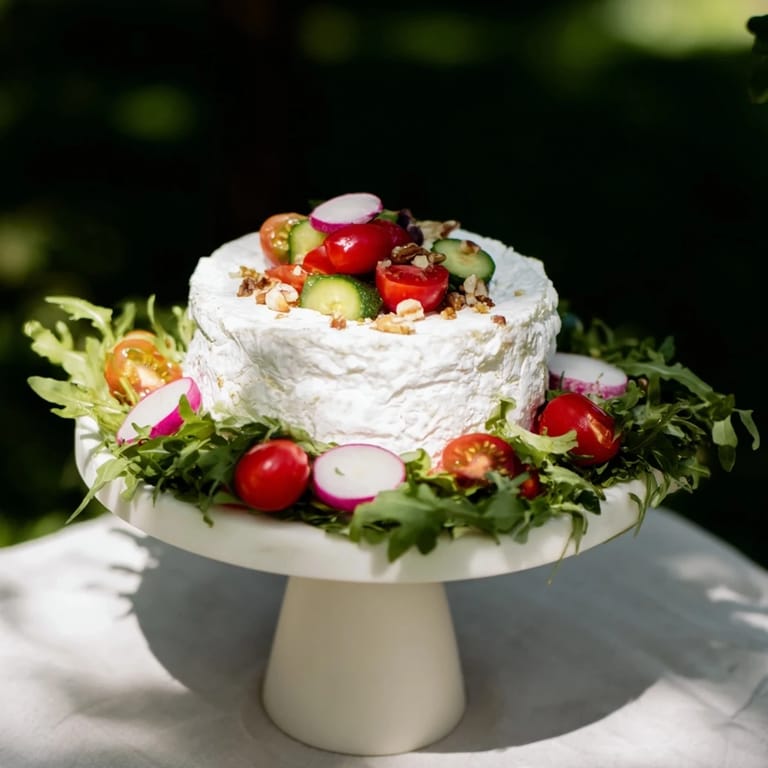
- Now arrange your tomatoes, cucumber, and watermelon radish in orderly rows, all angled toward that cheese wheel. You're building a visual pathway that says 'come this way.'
- Scatter the jewels:
- Sprinkle pomegranate seeds and walnuts along the vegetables, letting them land where they may. A little randomness makes it feel alive, not sterile.
- Make the dressing:
- Whisk together olive oil, vinegar, honey, and mustard in a small bowl until it emulsifies slightly. Taste it—you want the vinegar to sing without overpowering everything else.
- Dress it lightly:
- Drizzle the dressing with restraint across the vegetables, avoiding the cheese wheel itself. You want people to taste both the dressing and the naked vegetables together.
- Invite everyone to the table:
- Serve immediately while everything's still crisp and the colors are at their most vivid. Let guests slice into the cheese and build their own bites.
 Save
Save There's something almost meditative about arranging all these colors toward one point, knowing that someone's going to slice into that cheese and suddenly the whole design becomes the means to an end. I love that moment—when art becomes food becomes conversation.
Choosing Your Cheese Wisely
The cheese wheel is the entire point, so don't treat it as an afterthought. A perfectly ripe Saint-Marcellin has this nutty, almost fungi-like complexity that makes people close their eyes when they taste it. Brie is the safe choice—creamy and familiar. If you're feeling adventurous, try a local soft-ripened cheese from a real cheesemonger; they'll help you pick something that's exactly at the peak of ripeness for your dinner. The cheese should smell faintly funky and yield slightly when you press it, not be rock-hard or already breaking apart.
The Arrangement as Conversation
I've learned that people eat with their eyes first, and this salad knows that. The geometry isn't fussy—it's almost like you're saying something without words. When everyone gathers around the board and sees those lines all pointing to the cheese, there's this collective moment of recognition. It doesn't feel like a salad course anymore; it feels like an event.
When Perfection Isn't the Point
Don't stress about getting the lines exactly parallel or making the circles mathematically perfect. Some of my favorite versions have had slightly wonky arrangements where a tomato rolled and I just left it there, or the arugula wasn't quite as orderly as I'd planned. The imperfections actually make it look more intentional, more human, more like something made with care rather than a template. Your hands made this, and that should show.
- If you're making this ahead, assemble the vegetables on the board but wait to dress it until just before serving.
- Try adding thinly sliced prosciutto or smoked salmon if you want to move away from vegetarian—arrange them in their own radiating lines.
- Edible flowers in the gaps between vegetables add another layer of visual interest without changing the flavors at all.
 Save
Save This salad has become my go-to when I want to feel like I've done something meaningful without actually spending hours in the kitchen. It's the kind of dish that reminds you cooking isn't always about complexity—sometimes it's about seeing the beauty in what's already there and arranging it thoughtfully.
Recipe FAQs
- → What makes this salad visually striking?
The ingredients are arranged in precise lines radiating from the cheese wheel, creating a dramatic, artful presentation.
- → Can I use other cheeses in place of the soft wheel?
Yes, try Camembert, Humboldt Fog, or a mild blue cheese to vary flavor and texture.
- → Is the dressing necessary?
Yes, the olive oil and white balsamic dressing enhances the fresh produce and balances the rich cheese flavor.
- → Can this dish be adapted for non-vegetarians?
Adding thinly sliced prosciutto or smoked salmon provides a savory protein boost without disrupting the composition.
- → How should I serve the salad?
Serve immediately on a large platter with the cheese wheel on a small pedestal, inviting guests to combine bites at the table.