 Save
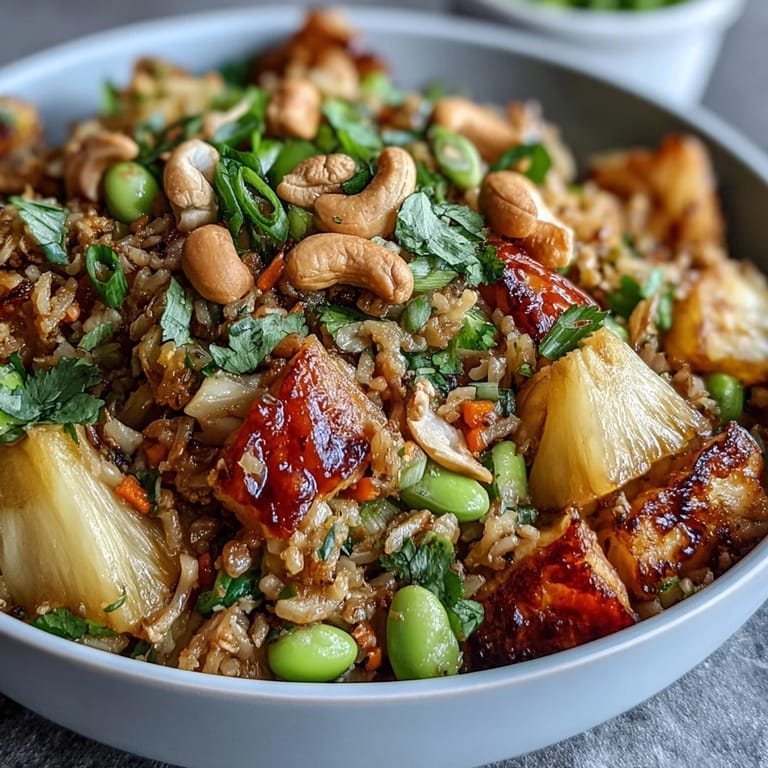
Save My roommate came home one evening with a bag of fresh pineapple and a challenge: make something that tastes like takeout but actually feels good to eat. I'd been experimenting with cauliflower rice for weeks, mostly out of curiosity, and that's when it clicked. The brightness of pineapple against savory umami, the little pops of edamame, the way everything came together in one pan without any fuss. That night turned into a dish I've made countless times since, each time remembering how good it felt to prove that healthy food doesn't have to taste like compromise.
I made this for a potluck where everyone was either vegan, gluten-free, or both, and I wasn't sure how it would land. The moment people started going back for seconds, I realized I'd accidentally created something that just works for everyone. A friend who usually avoids anything labeled healthy asked for the recipe, and that's when I knew this one had staying power.
Ingredients
- Cauliflower, riced (about 5 cups): Use fresh or frozen, but fresh gives you control over the texture. A food processor does this in seconds, or grab pre-riced cauliflower if you're short on time.
- Pineapple, diced (1 cup): Fresh pineapple is worth the effort for its juice and sweetness, but canned drained pineapple works perfectly and costs less.
- Edamame (1 cup shelled): These beans bring satisfying protein and a slight earthiness that balances the fruit. Thaw frozen ones first.
- Red bell pepper and carrot: They soften slightly during cooking and add color, texture, and natural sweetness without overwhelming the dish.
- Green onions (4, thinly sliced): Split these into white and green parts. Cook the white parts early for mellow flavor, add the green parts at the end for a bright, fresh bite.
- Garlic and ginger (2 cloves minced, 1 teaspoon grated): These create the aromatic foundation. Fresh ginger makes a noticeable difference in depth.
- Tamari or soy sauce (3 tablespoons): This is your umami anchor. Use tamari if you need gluten-free, and measure carefully because it's salty.
- Toasted sesame oil (1 tablespoon): Don't skip this. A little goes a long way, and it's what makes this taste restaurant-quality rather than homemade-health-food.
- Rice vinegar (1 tablespoon): Adds subtle tang that brings all the flavors into focus without being obvious.
- Sriracha or chili-garlic sauce (1 teaspoon optional): Only if you like heat. I usually add it, but it's genuinely optional.
- Cashews or peanuts, roasted and chopped (2 tablespoons): These add crunch and richness at the very end. Toast them yourself if you have time.
- Cilantro or basil (2 tablespoons fresh, chopped): Cilantro feels more authentic to the Asian-inspired flavor profile, but basil works if that's what you have.
- Lime wedges: These are not optional. The acid brightens everything and lets people customize their own bite.
Tired of Takeout? 🥡
Get 10 meals you can make faster than delivery arrives. Seriously.
One email. No spam. Unsubscribe anytime.
Instructions
- Prep your cauliflower:
- Cut a medium head into chunks, removing the tough core and leaves. Pulse in a food processor until it looks like grains of rice, about 2 minutes in batches if needed. You want pieces roughly the size of actual rice grains, not powder.
- Heat your pan:
- Pour sesame oil into a large nonstick skillet or wok and set it over medium-high heat. The oil should shimmer and smell toasted within a minute.
- Build your flavor base:
- Add minced garlic, grated ginger, and the white parts of sliced green onions. Stir constantly for about 1 minute until the kitchen smells incredible and the garlic turns pale gold. Don't let it brown.
- Soften your vegetables:
- Toss in diced carrot and red bell pepper. Stir-fry for 2 to 3 minutes, stirring often, until the edges just start to soften but they still have some snap.
- Cook the cauliflower:
- Add all your riced cauliflower and stir well to coat with oil. Cook for 4 to 5 minutes, stirring frequently, until it's tender but still has texture. It should not turn mushy.
- Add the proteins and fruit:
- Stir in peas, edamame, and diced pineapple. Cook for 2 to 3 minutes, stirring gently, just until everything is heated through. The pineapple releases a little juice that flavors everything.
- Season everything:
- Pour in tamari, rice vinegar, and sriracha if you're using it. Toss everything together using a spatula or wooden spoon until evenly coated. Taste it, then add salt and pepper as needed.
- Finish with fresh elements:
- Remove from heat and stir in the green parts of the green onions and half of your chopped cilantro. This keeps them fresh and bright instead of cooked down.
- Plate and serve:
- Divide among bowls and top with chopped cashews, remaining cilantro, and a lime wedge on the side. Let people squeeze lime over their own bowl.
 Save
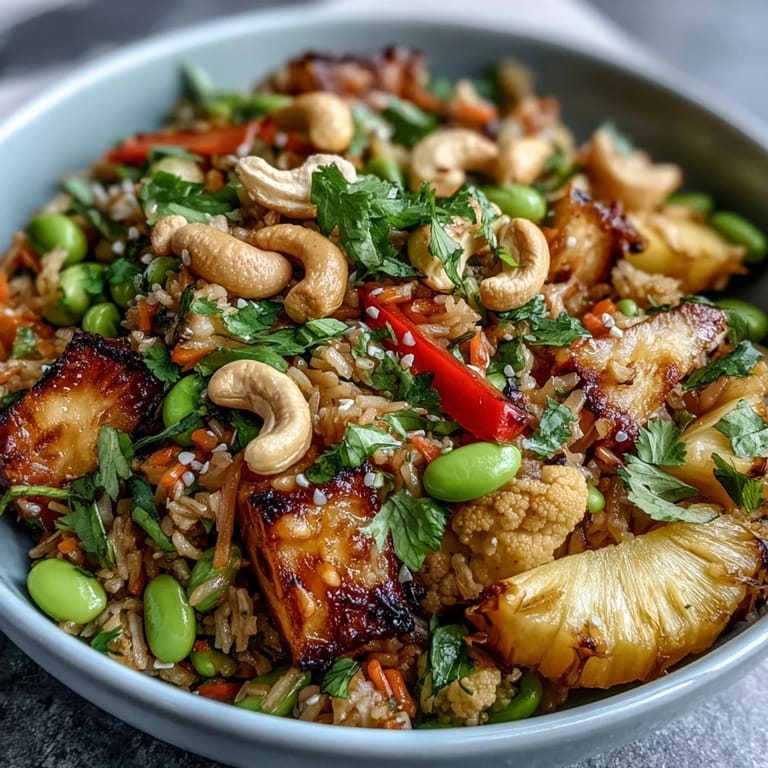
Save The best part is watching someone who usually avoids vegetables light up when they realize half their plate is cauliflower. It stops being about what's missing and starts being about what makes the dish actually taste good.
Why Frozen Edamame Changed Everything
I used to buy fresh edamame thinking it was superior, then realized frozen edamame is picked and frozen at peak freshness. It thaws while cooking, adds protein without any fuss, and honestly tastes identical to boiled fresh ones. The time savings alone made me rethink my whole approach to this dish.
The Pineapple-Savory Balance
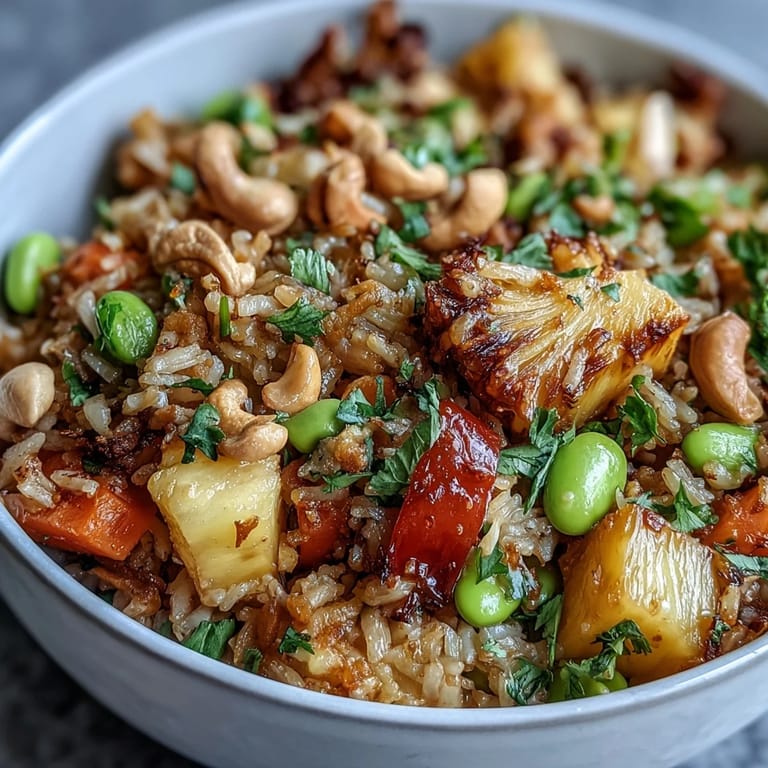
When I first made this, I was nervous about mixing sweet fruit with umami sauce. But the sweet and savory actually complement each other like they were designed for this moment. The pineapple juice caramelizes slightly against the hot pan, the tamari adds depth, and together they create something that tastes complex but happens in minutes. It's the kind of flavor combination that makes you pause mid-bite.
Variations That Actually Work
Once you understand how this dish works, you can bend it to what you have on hand. Swap edamame for crispy tofu cubes if you want more heartiness. Add water chestnuts for extra crunch, or throw in snap peas for a different texture. I even made it with diced mango once instead of pineapple, and it was equally good. The structure stays the same, just the details change.
- Keep at least one element of sweetness to balance the umami.
- Always finish with fresh green onions and fresh herbs for brightness.
- Let people adjust heat and acid at the table with sriracha and lime.
 Save
Save This recipe lives in my regular rotation because it feels like a celebration rather than a chore. Every bowl tastes bright, satisfying, and intentional, which is exactly what food should feel like.
Recipe FAQs
- → Can I substitute edamame with another protein?
Yes, tofu cubes work well as a protein substitute, maintaining the dish's texture and nutritional balance.
- → Is fresh pineapple necessary or can I use canned?
Both fresh and drained canned pineapple provide sweetness; fresh offers a brighter flavor while canned adds convenience.
- → What cooking tools are required to prepare this dish?
A food processor or box grater is needed to rice the cauliflower, along with a large nonstick skillet or wok for cooking.
- → How can I add extra crunch to this dish?
Adding diced water chestnuts or snap peas introduces additional texture and crispness.
- → Are there allergen considerations to keep in mind?
The dish contains soy from tamari and edamame, and tree nuts or peanuts used as garnishes; alternatives can be used if needed.
- → Can leftovers be stored safely?
Yes, leftovers can be refrigerated for up to three days without compromising flavor or texture.