 Save
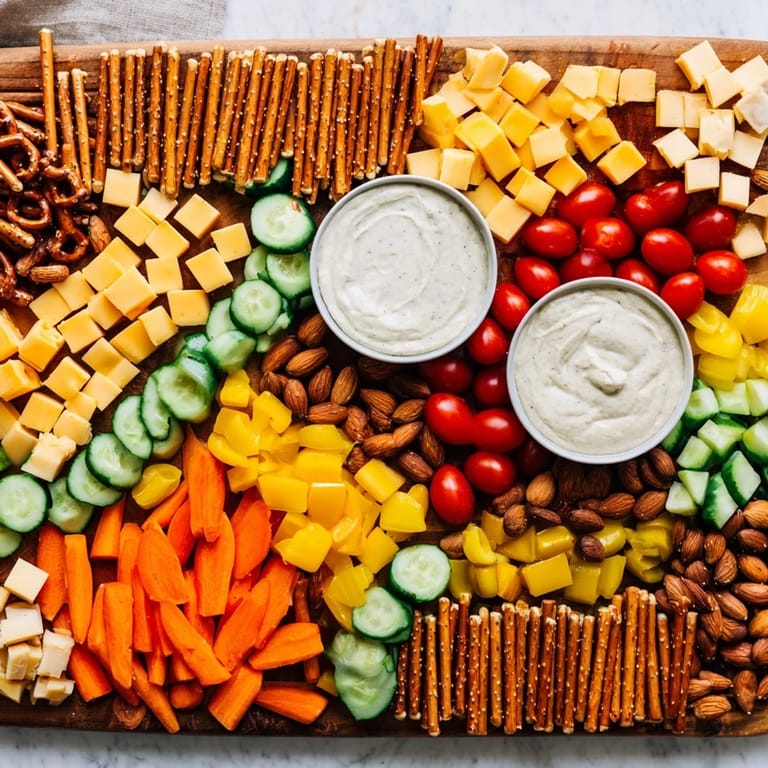
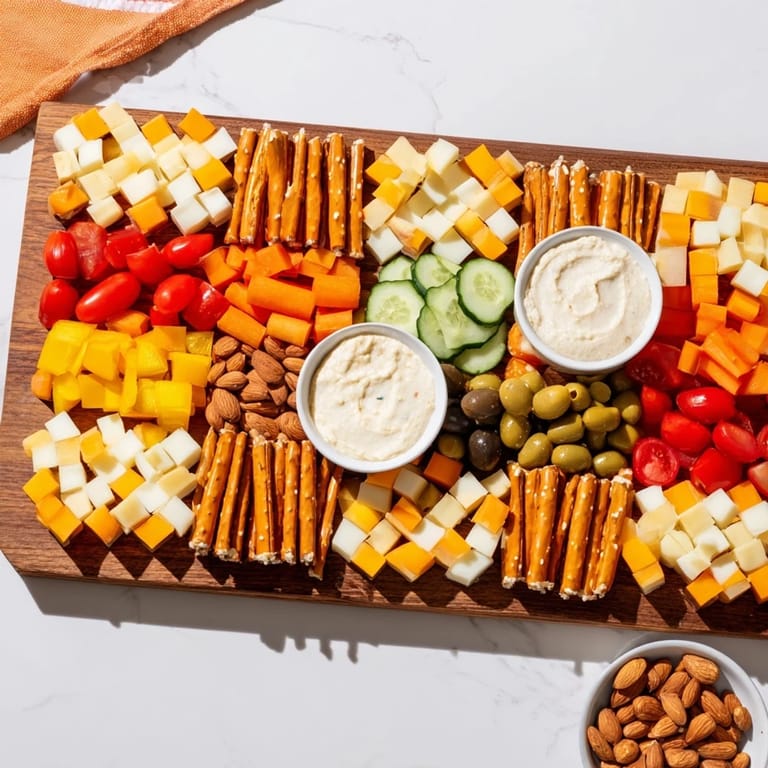
Save I discovered this platter concept at a rooftop gathering where someone had arranged snacks in this clever grid pattern using pretzel rods as dividers, and watching people navigate it like they were exploring city blocks made me realize how much fun food becomes when it looks like a game. The pretzel rods created these perfect little neighborhoods of flavor, and suddenly everyone at the party was talking about their favorite corner of the board instead of just grabbing and eating. It stuck with me because it proved that presentation isn't just about looking pretty—it's about creating an experience that makes people slow down and actually think about what they're choosing.
The first time I made this for my friends, I spent way too long trying to make everything symmetrical and perfectly aligned, only to watch them immediately start mixing and rearranging pieces from different blocks—which somehow made it even more fun. I realized then that the grid doesn't need to be perfect; it just needs to give people permission to play with their food, which as it turns out, is exactly what adults want to do when they think no one's watching.
Ingredients
- Pretzel rods: These aren't just structure; they're part of the flavor experience, adding a salty crunch that plays beautifully against soft cheeses and fresh vegetables, so choose ones that stay crispy and don't taste stale.
- Mild cheddar, gouda, and mozzarella: This trio gives you range without any single cheese overwhelming the board—cheddar adds sharpness, gouda brings nuttiness, and mozzarella keeps things creamy and mild for people who don't want bold flavors.
- Cherry tomatoes and cucumber: These vegetables provide juice and lightness that balance the richness of cheese, and halving the tomatoes makes them easier to grab without the dips rolling everywhere.
- Yellow bell pepper and baby carrots: The sweetness here is subtle but important, giving guests a palate cleanser and preventing the board from feeling too savory or one-dimensional.
- Salami and smoked turkey: Even though these are optional, they add a salty, smoky dimension that transforms the platter from vegetarian snack to something that feels more substantial and special.
- Hummus and ranch: These two dips cover different flavor territories—hummus is earthy and sophisticated, ranch is familiar and comforting, and having both means everyone finds something they want to dip into.
- Mixed olives and roasted nuts: Olives provide briny contrast and nuts add texture and protein, making the board feel more intentional than just vegetables and cheese sitting around.
Tired of Takeout? 🥡
Get 10 meals you can make faster than delivery arrives. Seriously.
One email. No spam. Unsubscribe anytime.
Instructions
- Build your grid foundation:
- Lay the pretzel rods out on your largest platter in a grid pattern, spacing them so they create distinct rectangular sections but still look cohesive as a whole. Think of them as streets dividing up a city block, and make sure there's enough space between rows that people can actually reach the food without the rods getting in the way.
- Fill the neighborhoods:
- Start placing your ingredients into separate grid sections, keeping each ingredient contained in its own block so the platter reads clearly—one corner for cheeses, another for vegetables, another for meats. This visual organization is what makes the whole concept work, so resist the urge to scatter things randomly.
- Position your dips strategically:
- Set small bowls of hummus and ranch either tucked into corner blocks or positioned just outside the grid where they won't get crowded. Make sure the bowls are stable and won't tip when someone reaches across the board.
- Serve and watch the magic:
- Put this out in front of people and step back—they'll immediately start planning their flavor combinations, building little towers of cheese and salami, testing different dip combinations. Let them navigate the board however they want; that's the whole point.
 Save
Save What surprised me most was how this platter became less about the food itself and more about the permission it gave people to interact with their meal in a playful way. At one gathering, someone literally drew a fictional map in the air while they snacked, naming the neighborhoods after people at the party, and suddenly everyone was doing it—the food had become a storytelling device.
The Art of Arrangement
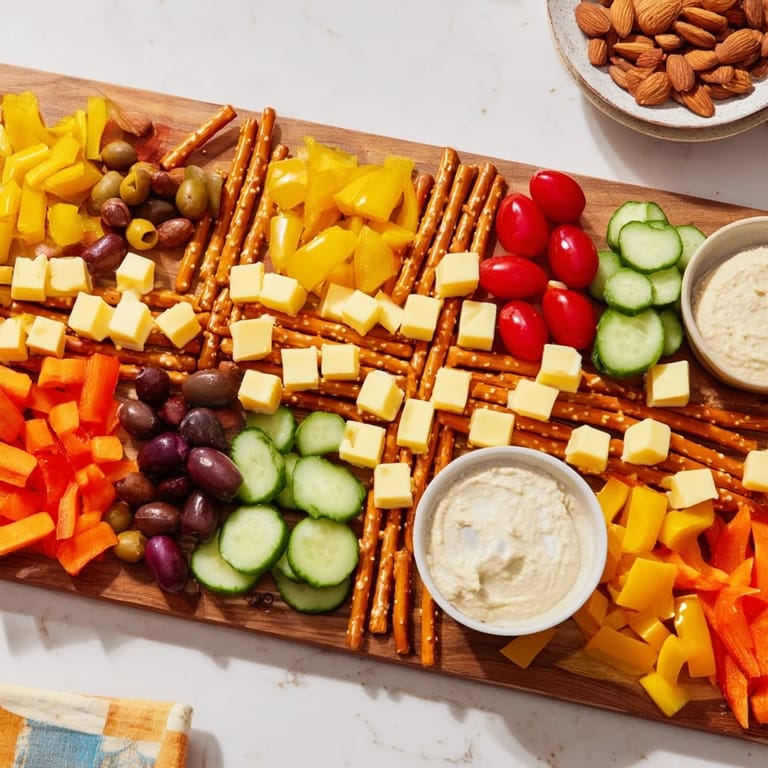
The beauty of this grid concept is that it forces you to think about color contrast and balance without actually requiring any real skill. When you're deciding where to place the golden cubes of cheddar next to the pale mozzarella and the deep red tomatoes, you're naturally creating visual rhythm that makes the whole thing feel designed rather than thrown together. I've found that thinking in terms of opposite sides helps—put lighter cheeses across from darker meats, place bright peppers next to more muted olives, and suddenly your platter has this pleasing visual flow that makes people want to photograph it before they eat it.
Flavor Combinations Worth Trying
The genius of the grid is that it invites experimentation, and I've learned that guests will naturally discover combinations you wouldn't have thought to suggest. The most surprising success I've witnessed is someone layering hummus on a pretzel rod, topping it with a thin slice of cucumber and a piece of salami—suddenly the pretzel becomes a little edible architecture. Another unexpected moment happened when someone dipped the roasted nuts in ranch, creating this salty-creamy texture play that I swear they were enjoying more than any of the main components. These discoveries remind me that presentation actually does influence how people experience flavor, because when food is arranged like a game board, they approach it with more curiosity and creativity.
Making It Your Own
This platter works because it's a framework, not a mandate, so don't feel locked into the exact ingredients I've listed. I've done versions with fresh mozzarella and basil when I wanted something lighter, added roasted beets when I wanted earthier colors, and once threw in some marinated artichoke hearts because they were what I had on hand. The structure stays interesting no matter what goes inside, which is why this has become one of my most-repeated entertaining tricks.
- Fresh fruit like grapes or apple slices add unexpected sweetness that guests genuinely appreciate as a palate break.
- A small section of specialty mustard or hot sauce opens up flavor dimensions that ranch and hummus alone can't provide.
- Edible flowers scattered across the top turn this into something that photographs beautifully for anyone who wants to show off their hosting skills.
 Save
Save This platter has become my secret weapon for entertaining because it looks like you've put thought and effort in, but it's actually just ingredients arranged on a board. That gap between perception and reality is where all the best entertaining happens.
Recipe FAQs
- → How do I arrange the pretzel rods for the grid?
Lay the pretzel rods parallel and perpendicular on a large platter to form square or rectangular blocks, simulating city blocks for ingredient placement.
- → Can I make this snack platter vegan?
Yes, substitute plant-based cheeses and omit meats to suit vegan preferences while keeping the fresh vegetables and dips.
- → What dips complement this platter best?
Hummus and ranch-style dips work well to balance the savory flavors and add creaminess between bites.
- → Are there suggested ingredient swaps for variety?
Try adding marinated vegetables, specialty mustards, or fruits like grapes and apple slices for extra flavor and sweetness.
- → How should this platter be served?
Serve immediately on a large board, allowing guests to pick and mix different ingredient blocks for interactive snacking.
- → What drinks pair well with this snack arrangement?
A crisp white wine or a light lager complements the mild cheeses and fresh vegetables nicely.