 Save
Save I discovered Thai Curry Pasta on a rainy Tuesday night when my usual pasta jar felt uninspiring, and I had a lonely can of coconut milk and Thai curry paste leftover from the weekend. The moment the fragrant paste hit hot oil, my kitchen transformed—suddenly I wasn't making a rushed weeknight dinner, I was creating something that smelled like a tiny escape to Southeast Asia. That first bite, with the creamy sauce clinging to linguine and the vegetables still snapping between my teeth, felt like I'd accidentally cracked a code. Now whenever I make it, that same sense of discovery happens again.
I remember serving this to my neighbor who'd just moved in, and she arrived with that polite "I'm not sure about this" expression that people get when fusion cooking is mentioned. She went back for seconds and asked for the recipe before she'd even finished her first plate. Watching someone taste something unexpected and genuinely enjoy it—that's the real magic of cooking.
Ingredients
- Linguine or spaghetti (350 g): The thinner pasta catches the curry sauce beautifully and allows it to coat every strand; I've tried thicker pasta and it feels heavy by comparison.
- Thai green curry paste (3 tbsp): This is your flavor foundation—buy the best quality you can find because it makes the difference between good and unforgettable, and store-bought is completely honest here.
- Coconut milk (400 ml, full fat): Non-negotiable; the cream content creates that silky sauce, and light coconut milk turns everything thin and one-dimensional.
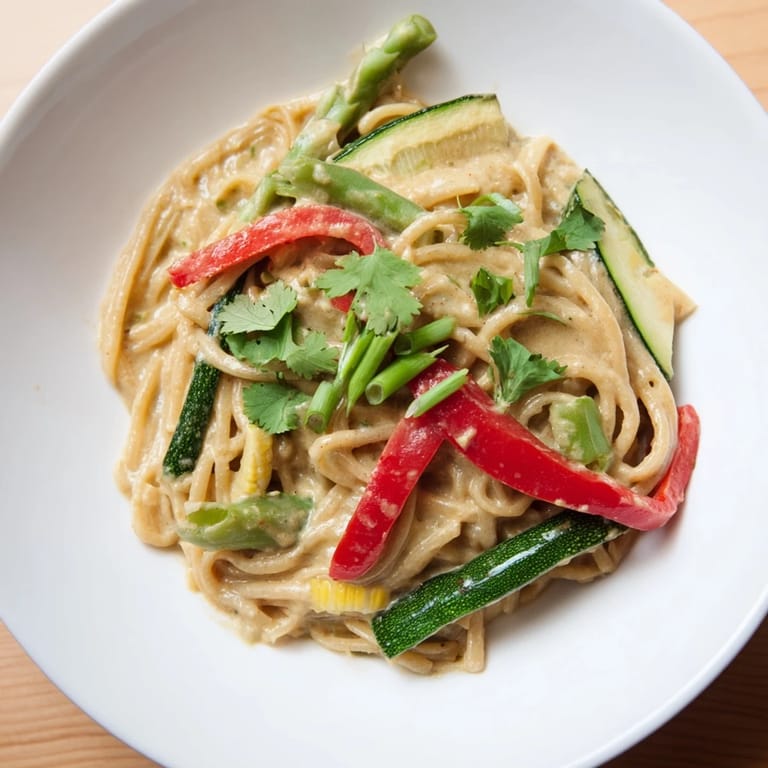
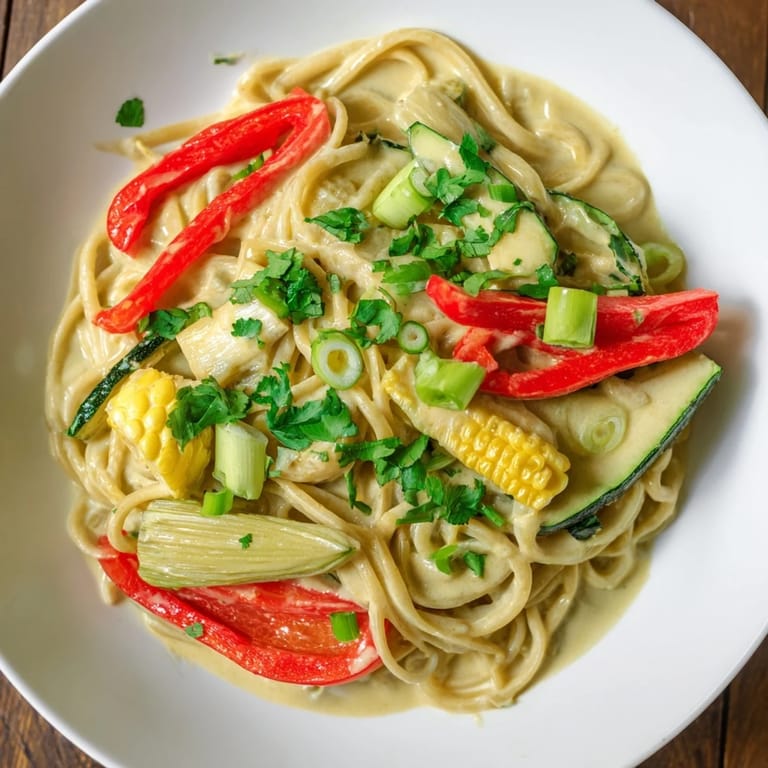
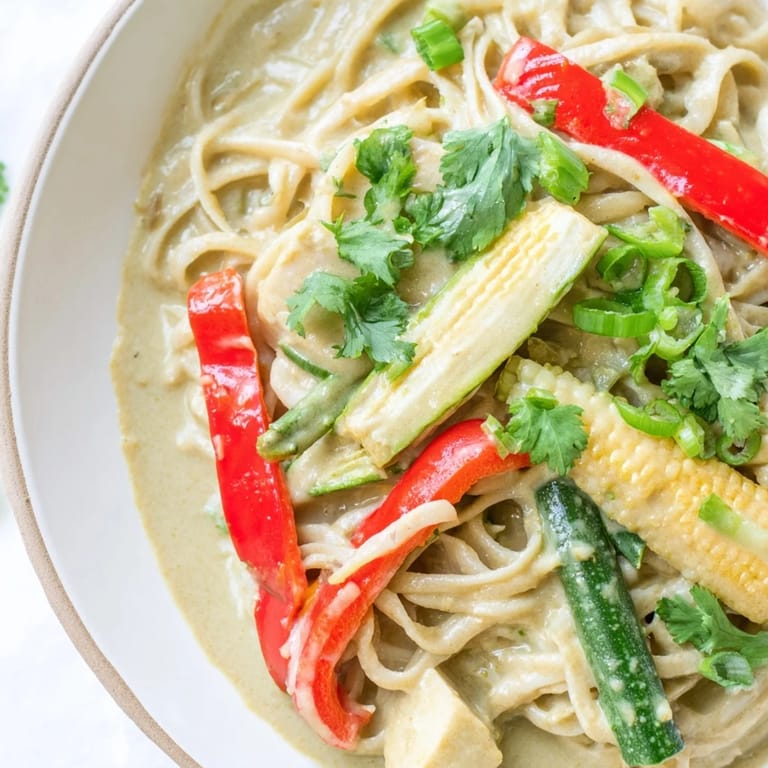
- Red bell pepper, zucchini, snap peas, baby corn: These vegetables stay crisp because they hit the pan at the right moment, and that contrast against creamy sauce is what makes your mouth happy.
- Fresh ginger (1 tsp grated): This tiny amount awakens the entire dish with brightness; it's the difference between a good sauce and one that tastes alive.
- Lime juice: The final squeeze cuts through richness and sharpens all the flavors into focus—never skip this step even if you're in a hurry.
- Spring onions and fresh cilantro: They go in at the very end to stay fresh and aromatic, adding personality to every spoonful.
Tired of Takeout? 🥡
Get 10 meals you can make faster than delivery arrives. Seriously.
One email. No spam. Unsubscribe anytime.
Instructions
- Get your water ready:
- Bring a large pot of salted water to a rolling boil and cook pasta to al dente—listen for when it stops resisting your teeth but before it gets soft. Reserve half a cup of that starchy cooking water before you drain; it's liquid gold for the sauce.
- Build the curry base:
- Heat oil in your skillet and let the curry paste and ginger bloom for a minute or two until your kitchen fills with that intoxicating aroma. You'll know it's ready when the paste turns a shade darker and smells like home.
- Create the sauce:
- Pour in coconut milk and stir in the soy sauce and brown sugar, letting everything simmer together for a few minutes so the flavors get acquainted. The sauce should smell rich and balanced, neither too salty nor too sweet.
- Add the vegetables:
- The red pepper, zucchini, snap peas, and baby corn go in next, and you're aiming for tender-crisp—when they still have a gentle bite. This takes about five to six minutes, and you'll notice the pan becomes a garden of color.
- Bring it all together:
- Toss in your drained pasta and that reserved pasta water, stirring everything so the sauce clings to every piece of pasta. A couple minutes of simmering lets the pasta drink in all those Thai flavors.
- Finish with brightness:
- Stir in spring onions, lime juice, and cilantro at the very end, tasting as you go because every curry paste brand tastes slightly different. Adjust the spice, salt, or sourness until it feels right to you.
 Save
Save There was an afternoon when I made this for my sister during her divorce, and she sat at my kitchen counter while the curry simmered, and something about that golden, creamy sauce seemed to make her exhale fully for the first time in weeks. Food isn't therapy, but sometimes a meal that tastes like care and comfort matters more than you'd expect.
Why Thai and Pasta Work Together
It sounds counterintuitive until you think about it—both cuisines understand that noodles are a canvas for bold, aromatic sauces. Thai curry paste brings heat and complexity while coconut milk adds luxury and texture, and pasta's mild creaminess somehow doesn't fight back but instead becomes a vehicle for the spices. The first time someone tells you this combination shouldn't work, you can smile knowingly because you've already tasted the proof.
Customizing Your Curry
This dish invites playing around—some nights I add a tin of chickpeas for extra protein and heartiness, other times I'll throw in sliced mushrooms or broccoli depending on what's in my crisper drawer. The beauty is that any vegetable you add will taste good because it's swimming in that magical sauce, and the dish never feels like you're improvising; it feels intentional. I've also experimented with different curry pastes (red is spicier, yellow is milder) and each one tells a slightly different story in the same dish.
Serving and Pairing Thoughts
I plate this with extra lime wedges because people love squeezing fresh brightness over top, and a sprinkle of cilantro makes every bowl look like it came from somewhere special. If you want to get fancy, toasted cashews add crunch, sliced red chili adds visual fire, and a crisp white wine like Riesling cuts through the richness perfectly without demanding attention.
- Serve immediately while the pasta is hot and the vegetables still have that satisfying snap.
- Leftovers actually improve overnight as flavors meld, though you might need to add a splash of coconut milk or water when reheating.
- This feeds four generously, but the recipe doubles easily if you're cooking for a crowd.
 Save
Save Every time I make this, I'm grateful for the moment I decided to trust an unusual combination, and I think you will be too. This is the kind of dish that becomes a regular in your rotation because it's simple enough for Tuesday but interesting enough to serve when you want to impress someone.
Recipe FAQs
- → Can I use gluten-free pasta for this dish?
Yes, gluten-free pasta works well and maintains the texture when paired with the green curry sauce.
- → How can I adjust the spice level?
Modify the amount of green curry paste or add sliced red chili to increase heat according to your preference.
- → What are good protein additions?
Adding cooked chicken, shrimp, or tofu can enhance protein content and complement the flavors.
- → Is there a vegan option available?
Yes, ensure the green curry paste is free of animal-based ingredients to keep the dish vegan-friendly.
- → What alternatives exist for vegetables?
Broccoli, carrots, or other crisp vegetables can substitute or supplement the listed veggies while maintaining texture.