 Save
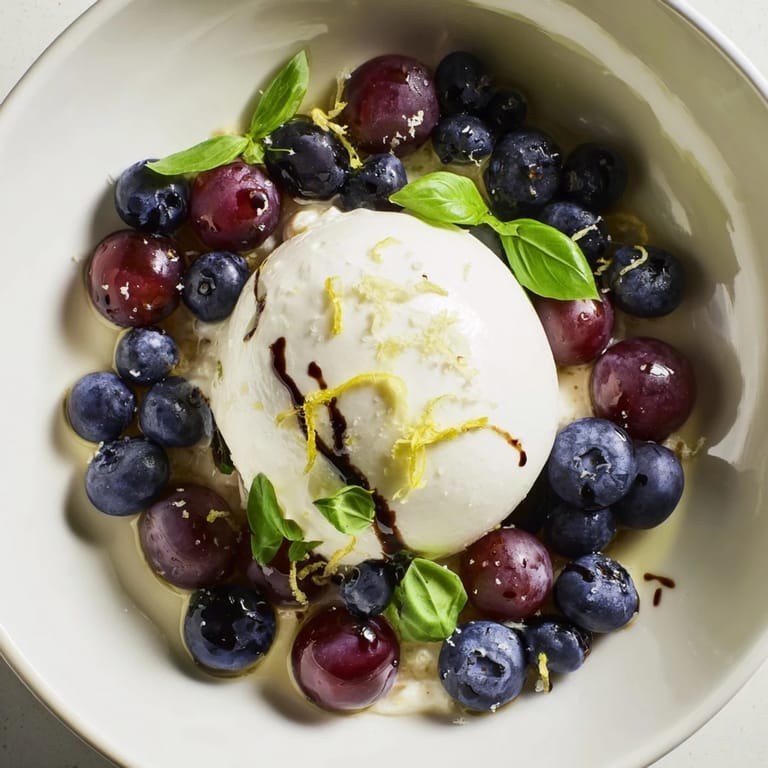
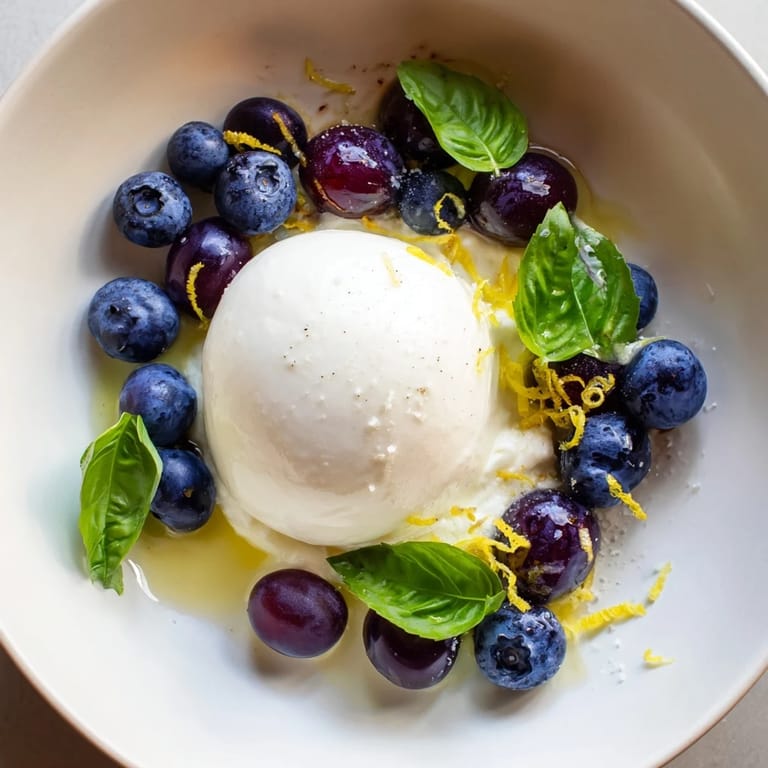
Save There's something about summer evenings that makes you want to create magic on a plate. I was sitting in my kitchen one July night, watching the full moon rise through the window, when I caught sight of a ball of burrata in my fridge alongside some just-picked blueberries from the farmer's market. Without planning anything formal, I started arranging them together—and suddenly I had this gorgeous moonlit scene staring back at me. That simple impulse turned into one of those dishes I keep making whenever I want to impress without the stress.
I made this for a dinner party where I'd invited friends with wildly different diets, and I was stressed about pulling together something everyone could enjoy. When I set down this salad, the table went quiet for a moment—not because anything was wrong, but because everyone just stared at it. A vegetarian friend teared up a little, saying it was the most beautiful plate she'd ever been served. That's when I realized this dish works because it feels like an occasion, even when you're just feeding yourself on a Tuesday.
Ingredients
- Fresh blueberries (1 cup): Look for berries that are deep blue and firm to the touch—they'll hold their shape better when arranged and taste noticeably sweeter.
- Seedless purple grapes (1 cup, halved): Halving them makes them easier to eat with a fork and helps the balsamic glaze cling to their surface.
- Burrata cheese (1 large ball, about 200g): This is the star—creamy, delicate, and worth seeking out at a good cheese counter or Italian market for the freshest version possible.
- Fresh basil leaves (1/3 cup, torn): Tear by hand rather than chopping to avoid bruising the delicate leaves and release their oils right before serving.
- Baby arugula or mixed greens (1 cup, optional): If you use it, choose tender leaves that won't overpower the subtle flavors of the fruit and cheese.
- Extra-virgin olive oil (2 tbsp): Use your best bottle here—its quality makes all the difference on a simply dressed salad.
- Balsamic glaze (1 tbsp): The reduced version is thicker and more intense than regular balsamic vinegar, so you need less of it.
- Sea salt and freshly ground black pepper: Always grind pepper fresh—pre-ground loses its spark.
- Lemon zest (from 1 lemon, optional): A fine microplane zester gives you delicate, bright flecks that add a subtle citrus note.
Tired of Takeout? 🥡
Get 10 meals you can make faster than delivery arrives. Seriously.
One email. No spam. Unsubscribe anytime.
Instructions
- Set your canvas:
- If you're using the greens, spread them across your serving platter or wide shallow bowl—think of this as the backdrop for your edible moon. This step takes barely a minute but makes the whole presentation feel intentional.
- Build the orbit:
- Scatter your blueberries and grape halves in a generous ring around the outer edge, leaving a clear space in the very center. Arrange them close enough to look abundant but loose enough that they don't feel cramped.
- Crown with the moon:
- Set the burrata ball right in the center of your fruit ring. It should sit there like the focal point—creamy, pale, and waiting to be broken into.
- Dress with care:
- Drizzle the olive oil evenly across everything—the fruit, the cheese, the greens if you used them. This isn't about drowning things; it's about a light, even coating that ties all the flavors together.
- Add the glaze:
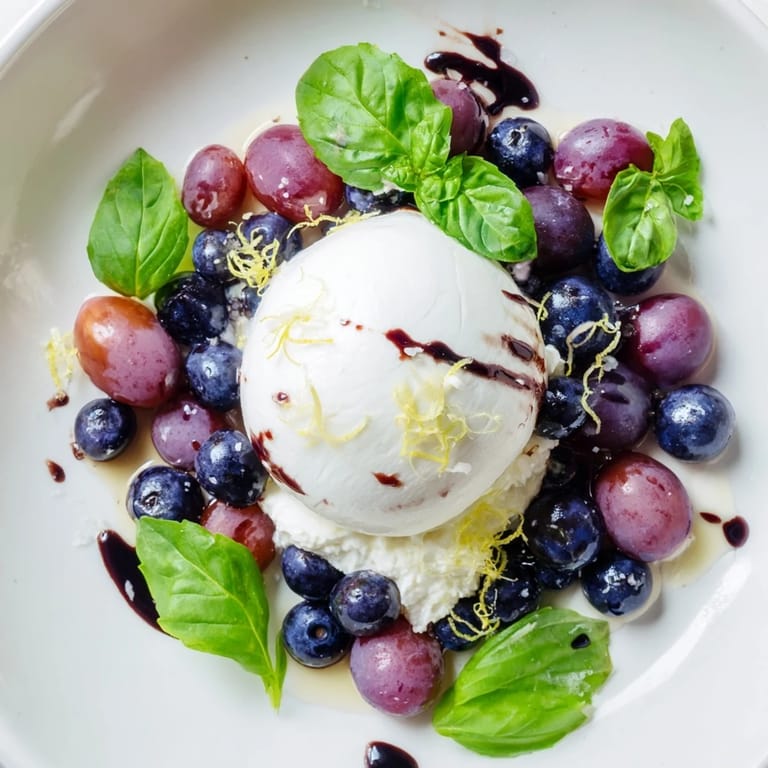
- Using a small spoon, drizzle the balsamic glaze in thin, deliberate streams over the berries and across the top of the burrata. Watch how it catches the light—this is where the magic happens.
- Finish and serve:
- Tear the basil leaves and scatter them over everything, then add lemon zest if you're using it, a pinch of sea salt, and a crack of fresh black pepper. Serve immediately while the burrata is still at its creamiest and the flavors haven't started to blur together.
 Save
Save I remember bringing this salad to a potluck where everyone else had made these hearty, heavy dishes, and watching my platter get emptied before the main course even arrived. One guest asked if it was a dessert—there's something about the bright berries and the soft, delicate cheese that makes people's eyes light up like they've stumbled onto something they didn't expect to find on a table. That moment cemented it for me: this isn't just food, it's a small piece of theater.
Why This Dish Works in Every Season
Summer feels like the obvious time for this salad, but I've learned it's far more versatile than that. In autumn, swap the berries for pomegranate seeds and add toasted hazelnuts for warmth. Even in cooler months, it reminds people that fresh, bright dishes don't have to hibernate—they just need a little reimagining. The idea of the burrata as a moon works no matter what time of year, and the technique of arranging fruit in a ring is something you can adapt to whatever's in season and looks beautiful.
Pairing and Serving Moments
I've learned that this salad sings most brightly as an opening course or a light lunch, not as a side dish competing for attention on a crowded plate. It deserves its own moment, preferably with good company and an unhurried pace. If you're thinking of wine, a crisp Sauvignon Blanc or dry rosé echoes the salad's delicate, fruity character without overshadowing it. Serve it with crusty bread for anyone who wants to wipe up the last bit of oil and glaze from their plate—that moment of soaking up the goodness is part of the experience.
Room for Play and Personalization
The beauty of this salad is that it's a framework, not a rigid formula. Once you've made it once and understood how the elements work together, you can start playing. I've added crispy pancetta for a friend who needed the salad to feel more substantial, roasted pistachios for texture, even a whisper of white balsamic when regular balsamic felt too dark. One summer, someone suggested blackberries instead of blueberries and it was stunning—deeper, slightly more tart, and somehow even more dramatic on the plate.
- Fresh mozzarella can stand in for burrata if you can't find it, though you'll miss that creamy surprise when you cut into it.
- Toast some nuts—pistachios, walnuts, or almonds work beautifully—and scatter them on top for an unexpected crunch.
- A tiny pinch of edible flowers like nasturtiums or pansies transforms it into something that feels like a special occasion dish.
 Save
Save Every time I make this, I'm reminded that some of the most memorable meals aren't about complexity or time spent cooking—they're about taking a moment to make something beautiful and sharing it with people you care about. That's the real magic of the moonlit lagoon.
Recipe FAQs
- → What is the best way to serve this salad?
Serve immediately on a wide platter to showcase the circular arrangement, paired with crusty bread or on its own as a light starter.
- → Can I substitute the berries used in the salad?
Yes, blackberries may replace blueberries for a different flavor profile while maintaining the balance of sweetness and tartness.
- → What cheese is featured in this salad?
The centerpiece is fresh burrata, prized for its creamy texture that complements the juicy fruits.
- → Are there any optional ingredients to enhance texture?
Toasted pistachios or walnuts can add a pleasant crunch and nutty depth to the dish.
- → Which dressing complements the salad components?
A simple mix of extra-virgin olive oil and a balsamic glaze adds richness and a mild tang that highlights the fresh ingredients.
- → What herbs are included in this salad?
Torn fresh basil leaves provide aromatic brightness and an herbal note that balances the sweetness of the fruit.