 Save
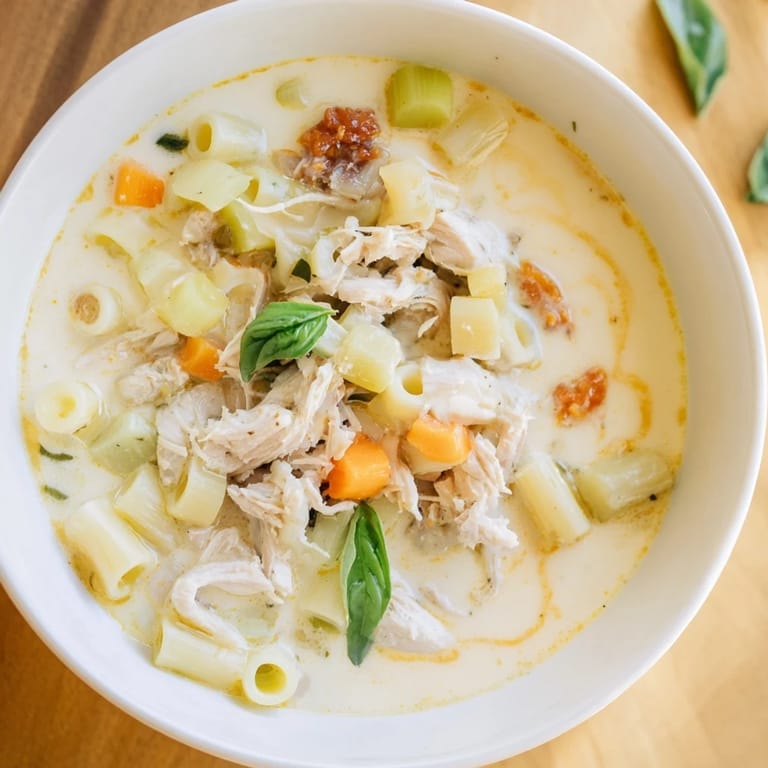
Save There's something about a steaming bowl of soup that stops you mid-sentence, mid-thought, mid-whatever else you were doing. I discovered this version of Marry Me Chicken on a Tuesday evening when I was too tired to think but too hungry to settle for leftovers, and something about the combination of sun-dried tomato sweetness and cream made me feel like I'd cracked a secret code in my own kitchen. The pasta softens into the broth, the chicken falls apart without fanfare, and suddenly you're spooning comfort into bowls like it's the easiest thing in the world. This soup has this gentle way of tasting like it took hours when you've really only invested fifty minutes.
I made this for my partner on our anniversary, thinking I'd do something fancy, and then realized halfway through prepping that this was exactly what we both wanted—something warm, unhurried, something that said I care without saying it too loudly. We sat with the windows open even though it was cool outside, and the soup steamed up our glasses while we talked about nothing important, everything comfortable. That's when I understood that this soup wasn't just dinner; it was permission to slow down.
Ingredients
- Boneless, skinless chicken breasts: Two medium ones give you tender meat that shreds easily; don't skip the searing step because that golden exterior adds flavor even though the chicken finishes cooking in the broth.
- Olive oil: Use a good one you'd actually want to taste, but save the expensive bottle for finishing—a standard extra virgin works perfectly here.
- Yellow onion, carrots, and celery: This is your flavor foundation; dice them small enough that they soften quickly but large enough that you can still see them in the finished soup.
- Garlic cloves: Three is the sweet spot; mince them fine so they dissolve into the broth rather than sitting in chunks.
- Sun-dried tomatoes: The ones packed in oil are worth it—they're already soft and flavorful, unlike the dried kind that need extra time to soften.
- Chicken broth: Low-sodium is non-negotiable because you're building flavor through cooking, and you want control of the salt level.
- Heavy cream: The real thing makes a difference; cream alternatives break or separate when you're not looking.
- Parmesan cheese: Freshly grated melts into the broth like it was always meant to be there; the pre-grated stuff gets grainy and separated.
- Ditalini pasta: Small tubes that catch broth in every bite; if you can't find it, tiny shells or even small broken spaghetti pieces work in a pinch.
- Dried oregano and thyme: These are doing the seasoning work, so make sure they're not from the back of your cabinet where they've been sitting for two years.
- Bay leaf: It adds a subtle herbal note that people can't quite identify but absolutely notice when it's missing.
- Fresh basil: Save this for the very end as garnish; it adds brightness and a reminder that this soup is alive, not a relic.
Tired of Takeout? 🥡
Get 10 meals you can make faster than delivery arrives. Seriously.
One email. No spam. Unsubscribe anytime.
Instructions
- Season and sear your chicken:
- Pat the chicken breasts dry with paper towels, then sprinkle them generously with salt and pepper on both sides. Heat olive oil in your pot until it's shimmering—you want it hot enough that the chicken sizzles immediately when it hits the pan, which means you're locking in flavor.
- Build your aromatics:
- Once the chicken is golden and set aside, add your diced onion, carrots, and celery to the oil still in the pot. You'll hear them hit the heat with a satisfying sound; let them cook until they soften and the onion turns translucent, stirring occasionally so nothing sticks.
- Wake up the seasonings:
- Add the minced garlic and let it toast for just a minute until your kitchen smells like someone who knows what they're doing. Stir in the sun-dried tomatoes, oregano, thyme, and red pepper flakes if you want a whisper of heat.
- Bring everything together:
- Pour in the chicken broth and water, add the bay leaf, and nestle the chicken breasts back into the pot. Watch it come to a boil, then lower the heat so it's simmering gently—you want tiny bubbles, not a rolling boil that will make the chicken tough.
- Let it simmer and cook through:
- Fifteen to twenty minutes is all you need; the chicken will go from pink to white, the vegetables will soften, and the broth will start to taste like it's been cooking for hours. You'll know it's ready when a fork easily pulls the chicken apart.
- Shred and return:
- Remove the chicken to a cutting board and use two forks to pull it into tender strands—it should fall apart without much resistance. Return it to the pot where it can soak up all that flavor you've built.
- Add the pasta:
- Stir in the ditalini and let it cook until it's just barely tender, about eight to ten minutes. Taste a piece to make sure it's the texture you like; al dente is best because it will soften slightly as you eat.
- Finish with cream and cheese:
- Lower the heat so everything is barely simmering, remove the bay leaf, then stir in the heavy cream slowly, letting it warm through without boiling. Add the Parmesan and stir until it's completely melted and incorporated, creating a silky broth.
- Taste and adjust:
- This is your moment to add more salt, pepper, or even a crack more cheese if something feels like it needs it. Trust your instincts—you know your own palate.
 Save
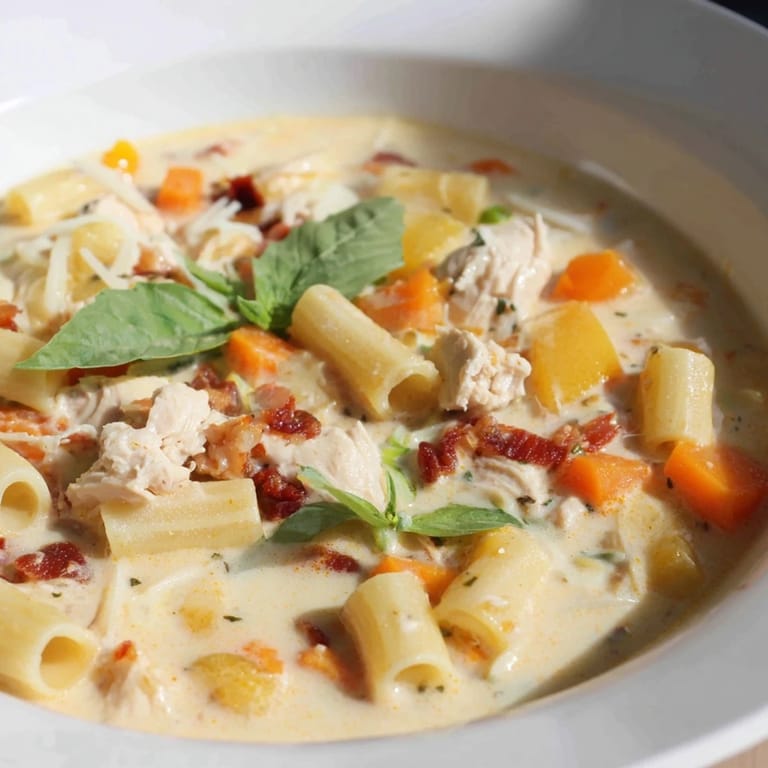
Save The first time this soup lived up to its name was when someone I barely knew came to dinner and left three hours later because we couldn't stop talking. Good food does that—it becomes the reason to stay, the excuse to linger. That's when I realized this soup isn't trying to marry anyone; it just creates the conditions where people want to stick around.
Why This Soup Works
The magic here is in the balance—you've got the earthiness of the broth, the subtle tang of sun-dried tomatoes, the creaminess that makes it feel indulgent, and the pasta that gives you something to chew on. None of these elements overpowers the others; instead they work like a small orchestra where every instrument gets a moment. The chicken is just a vehicle for everything else, which is why it doesn't matter if it's not the most exciting meat on its own.
Timing and Make-Ahead Strategy
I've made this on weeknights when I needed dinner in an hour and on lazy Sundays when I had nowhere to be, and it works both ways. You can prep all your vegetables in the morning and store them in containers, which means when you get home, you're really just executing a straightforward sequence. If you're making it ahead, cook everything except the pasta and cream, then finish those steps when you're ready to serve so the pasta doesn't turn into mush.
Variations and Swaps You Can Make
This recipe is flexible enough to bend with what you have or what you're craving. I've made it with rotisserie chicken when I was exhausted and it cut the cooking time in half, and I've added spinach or kale in the last few minutes for extra greens and a subtle bitterness that balances the cream. Some people finish it with a squeeze of lemon juice, which brightens everything up; others add a splash of white wine along with the broth for a more sophisticated edge. The structure is strong enough that these additions feel like evolution, not desperation.
- Rotisserie chicken works beautifully and saves you twenty minutes if you're short on time.
- Fresh spinach or kale stirred in at the end adds nutrition and a welcome contrast to the creaminess.
- A splash of dry white wine added with the broth deepens the flavor if you want more complexity.
 Save
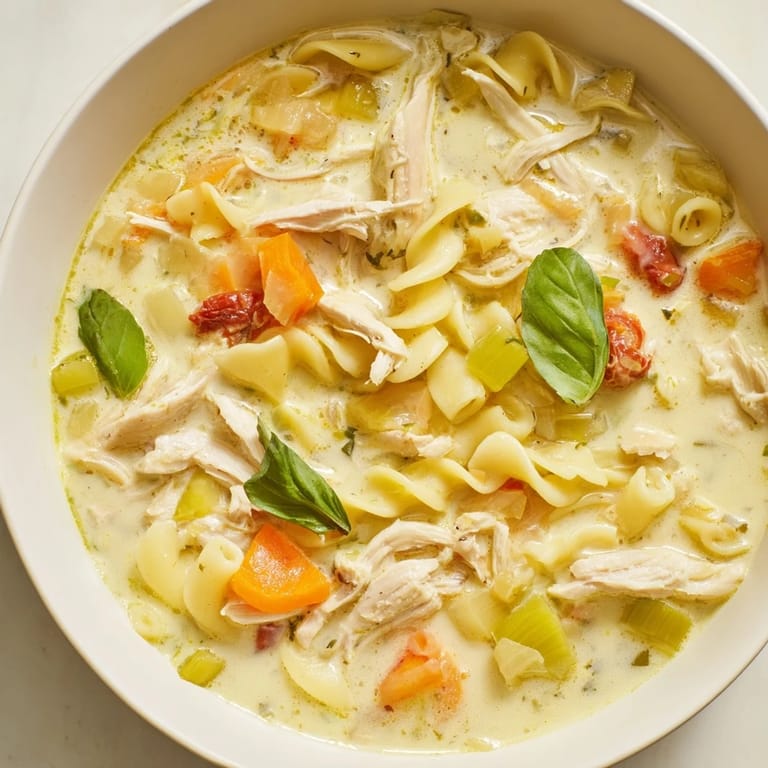
Save This is the kind of soup that becomes part of your rotation, the one you make when someone you love is sick or tired or just needs to feel cared for through food. It's unpretentious, honest, and somehow always exactly right.
Recipe FAQs
- → What type of pasta is used in this dish?
Ditalini pasta is used, small tube-shaped pasta that cooks quickly and pairs well with the creamy broth.
- → Can I use rotisserie chicken for faster preparation?
Yes, shredded rotisserie chicken can be added in place of cooking chicken breasts, reducing cooking time significantly.
- → How do the sun-dried tomatoes affect the flavor?
Sun-dried tomatoes add a concentrated, sweet, and slightly tangy depth that complements the creamy broth and tender chicken.
- → Is it possible to make this dish spicier?
Yes, incorporating red pepper flakes adds a gentle heat, which can be adjusted according to your taste preference.
- → What herbs enhance the overall taste?
Dried oregano and thyme infuse the dish with earthy, aromatic notes, enhancing the savory components beautifully.
- → Are there suggested garnishes for this dish?
Fresh basil leaves make a vibrant garnish, adding a fresh herbal brightness to the creamy and rich base.