 Save
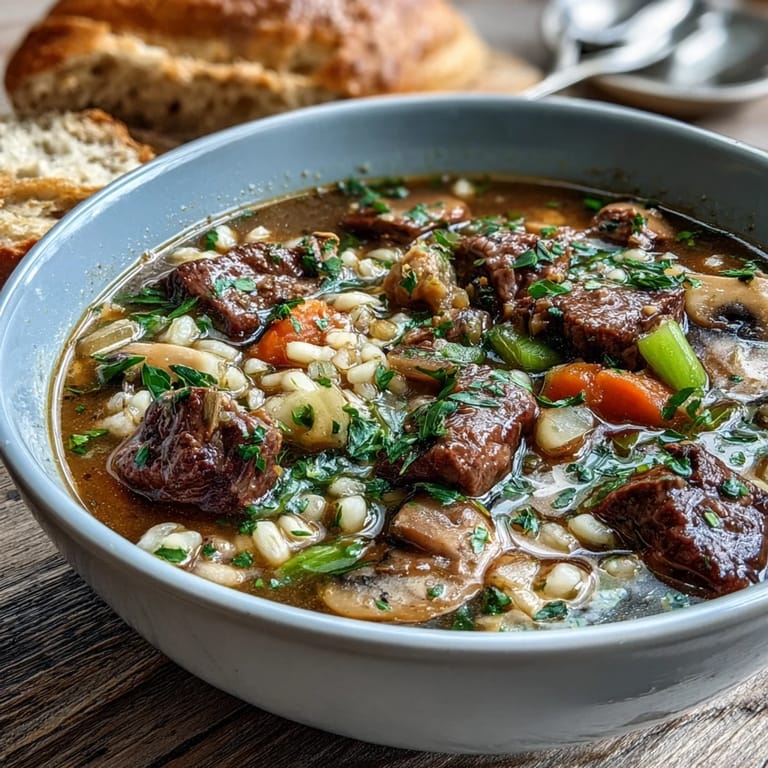
Save My dad used to make beef and barley soup on the coldest days of the year, and somehow he knew exactly when we needed it most. There was something about watching him brown the meat while the kitchen filled with that deep, savory smell that made everything feel manageable again. Years later, I realized he wasn't just making soup—he was making a ritual, one that I've carried into my own kitchen. This version is my attempt to capture that feeling, minus the pressure to be perfect.
I learned to make this properly when a friend showed up at my door on a really rough Monday with a container of homemade beef and barley soup. She didn't make a big deal about it, just left it in my fridge with a note that said "heat when you're ready." That gesture taught me more about cooking for people than any recipe ever could, and now I find myself making big batches just to have on hand for moments like that.
Ingredients
- Beef stew meat: Cut into 1-inch cubes for even cooking and that tender, melt-in-your-mouth texture that makes this soup special.
- Pearl barley: Rinse it first to remove any starch, then watch how it plumps up and thickens the broth into something almost luxurious.
- Carrots: Two medium ones, peeled and diced into bite-sized pieces that cook down but still hold their shape.
- Celery stalks: Two stalks diced fine, because they're the quiet backbone of this soup's flavor.
- Large onion: Chopped into chunks that will soften and almost disappear into the broth, adding sweetness.
- Garlic: Two cloves minced, added after the vegetables have started to soften so it doesn't burn.
- Potatoes: One cup peeled and diced, they add heartiness and help thicken the broth naturally.
- Mushrooms: One cup sliced, they bring an earthy depth that balances the beef.
- Frozen peas: One cup, added near the end to stay bright and tender.
- Diced tomatoes: Optional, but they add a subtle tang that pulls everything together.
- Beef broth: Eight cups is the right amount to let everything float and mingle without being too thick.
- Bay leaves, thyme, and parsley: These dried herbs are easier than fresh and actually stronger, which matters in a long simmer.
- Olive oil: Two tablespoons to get the beef browning properly without sticking.
- Salt and black pepper: Taste as you go, because you might not need as much as you think.
Tired of Takeout? 🥡
Get 10 meals you can make faster than delivery arrives. Seriously.
One email. No spam. Unsubscribe anytime.
Instructions
- Brown your beef:
- Heat the olive oil in a large pot over medium-high heat until it shimmers, then add the beef cubes in a single layer. Let them sit for a couple of minutes before you stir—this is how you get that golden crust that tastes like comfort. It takes about five minutes total, and you'll know it's done when the meat has color on all sides.
- Build the flavor base:
- In that same pot with all the beef drippings, add your onions, carrots, celery, and mushrooms. The sizzle you hear is a good sign, and you're looking for them to soften and start to release their own sweetness, which takes about five minutes.
- Add the garlic:
- Once the vegetables have softened, add your minced garlic and stir constantly for just one minute. This is the moment where your kitchen smells like pure possibility.
- Bring it all together:
- Return the beef to the pot and stir in the potatoes, barley, tomatoes if you're using them, beef broth, bay leaves, thyme, and parsley. You're going to bring this to a boil first, then immediately turn it down to low heat and cover it.
- Let it simmer:
- Cover the pot and let everything work together for an hour, stirring every so often so the barley doesn't settle at the bottom. The beef will become tender, the barley will soften, and the whole thing will smell incredible.
- Finish with the peas:
- After an hour, add the frozen peas and let it simmer uncovered for twenty to thirty minutes more. The peas will soften while you adjust the seasoning with salt and pepper.
- Serve:
- Remove the bay leaves, take one more taste to make sure the seasoning is right, and ladle it into bowls. Serve it hot with crusty bread and maybe a glass of something red.
 Save
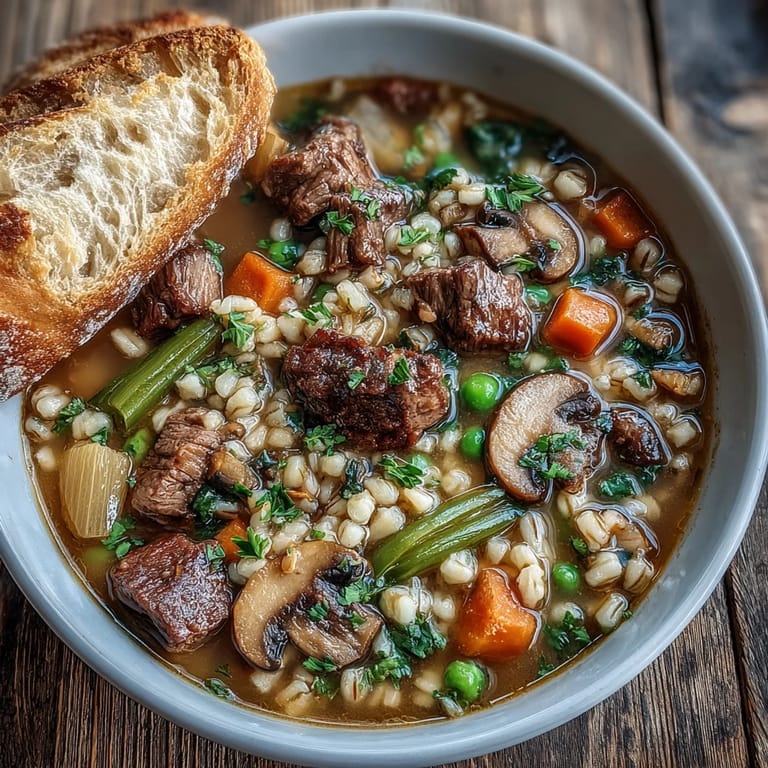
Save My neighbor tasted this soup once and asked if I'd add carrots instead of celery next time because her daughter was picky. The next week she told me that her kid actually ate every spoonful, and it was the first time in months she'd seen her try something new. That's when I realized this soup isn't just about the ingredients or the technique—it's about feeding people in a way that makes them feel seen.
Why Barley Changes Everything
Before I understood barley, I made beef soup that felt thin and one-note, no matter how long I simmered it. Then someone explained that barley releases its starch into the broth, which is why the soup thickens on its own and becomes creamy without any cream at all. Now I buy it in bulk because it's become my secret ingredient for turning simple soups into something that feels substantial and luxurious.
Make It Your Own
This recipe is a foundation, not a rule book, and the best versions I've made came from playing with what I had on hand. I've added parsnips instead of potatoes, used ground beef instead of cubes on nights I was in a hurry, and even stirred in leftover roasted vegetables from the fridge. The barley and beef broth are the constants, but everything else can shift depending on the season or what's sitting in your vegetable drawer.
Storage and Reheating
This soup actually tastes better the next day because the flavors have more time to find each other. I keep it in the fridge for up to four days, and it freezes beautifully for up to three months if you use a container that won't crack. When you reheat it, add a splash of water or broth because the barley keeps absorbing liquid, and always taste it again before serving because salt can fade.
- Let it cool completely before refrigerating to avoid temperature shock in your fridge.
- Freeze it in individual portions so you can thaw just what you need on a bad Tuesday night.
- If it's too thick after sitting, thin it with a bit of extra broth when you reheat it.
 Save
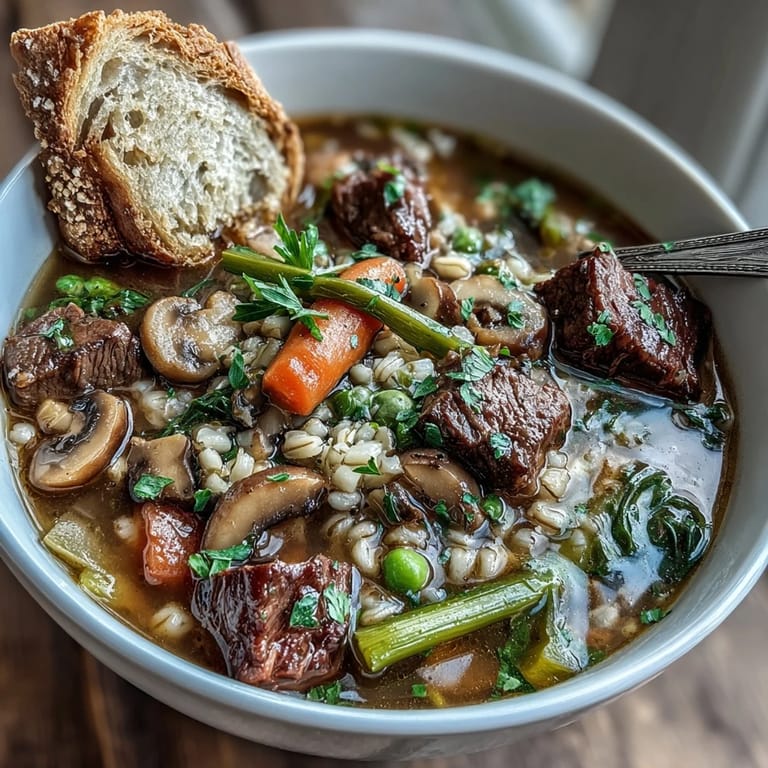
Save This soup is what I make when I want to say "I'm thinking of you" without making it complicated. There's something about a warm bowl that does more than fill your stomach—it reminds you that someone took the time to make something that lasts.
Recipe FAQs
- → How long should I cook the beef?
The beef needs about 1 hour and 20 to 30 minutes of simmering to become tender. This slow cooking breaks down the connective tissue, resulting in melt-in-your-mouth meat.
- → Do I need to soak the barley first?
No soaking is required for pearl barley. Simply rinse it before adding to the soup. It will cook completely during the simmering process.
- → Can I make this in a slow cooker?
Absolutely. Brown the beef first, then add all ingredients to your slow cooker. Cook on low for 7-8 hours or high for 4-5 hours. Add the peas during the last 30 minutes.
- → How do I store leftovers?
Refrigerate for up to 4 days in an airtight container. The soup actually tastes better the next day as flavors continue to develop. Freeze for up to 3 months.
- → What cut of beef works best?
Chuck roast or stew meat are ideal choices. These cuts have enough marbling and connective tissue to become tender and flavorful during long simmering.
- → Can I make this gluten-free?
Replace pearl barley with rice or quinoa and ensure your beef broth is certified gluten-free. The cooking time may need adjustment depending on the grain substitute.