 Save
Save There's something about standing over a pot of onions as they transform from sharp and pungent to something almost sweet and amber-colored that makes you understand why the French built an entire soup around them. I discovered this soup not in Paris, but in my own kitchen on a cold November evening when I had little more than onions, some broth, and curiosity driving me forward. What started as an experiment in patience became the kind of dish you crave when the weather turns and you need something that feels both comforting and sophisticated at once.
I made this for my neighbor last winter when she was recovering from surgery, and I'll never forget how she teared up a little when she tasted it, saying it was exactly what she needed to feel human again. That moment taught me that French onion soup isn't just technique or ingredients—it's an act of care that happens to be delicious.
Ingredients
- Yellow onions (4 large): These are your foundation, and their natural sugars are what create that deep, glossy caramel color that makes this soup sing—don't skip the slicing step or rush the cooking.
- Leeks (2 large): They add a subtle, refined onion-like flavor without the bite, and cleaning them thoroughly between layers prevents any grit from sneaking into your finished soup.
- Shallots (3): These bring a whisper of sophistication and a hint of sweetness that rounds out the onion family beautifully.
- Garlic (3 cloves): Added late in the cooking so it doesn't burn and turn bitter, garlic deepens the savory notes without overpowering the delicate caramelization.
- Unsalted butter and olive oil (3 tablespoons and 2 tablespoons): The butter provides richness while the oil prevents it from burning at the higher heat needed for proper caramelization.
- Beef broth (8 cups): Use the best quality you can find or make your own—this is where your soup's foundation lives, and mediocre broth will show in every spoonful.
- Worcestershire and soy sauce (1 tablespoon and 2 teaspoons): These aren't detectable as individual flavors but work quietly to amplify the umami and make the soup taste more like itself.
- Dry white wine (1/2 cup): This lifts the soup with acidity and complexity, preventing it from tasting flat or one-note.
- Fresh thyme and bay leaf: Thyme adds an herbal whisper while the bay leaf sits quietly in the background, integrating flavors together.
- Baguette (1): Look for a rustic loaf with a good crust that will toast up crispy rather than soggy.
- Gruyère cheese (2 cups): This cheese melts beautifully and has a nutty, complex flavor that stands up to the deep soup without getting lost.
- Parmesan (1/2 cup optional): A little extra Parmesan adds sharpness and helps the top get extra crispy and golden.
Tired of Takeout? 🥡
Get 10 meals you can make faster than delivery arrives. Seriously.
One email. No spam. Unsubscribe anytime.
Instructions
- Heat your fat and get ready to caramelize:
- Pour butter and olive oil into your Dutch oven over medium heat, and let them warm together until you can smell the butter becoming fragrant. The combination prevents the butter from burning while giving you that rich flavor you're after.
- Cook your onions low and slow:
- Add all your sliced onions, leeks, and shallots to the pot and stir them every few minutes, being patient as they slowly release their moisture and begin to turn golden. This takes about 35 to 40 minutes, and you'll watch them transform from a big pile of raw vegetables into something glossy and caramel-colored—don't rush this part, as it's the entire soul of the soup.
- Add garlic at the right moment:
- Once your onions are deep golden and soft, add your minced garlic and cook for just 2 minutes more, stirring constantly so it doesn't burn. You're looking for fragrant, not brown.
- Deglaze with wine:
- Pour in your white wine and use a wooden spoon to scrape up all those brown, flavorful bits stuck to the bottom of the pot—that's liquid gold in terms of flavor. Let it bubble away for a minute or two until the raw alcohol smell fades.
- Build your broth base:
- Stir in your beef broth, Worcestershire sauce, soy sauce, fresh thyme, and bay leaf, then bring everything to a gentle simmer. Reduce the heat and let it cook uncovered for about 30 minutes, stirring occasionally, so the flavors have time to marry together.
- Taste and season:
- Remove the bay leaf and taste your soup, adding salt and pepper until it tastes rich and balanced—remember that the cheese topping will add saltiness, so be gentle here.
- Toast your bread:
- Preheat your broiler and arrange baguette slices on a baking sheet, then slide them under the heat for about 1 to 2 minutes per side until they're golden and crispy. Watch them carefully because they can go from golden to burnt in seconds.
- Assemble your bowls:
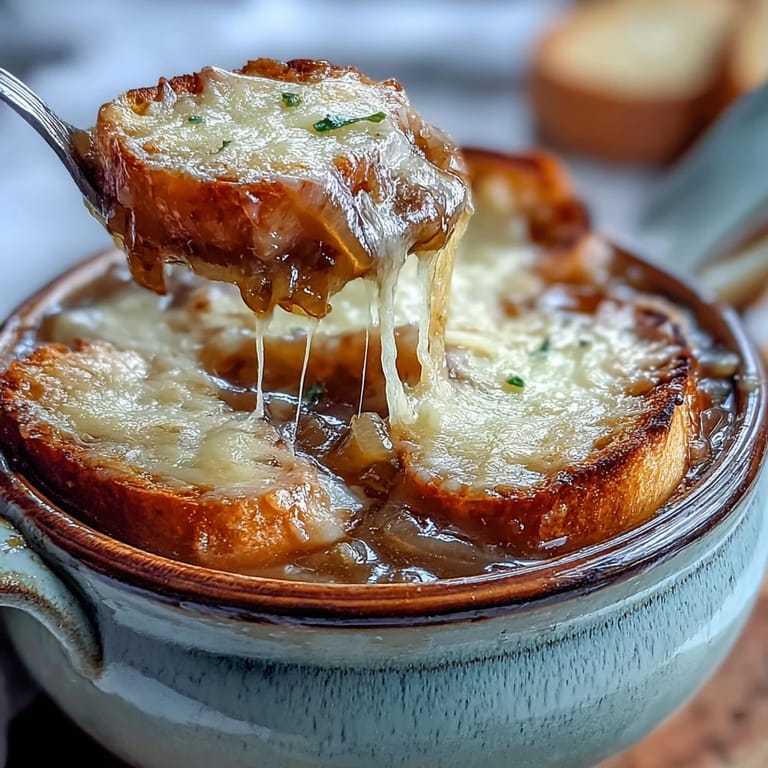
- Ladle your hot soup into oven-safe bowls and top each one with a couple of toasted baguette slices, followed by a generous handful of grated Gruyère and a sprinkle of Parmesan if you're using it. Don't be shy with the cheese—this is the whole point.
- Finish under the broiler:
- Place your bowls under the broiler for 3 to 5 minutes until the cheese is melted, bubbling, and turning golden brown at the edges. The cheese will continue to cook and brown even after you pull it out, so pull it a hair earlier than you think you need to.
- Serve immediately:
- Bring your bowls straight to the table while everything is still steaming and molten—this soup is all about that moment when cheese meets hot soup.
 Save
Save There was an afternoon when my teenage daughter came home from school in a mood, tossed her backpack aside, and one bowl of this soup somehow turned the whole day around. It's a quiet reminder that the most nourishing meals aren't always about impressing people—sometimes they're just about showing up with something warm and genuine.
The Art of Caramelization
Caramelizing onions is less about technique and more about understanding what's happening chemically in your pot. The natural sugars in the onions are slowly breaking down and transforming into hundreds of new flavor compounds, which is why the smell changes so dramatically over those 35 minutes. I learned this the hard way when I once tried to speed up the process by cranking the heat, only to end up with onions that tasted burnt and bitter—now I respect the slow burn, literally and figuratively.
Why Quality Broth Matters More Than You Think
A homemade beef broth makes this soup transcendent, but a good store-bought version works beautifully too—the key is tasting it before you use it and making sure it tastes like actual beef, not salt and sadness. I once made this soup with a mediocre broth that looked right but tasted thin, and I spent the rest of the cooking time trying to add depth where there wasn't any foundation to build on. Now I always taste my broth cold, straight from the container, because that's when you'll notice if it's lackluster.
Variations and Flexibility
This soup is confident enough in itself to welcome a few friends into the pot. For a vegetarian version, swap the beef broth for a rich mushroom or vegetable broth and skip the Worcestershire sauce—or find a vegetarian-friendly version—and you'll barely miss the beef. A splash of sherry or cognac stirred in with the wine creates a more luxurious version, while Swiss or Emmental cheese work just as well as Gruyère if that's what you have on hand.
- If your baguette is already a day or two old, it actually toasts better than fresh bread because it's drier and crisps up faster.
- You can make the soup completely ahead of time and refrigerate it for up to three days, then assemble and broil just before serving for maximum cheese melting drama.
- Some people place the bowls on a baking sheet before broiling to catch any cheese overflow and make handling easier.
 Save
Save French onion soup asks you to slow down and trust the process, and in return it gives you a bowl of pure comfort that tastes like it came from a centuries-old bistro kitchen. There's real magic in that trade-off.
Recipe FAQs
- → How do you get the onions properly caramelized?
Cook the sliced onions, leeks, and shallots over medium heat with butter and olive oil for 35-40 minutes, stirring frequently. The key is patience—let them turn deep golden brown and develop natural sweetness. This slow caramelization process creates the soup's signature rich flavor and dark color.
- → What type of broth works best?
High-quality beef broth provides the traditional depth and umami flavor. For a vegetarian version, use a rich vegetable broth and substitute the Worcestershire sauce with a vegetarian alternative or additional soy sauce for that savory element.
- → Can I make this soup ahead of time?
Yes, the soup base actually improves after resting in the refrigerator for 1-2 days as flavors meld together. Store the soup and bread separately. When ready to serve, reheat the soup, toast fresh bread slices, and broil the cheese topping just before serving for the best texture.
- → What cheese alternatives can I use?
Gruyère is traditional for its nutty flavor and excellent melting properties. Swiss cheese or Emmental make good substitutes with similar characteristics. Parmesan adds extra savory depth when combined with Gruyère. Avoid pre-shredded cheese as it doesn't melt as smoothly.
- → How do I achieve the perfect cheese topping?
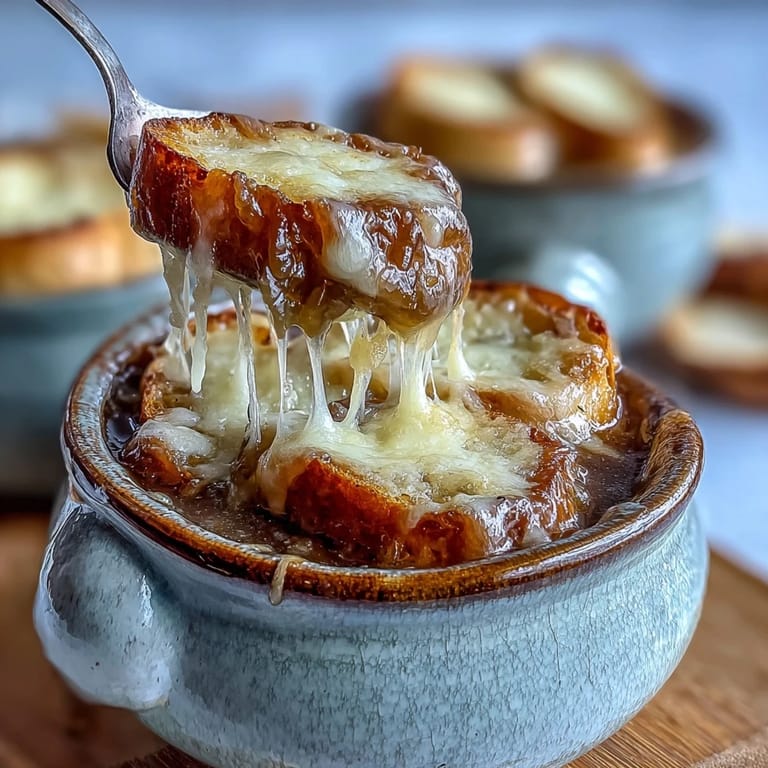
Use oven-safe bowls and fill them with hot soup. Arrange toasted baguette slices on top, then cover generously with grated Gruyère. Place under the broiler for 3-5 minutes, watching closely to prevent burning. The cheese should be melted, bubbly, and lightly golden in spots.
- → What wine works in this soup?
A dry white wine like Sauvignon Blanc or Pinot Grigio works well to deglaze the pot after caramelizing the onions. The wine adds acidity and complexity that balances the sweet onions and rich broth. For extra depth, you can also add a splash of sherry or cognac.