 Save
Save The sizzle hitting a hot pan on a Tuesday night still stops me in my tracks, even after years of weeknight cooking. Something about that sound promises dinner will actually be good tonight, not just edible. I started making hibachi at home after a particularly memorable restaurant birthday dinner where the chef flipped shrimp into his hat. My version lacks the theatrics but keeps all the flavor.
My teenage son actually asked for seconds, which is basically the highest compliment possible in my house. His friend was over for dinner that night and kept saying wait, you MADE this, like home cooking versus restaurant food was some kind of magic trick.
Ingredients
- Sirloin steak: Cut into cubes right before marinating so the coating sticks better to fresh surfaces
- Low-sodium soy sauce: Regular soy sauce makes everything unbearably salty once the rice reduces
- Cold day-old rice: Fresh rice turns into mush, while cold rice grains separate perfectly
- Sesame oil: A little goes a long way, but it is absolutely essential for that authentic hibachi aroma
- Unsalted butter: The secret ingredient restaurant hibachi chefs always use at the very end
Tired of Takeout? 🥡
Get 10 meals you can make faster than delivery arrives. Seriously.
One email. No spam. Unsubscribe anytime.
Instructions
- Marinate the steak:
- Combine cubed steak with soy sauce, mirin, sesame oil, garlic, and pepper, letting it sit for at least 10 minutes while you chop everything else.
- Sear the beef:
- Heat one tablespoon of oil in a large skillet over medium-high heat, then cook the marinated steak for 2 to 3 minutes until browned but still tender.
- Cook the vegetables:
- Add the remaining oil to the same pan and sauté onion, carrots, zucchini, and mushrooms for 4 to 5 minutes until just softened.
- Scramble the eggs:
- Push everything to the sides, pour beaten eggs into the cleared center space, and scramble until just set.
- Combine everything:
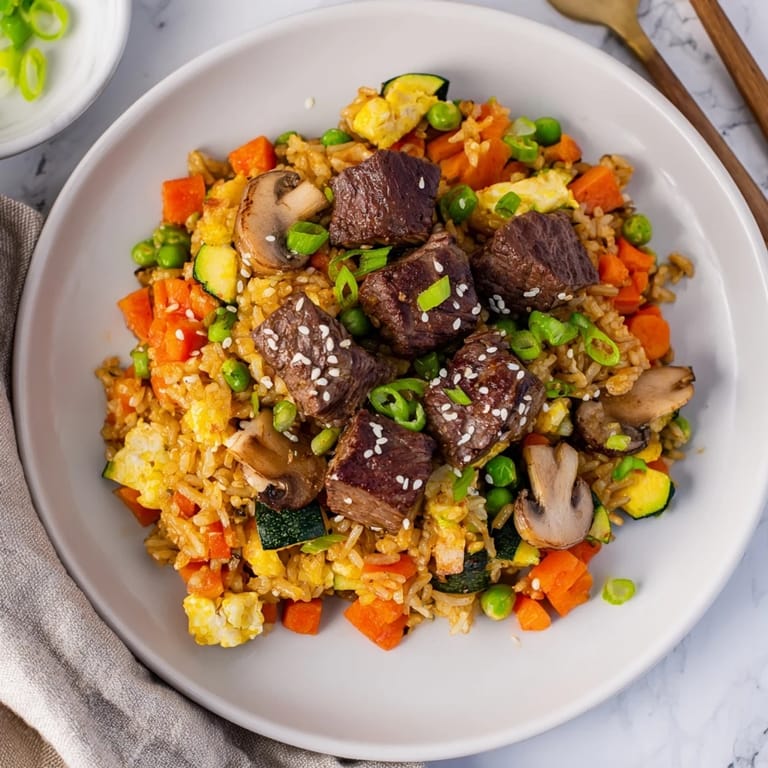
- Add rice, peas, cooked steak, and soy sauce to the pan, tossing constantly to break up rice clumps and distribute ingredients evenly.
- Finish with butter:
- Stir in butter and half the green onions, cooking for 2 to 3 more minutes until the rice gets slightly crispy and everything is heated through.
 Save
Save This recipe has become my go-to for exhausted weeknights when takeout sounds tempting but I know I will feel better about myself if I cook something real. The leftovers reheat surprisingly well for lunch the next day.
Getting That Restaurant Sizzle
Medium-high heat is your friend here. If the pan is not making noise, it is not doing its job. I used to be afraid of high heat, but hibachi is all about quick cooking over serious flames. Do not crowd the pan when searing the steak, or it will steam instead of brown.
Ripening Your Rice
Spread freshly cooked rice on a baking sheet and refrigerate it uncovered for at least a few hours, ideally overnight. The grains dry out just enough to develop that perfect separate texture when fried. I have tried shortcuts, but nothing compares to properly aged rice.
Protein Swaps That Work
Shrimp cooks in about 2 minutes and needs to be added at the very end to prevent rubbery texture. Chicken thighs work beautifully if you slice them thin against the grain.
- Diced firm tofu makes this vegetarian while still feeling substantial
- Leftover rotisserie chicken shreds easily into the rice during the last few minutes
- Pork loin strips need about 4 minutes to cook through before adding vegetables
 Save
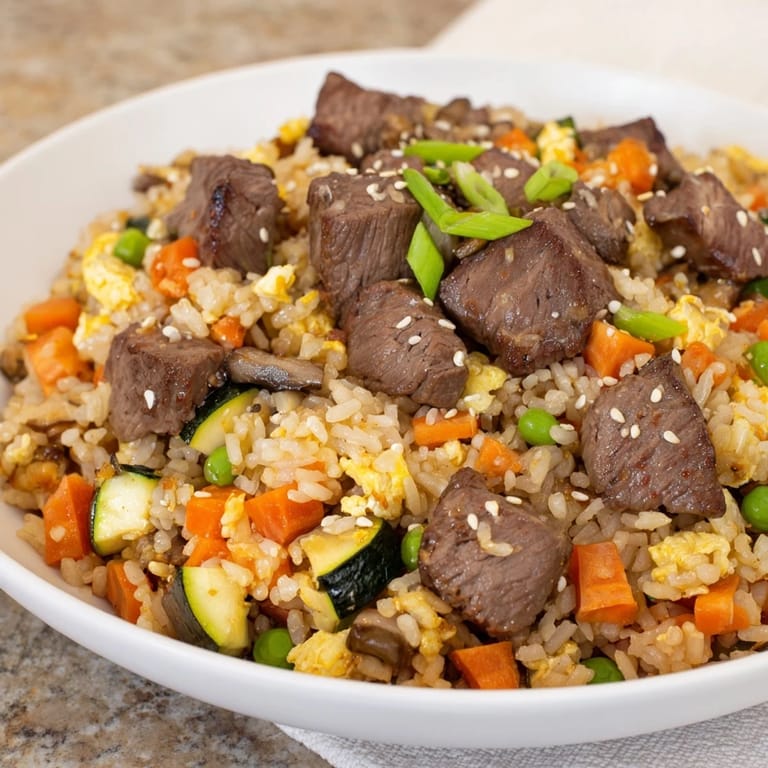
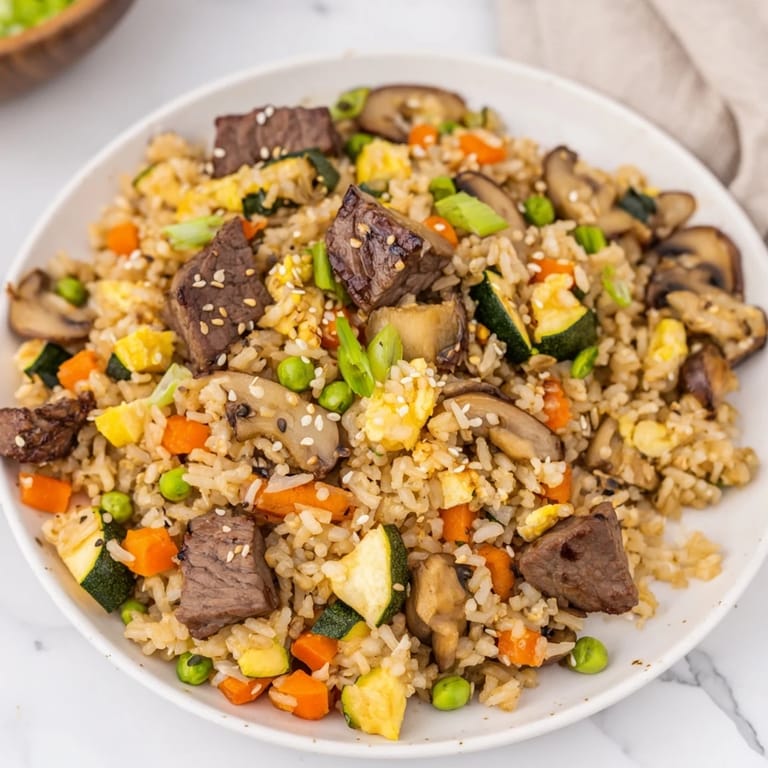
Save Garnish with extra green onions and sesame seeds right before serving to make it look like you tried harder than you actually did.
Recipe FAQs
- → Can I use fresh rice instead of day-old?
Fresh rice tends to become mushy when fried. For the best texture, spread cooked rice on a baking sheet and refrigerate for at least 2-3 hours before using. If you must use fresh rice, reduce the liquid slightly and cook it a day ahead.
- → What cut of steak works best for hibachi?
Sirloin is ideal for its balance of tenderness and flavor. You can also use ribeye, New York strip, or flank steak. Cut against the grain into 1-inch cubes for even cooking and maximum tenderness.
- → How do I prevent the rice from sticking to the pan?
Use a well-seasoned wok or non-stick skillet with enough oil. Keep the heat at medium-high and stir constantly. Cold, day-old rice naturally separates better than warm, freshly cooked rice.
- → Can I make this vegetarian?
Replace steak with extra firm tofu cubed and pressed, or add more vegetables like bell peppers, broccoli, and snap peas. Use oyster sauce or mushroom sauce instead of the steak marinade for umami flavor.
- → What vegetables work best in hibachi fried rice?
Classic hibachi vegetables include onion, carrots, zucchini, mushrooms, and peas. You can also add bean sprouts, bell peppers, broccoli, or baby corn. Cut vegetables into uniform pieces for even cooking.
- → How do I store and reheat leftovers?
Store in an airtight container in the refrigerator for up to 3 days. Reheat in a skillet over medium heat with a splash of oil, or microwave in 30-second intervals. The rice may become softer after reheating.