 Save
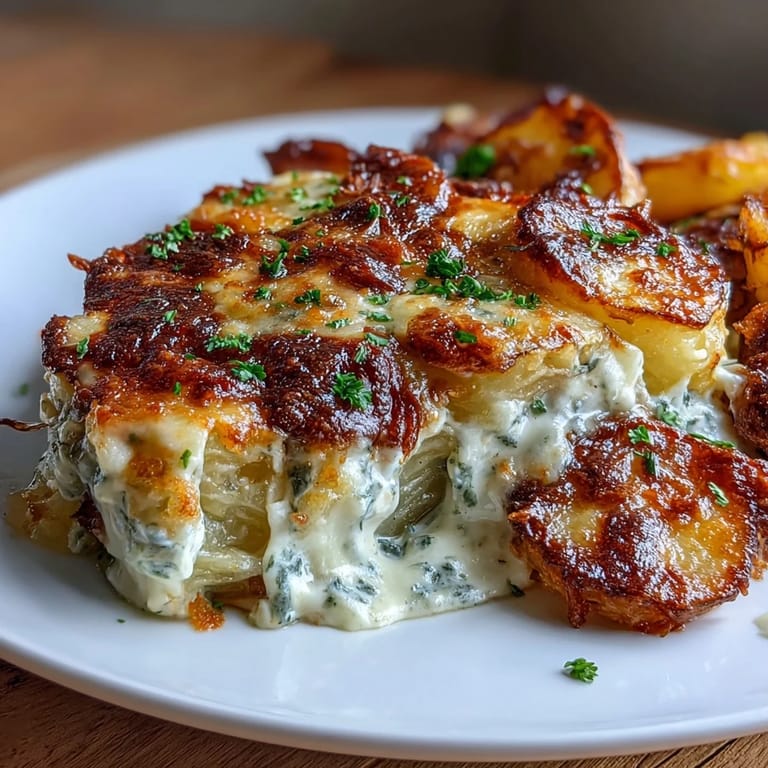
Save There's something about the sound of potatoes hitting boiling water that signals comfort is coming. I discovered this gratin on a chilly autumn evening when I had too many small potatoes from the market and wanted something more interesting than the usual mash. The twist of smashing them first, then roasting until crispy, before drowning them in herbed cream felt like reinventing something I'd known my whole life. That night, the kitchen filled with the smell of nutmeg and thyme, and I realized I'd stumbled onto something worth repeating.
I made this for my partner's parents on their first visit to our new place, and I'll never forget watching his mother take that first bite and pause. She looked up and said it reminded her of her grandmother's cooking, which turned out to be the highest compliment she could give. That moment made me understand that food carries memory in ways words can't quite capture.
Ingredients
- Small Yukon Gold or baby potatoes (1.5 kg / 3.3 lbs): Their waxy texture holds together when smashed and won't turn gluey like starchy varieties—this is the secret to keeping everything light.
- Olive oil (1 tbsp): Just enough to help those smashed potatoes crispen at the edges without making them greasy.
- Heavy cream (1 1/2 cups / 360 ml): The luxurious base that binds everything together with silky richness.
- Garlic (2 cloves, minced): Infused directly into the warm cream so it becomes mellow and sweet rather than sharp.
- Fresh thyme and rosemary (1 tsp thyme leaves, 1/2 tsp rosemary): These two herbs together create a subtle French countryside flavor that elevates the entire dish.
- Ground nutmeg (1/2 tsp): A pinch transforms the cream into something almost magical—don't skip it, and resist the urge to add more.
- Gruyère, mozzarella, and Parmesan cheeses (1 cup, 1 cup, and 1/2 cup respectively, grated): The three-cheese blend gives you depth: Gruyère for nuttiness, mozzarella for stretch and mild flavor, Parmesan for sharp finish.
- Fresh chives or parsley (2 tbsp, chopped): A final bright note that cuts through the richness and makes the dish feel finished.
Tired of Takeout? 🥡
Get 10 meals you can make faster than delivery arrives. Seriously.
One email. No spam. Unsubscribe anytime.
Instructions
- Get your oven ready and potatoes boiling:
- Preheat to 220°C (425°F) and line a baking sheet with parchment paper. Boil whole potatoes in salted water for 15–18 minutes until they yield easily to a fork—this is when they're perfect for smashing without falling apart.
- Smash with intention:
- Once cooled slightly, use a potato masher or the bottom of a glass to press each potato into a 1 cm (1/2 inch) thick disc. You want them roughly uniform so they cook evenly, but slight irregularities give character.
- Crisp the edges:
- Drizzle with olive oil, season generously with salt and pepper, and roast for 20 minutes until the edges turn golden and slightly crispy. This step is what separates this from ordinary mashed potatoes.
- Warm the cream gently:
- In a small saucepan over low heat, combine heavy cream, minced garlic, thyme, rosemary, and nutmeg. Let it warm and become fragrant—never let it boil, or the cream can separate. You're infusing, not cooking.
- Layer with confidence:
- Arrange half the roasted smashed potatoes in a buttered baking dish, pour half the cream mixture over top, then sprinkle with half of all three cheeses. Repeat with the remaining potatoes, cream, and cheese blend.
- Finish in the oven:
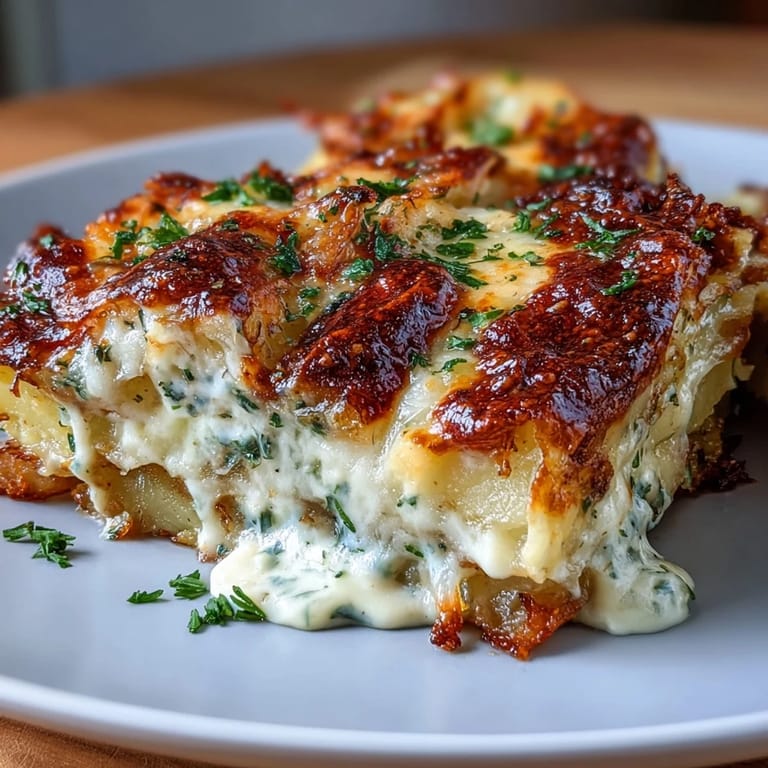
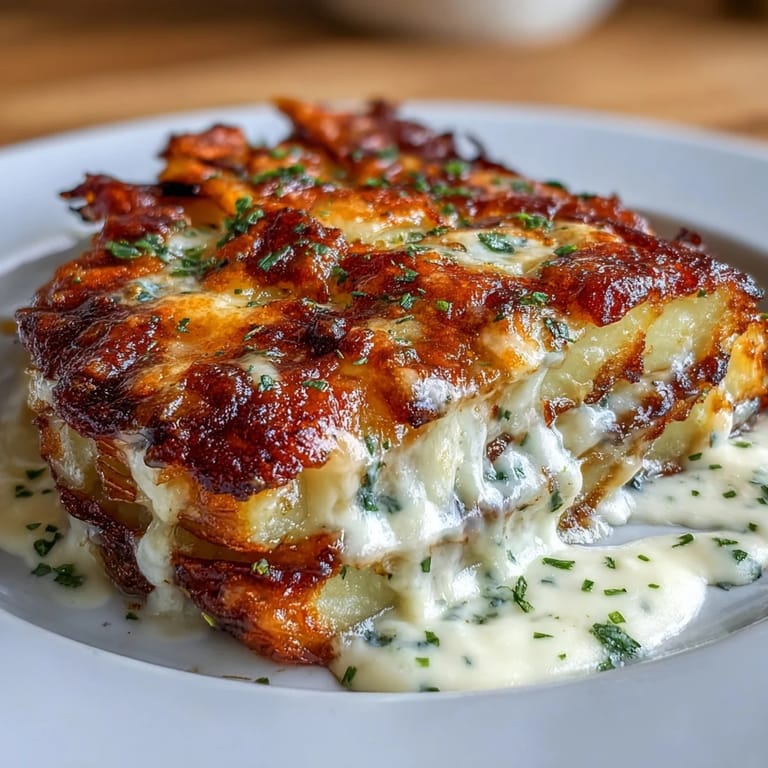
- Bake at the same temperature for 20–25 minutes until the top is bubbly and golden brown and you can see cheese melting at the edges. It should smell almost overwhelming by this point.
- Rest before serving:
- Let it sit for 10 minutes so the layers set slightly and the flavors meld. Garnish with fresh herbs and bring to the table while still steaming.
 Save
Save My friend who claims she doesn't like potatoes asked for thirds at dinner last month. Watching someone's walls come down around food is one of those small kitchen victories that reminds me why I cook.
Cheese Matters More Than You'd Think
The combination of three cheeses isn't overcomplicated—it's actually the smart way to layer flavor without overdoing it. Gruyère alone would be too heavy, mozzarella alone too mild, Parmesan alone too sharp. Together, they create this balanced richness that feels sophisticated but never pretentious. I learned this after making a version with only Cheddar, and while it was good, it didn't have that subtle complexity that lingers.
Why This Works as Both Side Dish and Star
I've served this alongside roasted lamb and it disappeared in minutes, but I've also plated it as the main course with a simple green salad tossed in bright vinaigrette and had just as many compliments. The richness means you don't need much else, but it's humble enough not to overshadow good meat or fish. The versatility keeps me coming back.
Small Variations That Keep It Interesting
Once you understand the foundation of this gratin, it invites gentle improvisation. I've added caramelized onions layered between the potatoes on nights when I had extra time, and sautéed mushrooms when I wanted earthy depth. A light scattered of bacon adds smokiness if you're feeling adventurous, and a whisper of truffle oil transforms it into something special occasion worthy.
- Try layering thin slices of caramelized onions or sautéed mushrooms between the potato layers for added flavor without much extra effort.
- Substitute Emmental for Gruyère or Fontina for mozzarella if you want to experiment with different cheese personalities.
- For a lighter version, use half-and-half instead of heavy cream, though the dish will be less luxurious but still absolutely delicious.
 Save
Save This gratin has become my go-to dish when I want to feel like I'm cooking with intention, even on busy nights. It's one of those recipes that rewards patience with flavor and leaves everyone at the table a little happier.
Recipe FAQs
- → What type of potatoes work best for this dish?
Small Yukon Gold or baby potatoes hold their shape well and offer a creamy interior that crisps nicely when smashed and roasted.
- → How do I achieve crispy edges on the smashed potatoes?
After gently smashing the boiled potatoes, drizzle with olive oil and roast at a high temperature (220°C/425°F) until the edges turn golden and crisp.
- → Can I substitute the cheeses used?
Yes, Gruyère can be swapped with Emmental, and mozzarella can be replaced with Fontina for a different flavor profile.
- → How is the cream mixture prepared?
The cream is gently heated with minced garlic, thyme, rosemary, and nutmeg to infuse flavor without boiling, preserving the creamy texture.
- → What garnishes complement this dish?
Fresh chives or parsley add a bright, herbaceous finish that balances the richness of the gratin.