 Save
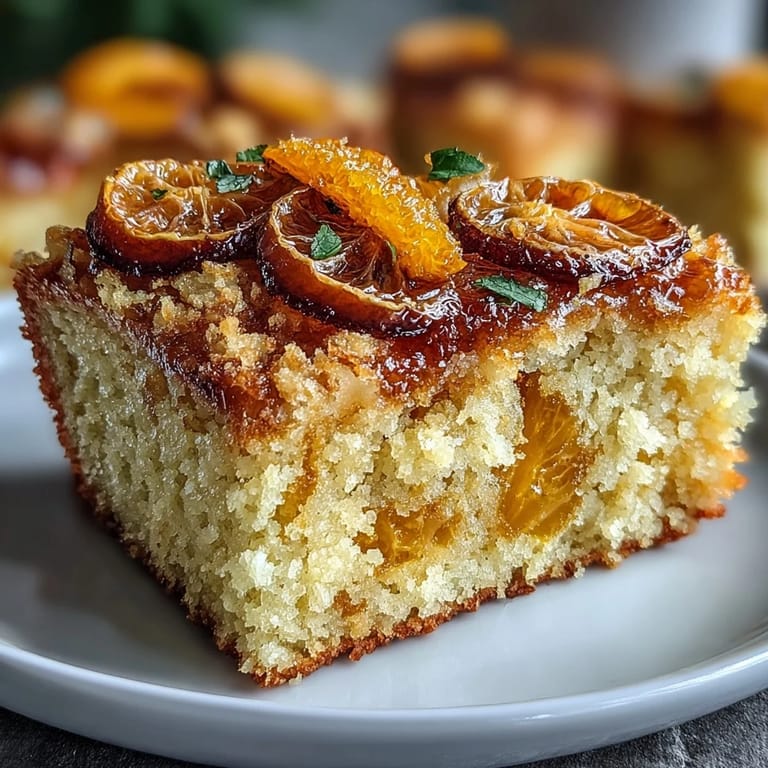
Save My neighbor knocked on the door one autumn afternoon with a bag of blood oranges she'd grown herself, and I had absolutely no idea what to do with them. She mentioned candying a few, and something about that combination—bright citrus, nutty almond flour, the silky richness of olive oil—sparked a memory of a café in Barcelona where I'd tasted something remarkably similar. That afternoon became a kitchen experiment that somehow turned into my most-requested dessert. The cake emerged from the oven with those candied slices arranged like stained glass on top, and I knew I'd stumbled onto something special.
I made this for a book club gathering where everyone expected something store-bought, and watching their faces when they realized the elegant citrus cake was homemade felt like the real victory. One friend asked for the recipe before even finishing her slice, and now it's become the cake she brings to potlucks—which means I've somehow created a dessert legacy through accidental generosity.
Ingredients
- Medium oranges (2): These get transformed into jewel-like candied slices that sit atop your cake like edible garnish, so choose ones that feel heavy and fragrant rather than perfect-looking.
- Granulated sugar (1 cup for candying, plus 3/4 cup for cake): The first batch slowly cooks down with the oranges to create that glossy, translucent finish, while the second batch aerates with your eggs to lighten the entire cake.
- Water (1 cup for syrup): Just enough to gently poach the orange slices without drowning them.
- Almond flour (2 cups): This is where the magic happens—it gives you structure and richness while keeping everything tender and naturally gluten-free, no grittiness or odd aftertaste like some almond flour can have.
- Gluten-free flour blend (1/2 cup): A small amount bridges the texture, adding just enough structure so the cake doesn't crumble when you invert it.
- Baking powder (1 1/2 tsp): The gentle lift you need without making this taste like a sponge cake.
- Salt (1/4 tsp): Sharpens the citrus and makes the almond flavor sing.
- Large eggs (3), room temperature: Cold eggs won't incorporate properly, and you'll miss out on that pale, fluffy mixture that's the foundation of everything tender in this cake.
- Extra-virgin olive oil (1/2 cup): Use something you'd actually taste on bread—it's not the background player here, it's part of the flavor story.
- Greek yogurt (1/2 cup): The secret to keeping this cake moist without making it dense, and it adds a subtle tang that plays beautifully against the sweet citrus.
- Orange zest (from 1 orange): Fresh zest scattered through the batter ensures every bite has that bright citrus note, not just the surface decorations.
- Vanilla extract (1 tsp): A quiet supporting player that deepens the almond and softens the citrus edges.
Tired of Takeout? 🥡
Get 10 meals you can make faster than delivery arrives. Seriously.
One email. No spam. Unsubscribe anytime.
Instructions
- Candy the oranges first:
- Combine sugar and water in a saucepan and bring it to a gentle simmer—you want a quiet bubble, not an aggressive boil. Lay those orange slices in a single layer and watch them slowly turn from opaque to translucent, about 20–25 minutes, which means the sugar has properly penetrated them. Remove each slice with care and let them cool on parchment paper until they're completely dry and slightly tacky.
- Prepare your cake pan:
- Set your oven to 350°F and while it preheats, grease a 9-inch round pan generously, then line the bottom with parchment paper. This ensures you can invert it later without losing those beautiful candied oranges on top.
- Arrange your candied oranges:
- Slightly overlap the cooled slices on the bottom of the pan in whatever pattern feels right—imperfection looks more elegant than grid-perfect symmetry.
- Combine dry ingredients:
- In a large bowl, whisk together almond flour, gluten-free flour, baking powder, and salt until no lumps remain. This prevents any grainy texture from settling on you.
- Whisk eggs with sugar:
- In another bowl, beat the room-temperature eggs with sugar until the mixture becomes pale and noticeably thickened, which takes about 2–3 minutes and signals that you've incorporated enough air. Whisk in your olive oil, Greek yogurt, orange zest, and vanilla until everything is smooth and cohesive.
- Fold everything together gently:
- Pour your wet ingredients into the dry mixture and fold with a spatula using broad, slow strokes—this isn't the time to be vigorous. You want just enough mixing to bring everything together without deflating the air you worked into the eggs.
- Pour and bake:
- Carefully pour the batter over those candied oranges and smooth the top with your spatula. Bake for 40–45 minutes until a toothpick inserted in the center comes out clean or with just a few moist crumbs clinging to it.
- Cool and invert:
- Let the cake rest in the pan for 10 minutes—this is crucial because it needs time to set but not so long that it cools completely and sticks. Then invert onto a serving plate and peel away the parchment to reveal those gorgeous candied oranges on top.
- Finish and serve:
- Dust with powdered sugar and scatter fresh mint leaves if you want that final flourish of color and freshness.
 Save
Save There's something about serving a dessert that looks like it took professional skill but was honestly just patience and good ingredients that changes how people see your kitchen abilities. My mom now requests this cake for every family gathering, and I've made peace with the fact that I'm forever known as the person who makes the fancy citrus thing.
Why This Cake Works
The combination of almond flour and gluten-free blend creates a tender crumb that holds up beautifully when inverted, while Greek yogurt adds moisture that keeps the cake soft even after a couple of days at room temperature. The candied oranges aren't just decoration—their sticky sweetness seeps slightly into the cake during baking, creating subtle flavor layers that unfold with each bite. Olive oil amplifies the almond nuttiness while keeping everything feeling light and Mediterranean rather than heavy and indulgent.
Making It Your Own
Blood oranges transform this cake into something almost jewel-toned, with a flavor that leans slightly more tart and dramatic than regular oranges, which is honestly the better choice if you can find them. You could swap the Greek yogurt for dairy-free yogurt without missing a beat, and the cake would still be impossibly moist. A whipped cream dollop on the side isn't just indulgent—it's practically necessary, because it cools everything down and lets the citrus pop even brighter.
Storing and Serving Tips
This cake actually improves over time as the flavors meld and the moisture distributes evenly, so baking it a day ahead of when you need it is honest strategy, not cutting corners. Keep it covered at room temperature for up to two days, and it will stay tender and fresh-tasting in a way that surprises people who expect homemade cake to dry out. Slices are lovely slightly warm or at room temperature, and it pairs beautifully with afternoon tea, strong coffee, or a light dessert wine that echoes those citrus notes.
- Powdered sugar dusted on top just before serving looks elegant and tastes better than dusting it hours in advance.
- Fresh mint isn't just pretty—it adds a cooling contrast that makes the sweetness feel balanced and sophisticated.
- If you have leftover candied orange syrup, drizzle a tiny bit over the finished cake for extra moisture and citrus intensity.
 Save
Save This cake has become my answer to the question of what to bring when I want to feel confident and present something beautiful. It's approachable enough for a casual afternoon but elegant enough that people assume you've learned classical French pastry techniques.
Recipe FAQs
- → How do I make the candied oranges?
Simmer thinly sliced oranges in a sugar and water syrup for 20–25 minutes until they become translucent. Then drain and cool on parchment.
- → Can I use regular flour instead of gluten-free blend?
Yes, regular all-purpose flour can replace gluten-free flour if dietary restrictions don’t apply.
- → What role does olive oil play in the cake?
Olive oil adds richness and moistness, imparting a subtle fruity aroma that complements the citrus flavors.
- → Can I substitute the Greek yogurt?
Yes, dairy-free yogurt can be used to maintain moisture while adhering to dietary needs.
- → How do I know when the cake is done baking?
Insert a toothpick into the center; it should come out clean or with a few moist crumbs attached.
- → What is the best way to serve this cake?
Serve at room temperature, optionally dusted with powdered sugar and garnished with fresh mint leaves for a refreshing touch.