 Save
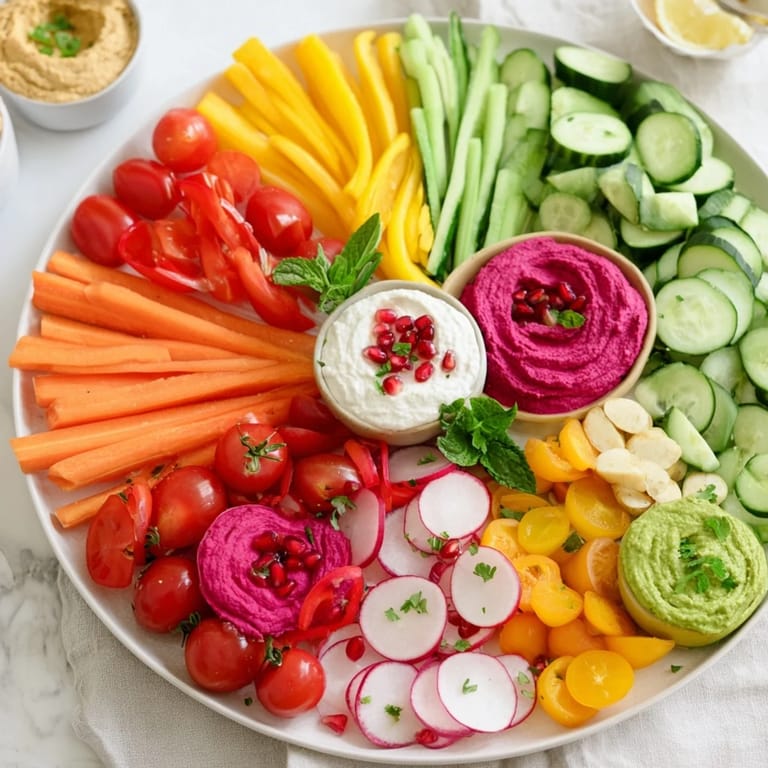
Save I'll never forget the first time I created a platter like this for a summer gathering at my apartment. My friend Sarah, who'd recently gone vegan, was coming over for lunch, and I wanted to show her that plant-based eating could be just as vibrant and abundant as anything else. As I arranged those first rainbow carrots and bright red tomatoes on a large white board, something magical happened—it stopped being just a snack and became a work of art. Now, every time I build one of these platters, I'm reminded that feeding people well is about creating moments of joy and color on the table.
I remember bringing a version of this to a potluck where half the guests had different dietary needs, and watching everyone gather around it with genuine excitement was one of those cooking moments that reminded me why I love feeding people. The colors alone seemed to spark conversation, and before long, people were mixing dips and discovering favorite combinations they'd never tried before.
Ingredients
- Rainbow carrots, sliced (1 cup): These aren't just pretty—the different colors mean different nutrients and subtle flavor variations. I've learned to slice them on a slight bias, which makes them easier to dip and creates a more elegant presentation.
- Baby cucumbers, sliced or quartered (1 cup): The smaller varieties stay crisper longer and have fewer seeds, so they're perfect for a platter that might sit out for a bit. Keep them chilled until the last moment.
- Cherry tomatoes, assorted colors (1 cup): Mixed colors make the platter sing visually, and the small size means each bite is intensely flavorful without being overwhelming.
- Radishes, thinly sliced (1 cup): They add a peppery crunch that livens up every dip—don't skip these, they're the secret weapon of any vegetable platter.
- Baby bell peppers, sliced (1 cup): Sweet and colorful, these feel fancy without requiring any special prep. The natural sweetness pairs beautifully with savory dips.
- Snap peas (1 cup): These add a tender crunch and look like little jewels on the board. Eat one while you're arranging—they're the cook's privilege.
- Seedless grapes, mixed colors (1 cup): The sweetness of fruit against savory dips is a flavor combination that keeps people reaching back. I always add these last so they stay chilled.
- Strawberries, halved (1 cup): Fresh strawberries bring brightness and natural sweetness to balance the earthier vegetables and dips.
- Pineapple chunks (1 cup): The tropical note cuts through rich dips and adds a surprising element that makes guests pause and appreciate the thoughtfulness of the platter.
- Kiwi, peeled and sliced (1 cup): Vibrant green color that photographs beautifully, and the tartness is a wonderful counterpoint to the creaminess of hummus.
- Classic hummus (1 cup): The foundation—creamy, familiar, and endlessly welcoming. Make sure it's at room temperature so it spreads smoothly.
- Beetroot hummus (1 cup): This one adds visual drama with its deep magenta color and a subtle earthiness that's different enough to feel special.
- Guacamole (1 cup): Rich and luxurious, it's the dip people don't expect on a vegetable platter, which makes them excited when they see it.
- Cashew tzatziki (1 cup): Creamy, cool, and herbaceous—this brings a Mediterranean element that makes everything taste more sophisticated.
- Pomegranate seeds (1/4 cup): These aren't just garnish; they're flavor and texture that elevate every bite they land on.
- Fresh herbs—mint, basil, parsley (1/4 cup): Scatter these throughout the platter for pops of color and aroma. People notice the care when fresh herbs are visible.
- Edible flowers (optional): If you can find them, they transform this from a nice platter into a showstopper. Pansies and nasturtiums are my go-to choices.
- Gluten-free crackers or pita chips (1 cup): These give dippers who prefer something substantial an option, and they fill visual gaps on the board.
Tired of Takeout? 🥡
Get 10 meals you can make faster than delivery arrives. Seriously.
One email. No spam. Unsubscribe anytime.
Instructions
- Wash and prepare everything:
- Start by rinsing all your vegetables and fruits under cool water and patting them completely dry with a clean towel. Wet vegetables slide around on a platter and don't look as appetizing, so this step matters more than you'd think. As you dry them, you're building anticipation—this is the quiet part of the process where you're just you and the ingredients.
- Slice with intention:
- Using a sharp knife on a clean cutting board, slice each vegetable and fruit as indicated. Take your time here—the slices don't need to be perfect, but they should be uniform enough that they look intentional. This is meditative work, and I always find myself thinking about who I'm cooking for while I'm slicing.
- Choose your canvas:
- Select a large platter or wooden board as your base. White plates are classic and let colors pop, while wooden boards feel warm and natural. The size matters—you want enough room to arrange generously without crowding.
- Position the dips strategically:
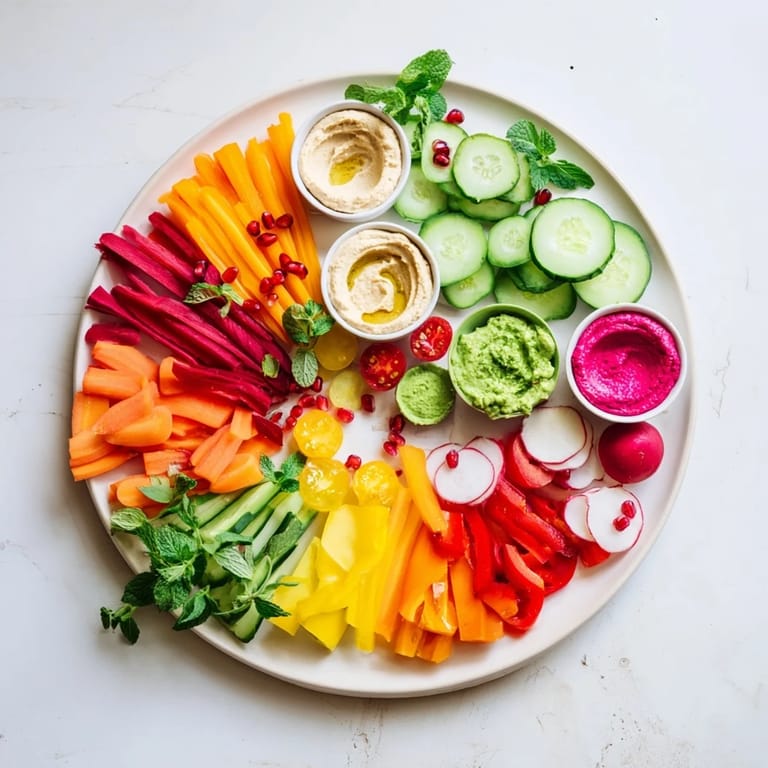
- Place small bowls of each dip at different points around your platter—I like to imagine them as anchors that organize the space. Don't put them all together; spread them out so people naturally move around the entire board.
- Create color blocks with purpose:
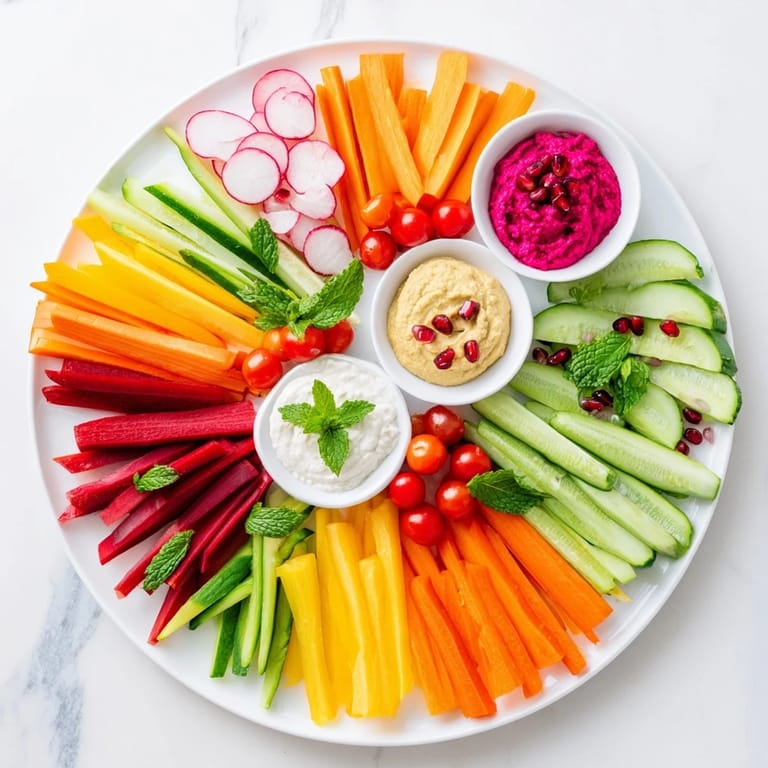
- Here's where the magic happens. Group each type of vegetable or fruit together, but think about color contrast as you go. Put the deep purple radishes next to the bright orange carrots, the red tomatoes next to the green snap peas. This isn't random—you're creating visual rhythm that makes people want to eat with their eyes first.
- Fill the gaps with love:
- The spaces between your color blocks are opportunities. Scatter pomegranate seeds for jewel-like pops of color, tuck fresh herbs throughout for aroma and visual interest, and add edible flowers if you have them. Arrange crackers or pita chips in clusters. These finishing touches make the difference between a platter and a presentation.
- Serve at the perfect moment:
- If you're serving immediately, go right ahead—everything is at its peak. If you need to wait, cover the platter loosely with plastic wrap and refrigerate it. The cold will crisp everything up, but bring it to the table just before guests arrive so nothing gets condensation-soggy.
 Save
Save What I love most about this platter is that it's become my go-to for almost any gathering—baby showers, book clubs, casual dinners with friends. It's the kind of dish that brings people together without making a big deal about it, and somehow, the simplicity of fresh vegetables and good dips always feels celebratory.
Why This Works as a Global Fusion Platter
By combining vegetables and fruits from different cuisines with dips inspired by Mediterranean, Middle Eastern, and contemporary vegan traditions, you're creating a platter that feels both familiar and adventurous. The hummus brings Mediterranean comfort, the tzatziki adds Greek elements, the guacamole represents the Americas, and the simple fresh vegetables are truly universal. This approach means every guest finds something that speaks to them, and together, these elements create something that feels bigger than the sum of its parts. It's the culinary equivalent of saying: there's room for everyone at this table.
Storage and Make-Ahead Tips
I've learned through experience that the key to a stress-free gathering is preparing what you can in advance. Wash and dry all your vegetables the night before, then store them in sealed containers in the fridge. The dips can be made up to two days ahead (store them in airtight containers), which means on the day of your gathering, you're really just slicing, arranging, and enjoying the moment with your guests. This shift from cooking stress to hosting joy makes all the difference in how you experience your own party. If you find yourself with leftovers—which rarely happens—store the vegetables and dips separately, and you'll have ingredients for quick grain bowls or snack plates the next day.
Customization and Seasonal Variations
One of the beautiful things about this platter is how it adapts to seasons and preferences. In summer, I lean into light fruits like melons and berries; in fall, I add roasted chickpeas and dried cranberries for texture and warmth. Winter brings root vegetables like parsnips and beets, while spring celebrates tender asparagus and fresh herbs. Beyond seasons, think about your guests—if you're hosting people with nut allergies, skip the cashew tzatziki and add another hummus variation instead. If someone's never tried guacamole, this is the perfect setting to introduce them. The platter becomes a conversation about abundance and inclusion, which is really what good food is all about.
- Try roasted chickpeas seasoned with smoked paprika or herbs for added protein and crunch.
- Add marinated olives or artichoke hearts for briny, complex flavors that pair beautifully with creamy dips.
- Fresh herbs like cilantro or dill can be scattered on top or used as garnish to elevate the visual appeal and add aromatic notes.
 Save
Save At its heart, this platter is an invitation—to eat more plants, to try new combinations, to slow down and enjoy food as both nourishment and connection. Every time I arrange one, I'm reminded that the best meals are the ones where everyone feels welcome, and where simplicity becomes elegance through care and intention.
Recipe FAQs
- → What vegetables are included in this platter?
It features rainbow carrots, baby cucumbers, cherry tomatoes, radishes, baby bell peppers, and snap peas arranged in colorful sections.
- → Which fruits complement the fresh vegetables?
Seedless grapes, strawberries, pineapple chunks, and sliced kiwi add sweetness and a refreshing contrast.
- → What dips are served alongside the fruits and vegetables?
Classic hummus, beetroot hummus, guacamole, and cashew tzatziki offer a variety of plant-based flavors for dipping.
- → How can I add extra flavor and texture to the platter?
Adding gluten-free crackers, pomegranate seeds, fresh herbs like mint and basil, and edible flowers enhances taste and visual appeal.
- → Are there any allergy considerations to keep in mind?
Yes, the cashew tzatziki contains nuts and traditional hummus may have sesame. Substitute or omit these if allergies are a concern.
- → Can I customize the platter with seasonal produce?
Absolutely, you can swap in seasonal vegetables or fruits to suit availability and preference for a fresh experience year-round.