 Save
Save My kitchen smelled like toasted sesame the first time I made these bowls, and honestly, it was the aroma that sold me before I even tasted a bite. I was looking for something light but substantial, the kind of meal that wouldn't leave me feeling sluggish on a busy afternoon. These sesame turkey lettuce wrap bowls arrived almost by accident—I had ground turkey thawing, some gochujang in the fridge, and a sudden craving for Korean flavors without the commitment of a full stir-fry. What started as improvisation became something I find myself making twice a month now.
I made these for my sister on a Saturday when she was trying to cut back on heavy meals, and watching her reach for a third bowl told me everything I needed to know. She started deconstructing each element, building her own bites with different combinations, and suddenly we weren't just eating—we were having a moment together. That's when I realized this dish does something special: it feels fancy enough to serve to guests but casual enough to make on a regular Tuesday.
Ingredients
- Ground turkey: Use a mix that's not too lean—some fat keeps the meat tender and flavorful as it cooks down with the sauce.
- Sesame oil: This is non-negotiable; it's the backbone of the whole flavor profile, so don't skip it or substitute with regular oil.
- Fresh ginger and garlic: Mince them finely so they distribute evenly and won't leave big chunks that surprise you mid-bite.
- Gochujang: Korean chili paste is spicy but not unbearably so—it adds depth and a slight sweetness that balances the savory elements.
- Honey and rice vinegar: These create a subtle glaze and brightness that makes the turkey feel more refined than plain seasoning.
- Green onions and sesame seeds: Both should be added at the end to keep them fresh and let their flavors shine.
- Jasmine or short-grain rice: Fluffy jasmine rice absorbs all those delicious sauce flavors without getting mushy.
- Romaine or butter lettuce: Avoid iceberg—the sturdier leaves hold everything together and have actual flavor.
- Cucumber and carrot ribbons: A vegetable peeler makes this task effortless and the ribbons look more intentional than rough cuts.
Tired of Takeout? 🥡
Get 10 meals you can make faster than delivery arrives. Seriously.
One email. No spam. Unsubscribe anytime.
Instructions
- Start with your rice:
- Get the rice cooking according to package directions and let it steam while you prep everything else. This way it'll be hot and fluffy exactly when you need it.
- Bloom the garlic and ginger:
- Heat that sesame oil in a large skillet over medium heat, then sauté the garlic and ginger for just a minute until fragrant. You'll smell it immediately—that's your signal you're on track.
- Brown the turkey:
- Add the ground turkey and use a wooden spoon to break it into small pieces as it cooks, about 5 to 7 minutes until it's completely cooked through with no pink. Don't rush this step; let the edges get slightly crispy.
- Build the sauce:
- Stir in the soy sauce, gochujang, honey, and rice vinegar, then let it simmer for 2 to 3 minutes so the turkey soaks up all that savory-sweet glaze and caramelizes slightly. The sauce should look glossy and coat every piece.
- Finish with brightness:
- Add the sliced green onions and toasted sesame seeds, taste it, then season with salt and pepper to your liking. Remove from heat so the green onions stay fresh.
- Assemble your bowls:
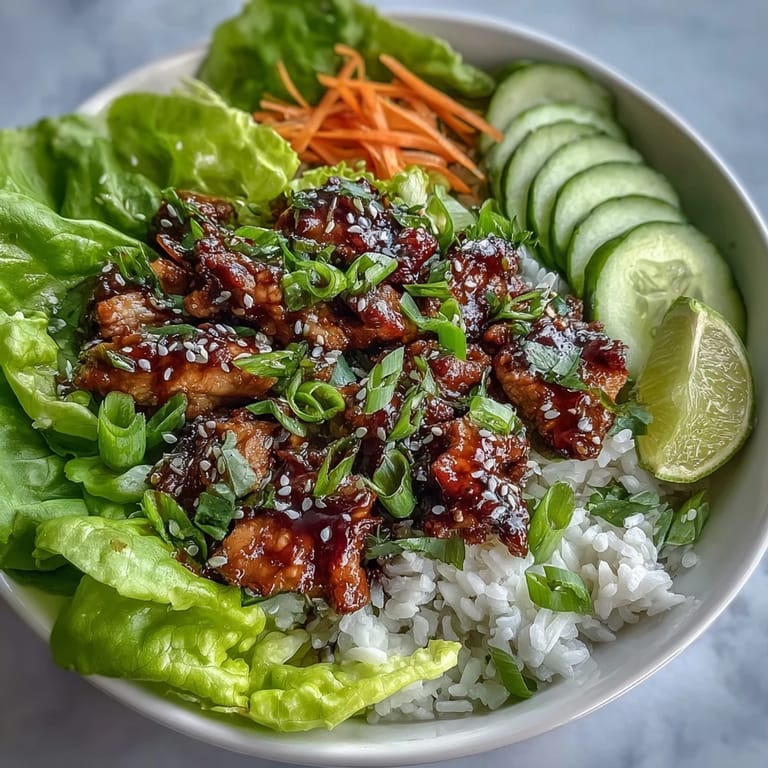
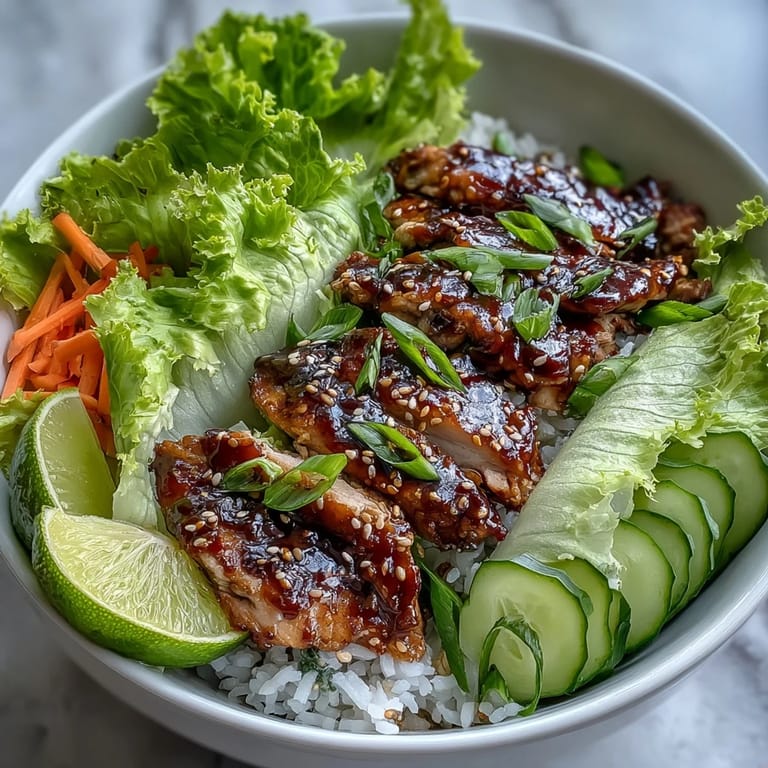
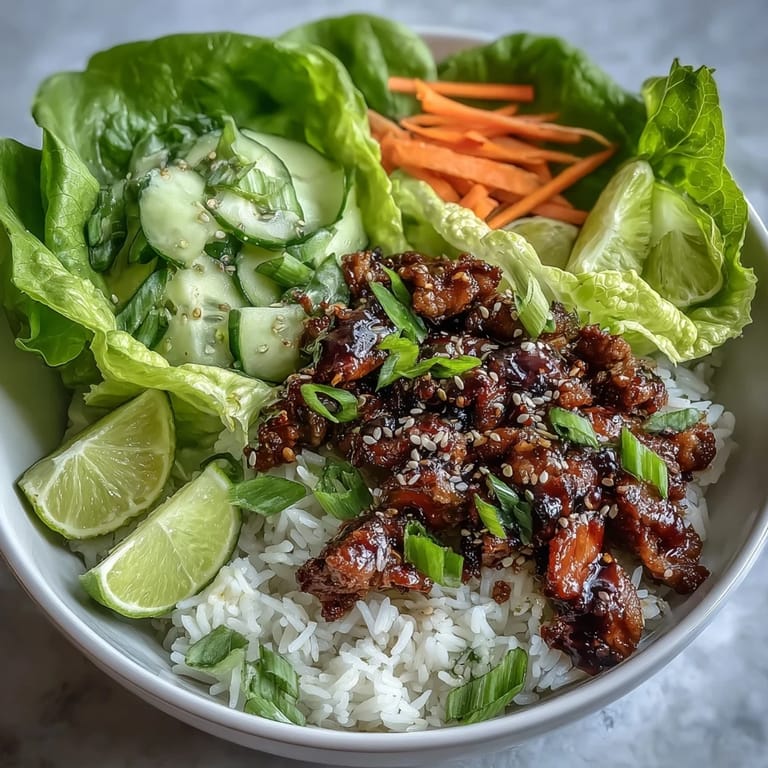
- Scoop warm rice into each bowl, top generously with the sesame turkey, then arrange lettuce leaves, cucumber ribbons, and carrot matchsticks around it like you're creating something beautiful.
- Garnish and serve:
- Sprinkle with extra sesame seeds and cilantro if you like, then pass lime wedges so everyone can squeeze brightness onto their bowl exactly how they want it.
 Save
Save There was something unexpectedly meditative about standing at my cutting board with a vegetable peeler, creating those thin ribbon strands of cucumber and carrot, knowing I was building something both nourishing and intentional. My young nephew watched me work and kept asking if he could eat the curls straight off the board—he did, and suddenly the whole cooking process became this shared moment between us instead of just a chore I was checking off.
Building Your Perfect Bowl
There's an art to layering these bowls that goes beyond just throwing everything together. Start with the warm rice as your base because it will gently soften the lettuce leaves and warm the cool vegetables without cooking them fully. The cold crunch of cucumber and carrot against the warm, savory turkey creates a textural experience that makes each bite feel intentional and interesting.
Adjusting Heat and Flavor to Your Taste
Gochujang has a reputation for being spicy, but honestly, the amount in this recipe is pretty forgiving—it's more about depth and umami than actual heat. If you're serving this to people who prefer milder food, start with half the gochujang and stir more in gradually. Conversely, if you love heat, a bit more gochujang or a pinch of gochugaru (chili flakes) on top takes this to another level without overpowering the delicate balance.
Meal Prep and Storage Wisdom
I've learned that this dish actually improves slightly if you make the sesame turkey the night before—the flavors meld and intensify, and reheating just takes two minutes in a skillet. Store the turkey separately from the vegetables so nothing gets soggy, and assemble fresh bowls when you're ready to eat. The vegetable ribbons can be cut a few hours ahead and stored in a sealed container with a damp paper towel to keep them crisp and refreshing.
- Make extra turkey sauce: Double the batch and freeze it in portions so you have a quick protein for future meals.
- Prep vegetables on Sunday: Cut your cucumber and carrot ribbons ahead, and you'll have almost instant dinners all week long.
- Rice can sit at room temperature: If you're making these for a casual meal with friends, slightly cooled rice is perfectly fine and actually easier to handle.
 Save
Save These bowls have become my answer to the question "What should we make for dinner?" because they satisfy both the part of me that wants something healthy and the part that refuses to eat boring food. Whether you're cooking for yourself or feeding a small crowd, there's something deeply satisfying about creating a bowl where every single component matters.
Recipe FAQs
- → What makes these bowls Korean-inspired?
The Korean inspiration comes from key ingredients like gochujang (Korean chili paste), sesame oil, garlic, and ginger. These create the signature sweet-spicy-savory flavor profile found in Korean cuisine. Gochujang provides authentic depth and mild heat.
- → Can I use other meats instead of ground turkey?
Absolutely. Ground chicken works well as a lighter alternative, while ground beef offers richer flavor. Plant-based ground meat substitutes also work perfectly with these seasonings. Adjust cooking time slightly based on your chosen protein.
- → How do I make this dish lower in carbohydrates?
Replace the jasmine rice with cauliflower rice for a low-carb version. Simply pulse cauliflower florets in a food processor until rice-sized, then sauté briefly. The lettuce wraps themselves are naturally low-carb and perfect for scooping the seasoned turkey.
- → What vegetables work best in these bowls?
Crisp romaine or butter lettuce cups are essential for the wrap experience. Cucumber ribbons add refreshing coolness, while matchstick carrots provide crunch. Fresh cilantro, pickled radishes, and shredded cabbage make excellent additions for texture and flavor contrast.
- → How spicy is the sesame turkey?
The spice level is mild to medium with one tablespoon of gochujang. You can easily adjust this by using less for a milder version or adding more for extra heat. The honey and rice vinegar balance the spice beautifully, creating complex flavor rather than overwhelming heat.
- → Can I prepare components ahead of time?
The sesame turkey reheats beautifully and can be made up to 3 days ahead. Store it separately from the fresh vegetables. Rice can be cooked in advance, though freshly cooked rice has better texture. Prepare vegetables just before serving to maintain their crispness and vibrant appearance.