 Save
Save Last spring, my neighbor stopped by with a handful of fresh asparagus from her garden, and I had no idea what to do with it beyond the usual roasting. She mentioned frittatas, and something clicked—here was a way to let those tender spears shine without overthinking it. That first attempt taught me that eggs and vegetables speak the same language, especially when you're not fussing over them too much. The goat cheese came later, a happy accident when I realized I had some sitting in my fridge. Now this dish feels less like cooking and more like throwing together whatever the season offers.
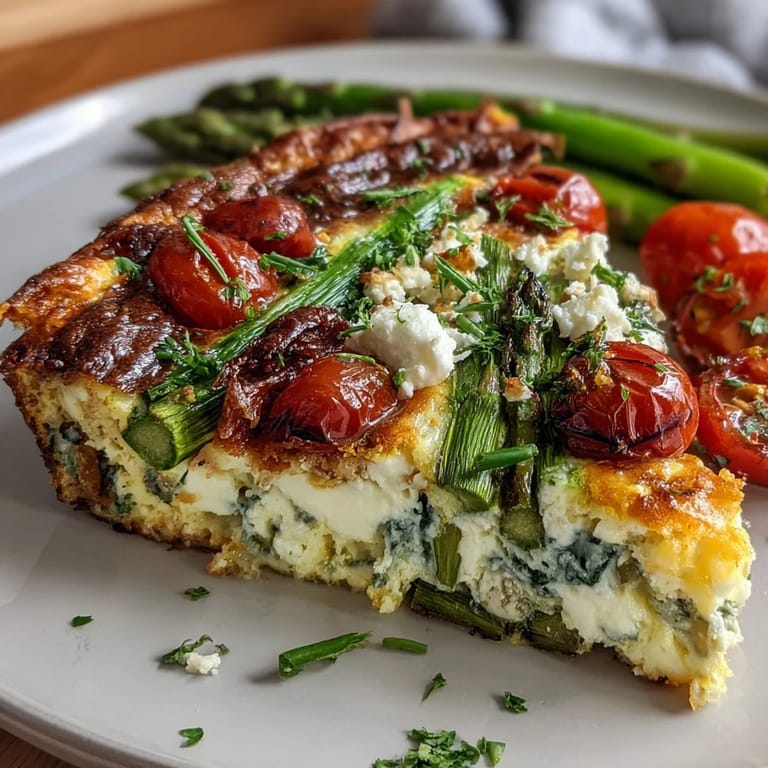
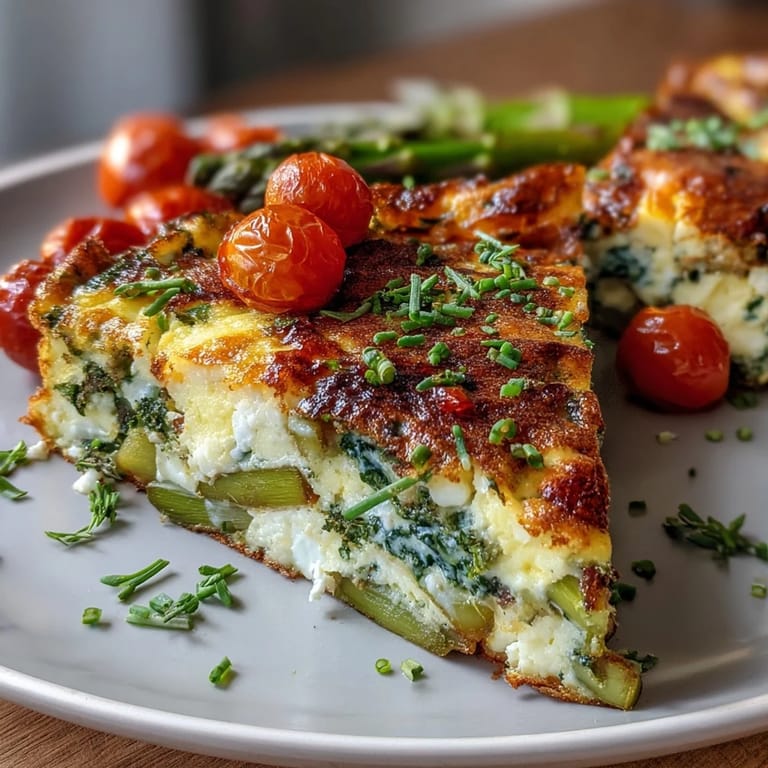
I made this for my sister on a Sunday morning when she was visiting, and she kept asking if I'd made it at a restaurant beforehand. Watching her eyes light up when she bit into that creamy center with the burst of tomato was one of those small kitchen moments that sticks with you. She asked for the recipe immediately, but honestly, what sold it for her was the smell—that grassy asparagus mixed with melting cheese filling the kitchen by the time we pulled it from the oven.
Ingredients
- Asparagus: Trim the woody ends by bending each stalk until it snaps naturally; that snap tells you exactly where the tender part begins.
- Baby spinach: Buy it pre-washed if you're short on time, but squeeze it dry after chopping or your frittata might get watery.
- Zucchini: Dice it small so it cooks through in those few minutes; thick chunks can turn mushy before the eggs set.
- Cherry tomatoes: Halving them matters because whole ones can slip around and not cook evenly.
- Green onions: The white parts should go in with the harder vegetables, but save most of the green tops for garnish at the end.
- Eggs: Room temperature eggs blend more smoothly into that custard-like filling; cold ones take longer to fully incorporate.
- Goat cheese: Crumble it by hand into uneven pieces so you get pockets of creaminess throughout instead of a uniform texture.
- Parmesan: Freshly grated tastes sharper and melts better than pre-grated, which often contains anti-caking agents that affect the final result.
- Fresh herbs: Chives and parsley are forgiving; even dried versions work in a pinch, but fresh gives you that bright finish that makes people ask what you did differently.
- Olive oil: Use something you actually enjoy tasting; the oil flavors everything here, so skip the cheap stuff.
Tired of Takeout? 🥡
Get 10 meals you can make faster than delivery arrives. Seriously.
One email. No spam. Unsubscribe anytime.
Instructions
- Heat your skillet and oven:
- Get that oven warming to 375°F while you're prepping vegetables, so you're not waiting around later. An oven-safe skillet is non-negotiable here; cast iron works beautifully if you have it.
- Soften the hearty vegetables:
- Warm olive oil in your skillet over medium heat, then add asparagus and zucchini, letting them start to tender up for about 3 to 4 minutes. You want them soft enough to bite through easily, but not so soft they fall apart when you stir.
- Wilt the delicate greens:
- Toss in the spinach, cherry tomatoes, and green onions, stirring gently for another 2 minutes until everything looks glossy and the spinach loses that raw look. The pan should smell herbaceous and alive at this point.
- Blend your egg custard:
- In a separate bowl, whisk together eggs, milk, salt, and pepper until the mixture is uniform and slightly frothy. Don't skip the whisking; air bubbles are what makes your frittata fluffy instead of dense.
- Combine and layer:
- Pour the egg mixture over the vegetables in the skillet, letting it settle around them, then scatter the goat cheese, Parmesan, chives, and parsley across the top. The cheese will start melting into the eggs as you cook, creating those creamy pockets.
- Start on the stovetop:
- Leave the skillet on medium heat for 3 to 4 minutes, watching for the edges to turn golden and set slightly while the center still jiggles a bit. This head start creates a slightly crispy bottom that contrasts with the creamy center.
- Finish in the oven:
- Transfer the whole skillet to the preheated oven and bake for 12 to 15 minutes until the center is just set and the top has puffed up slightly. If you press the center gently, it should feel almost firm but still have a whisper of give.
- Rest before serving:
- Let it cool in the pan for 5 minutes; this time allows everything to set properly so slices stay together instead of collapsing. The residual heat keeps cooking everything gently, which matters more than you'd think.
 Save
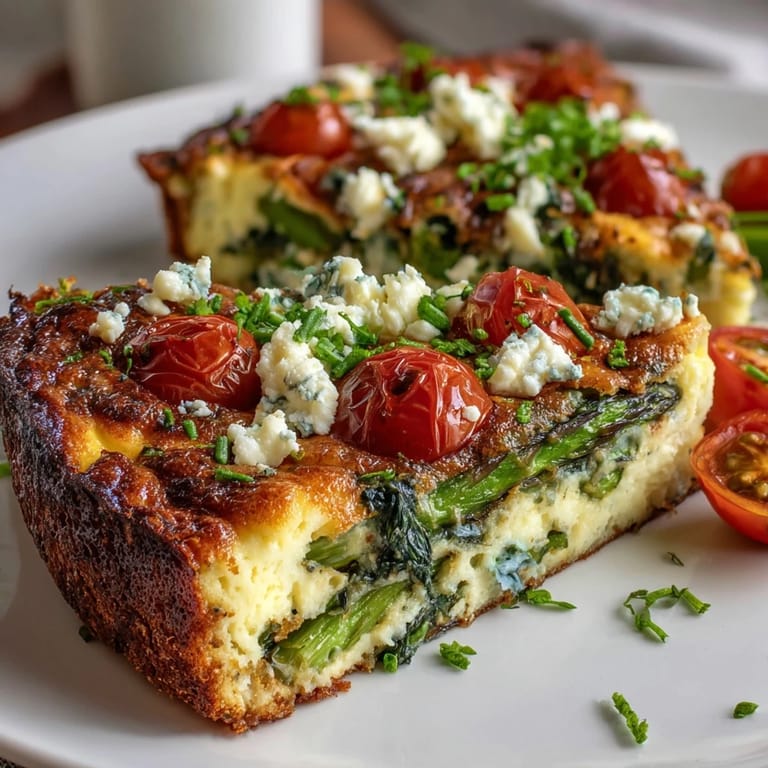
Save There's something almost magical about pulling a frittata from the oven—that puff that rises above the skillet's edge feels like an accomplishment, even though you barely did anything. My kids actually asked for seconds without being asked, which in my house is basically a standing ovation.
Why Spring Vegetables Matter Here
Spring vegetables have a delicate sweetness that gets lost if you roast or sauté them aggressively, but a frittata's gentle heat treats them with respect. Asparagus especially develops an almost creamy texture when cooked this way, completely different from how it behaves at high temperatures. The short cooking time means everything stays bright, both in flavor and color, which is why this dish feels lighter than it actually is.
The Goat Cheese Secret
I used to think goat cheese only belonged on salads or crusty bread, but its tanginess against eggs and sweet tomatoes creates a balance that feels sophisticated without trying. The acid cuts through the richness so perfectly that even people who say they don't like goat cheese usually go back for more. If you can't find it or want something milder, ricotta or feta work in a pinch, though the flavor profile shifts slightly.
Ways to Make It Your Own
Once you understand how this frittata works, you stop following the recipe and start cooking by instinct. I've added artichoke hearts, swapped spinach for arugula, thrown in roasted red peppers, and even experimented with dill instead of parsley. The formula stays the same: sauté harder vegetables first, add greens, pour eggs, garnish, finish in the oven. Every version tastes like spring, just in different dialects.
- Peas and mint make a combination that tastes almost like spring captured in eggs and cheese.
- If you love garlic, mince a clove or two and cook it with the oil before adding vegetables so it mellows into the background rather than shouting.
- Leftovers taste just as good cold the next day, making this a perfect make-ahead brunch or light dinner option for the week.
 Save
Save This frittata has become my go-to when I want to cook something that feels special but doesn't demand much from me. It's the kind of dish that makes people think you spent hours in the kitchen when really you just let good ingredients speak for themselves.
Recipe FAQs
- → Can I substitute vegetables in this dish?
Yes, you can swap asparagus and zucchini for other spring vegetables like peas or artichokes to suit your preference.
- → What cheese options work well here?
Goat cheese adds creaminess, but you can also use feta or omit cheese altogether for a dairy-free version.
- → How do I ensure the frittata cooks evenly?
Cook the vegetables until just tender, then bake in an oven-safe skillet until the center is puffed and set to get an even texture.
- → Can this be prepared ahead of time?
Yes, prepare the vegetable mixture in advance and assemble just before cooking. It's also delicious served warm or at room temperature.
- → Is this dish gluten-free?
Yes, this dish contains no gluten ingredients and suits gluten-free diets.