 Save
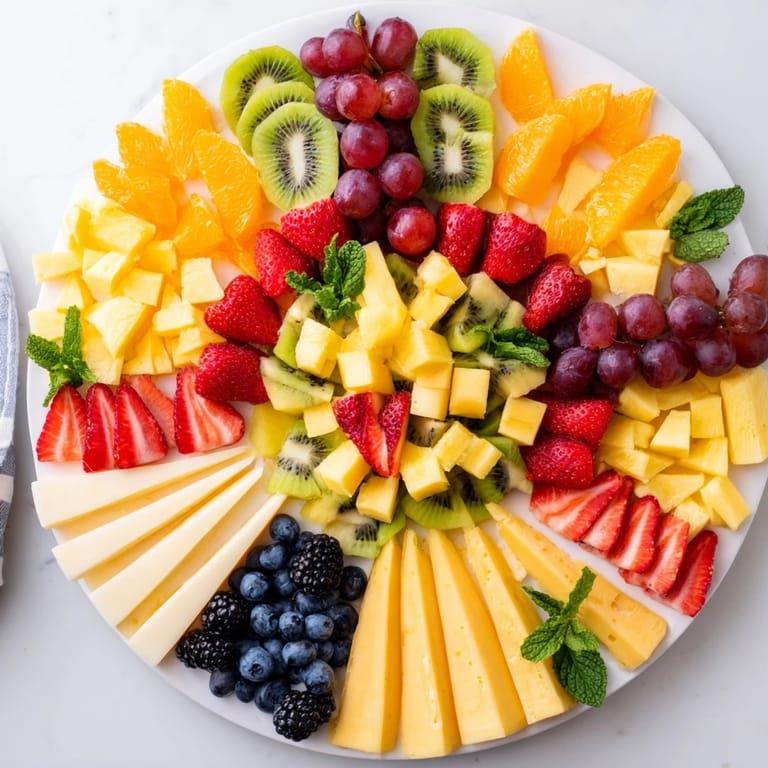
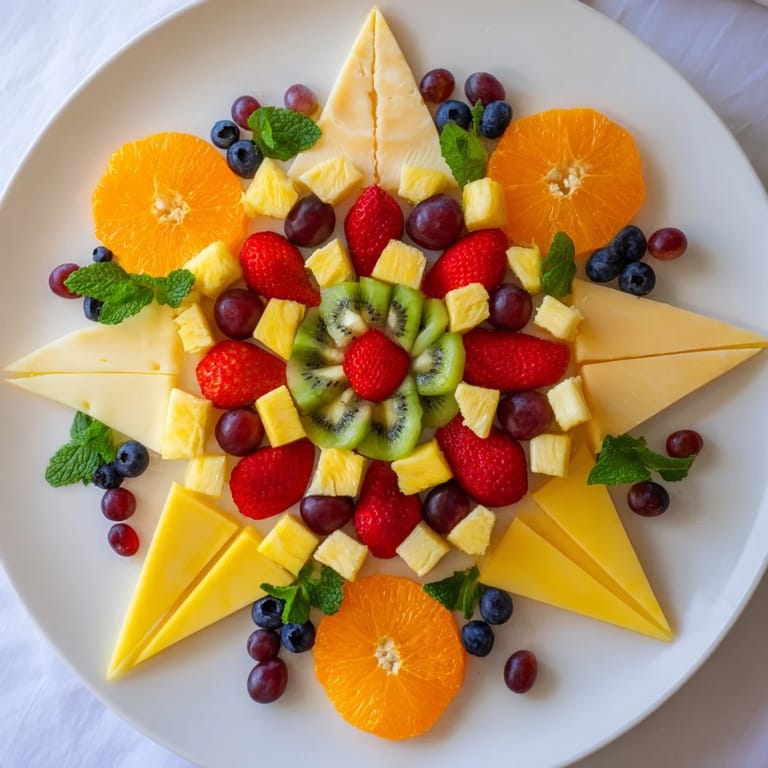
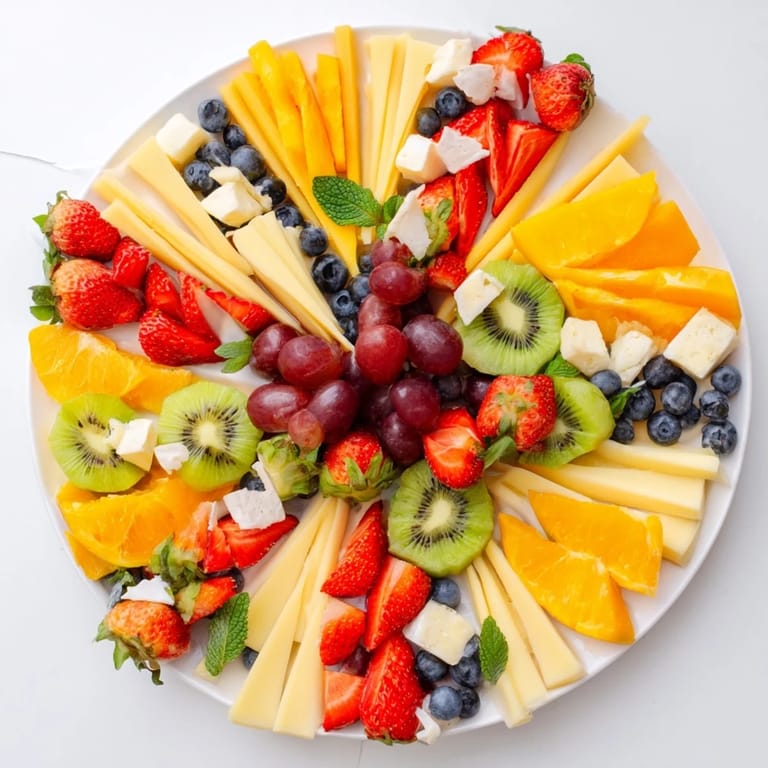
Save The first time I arranged fruit and cheese in concentric circles, I wasn't thinking about symmetry at all—I was just trying to fit everything on the board without it looking like a chaotic mess. But as I kept placing wedges in alternating colors, something clicked. The pattern emerged almost on its own, and suddenly people were gathering around before I'd even finished, mesmerized by the geometry of it all. That's when I realized this wasn't just a platter; it was edible art that somehow felt both effortless and intentional.
I made this for a casual dinner party that almost didn't happen, and halfway through arranging it, my friend walked in early. She stopped in her tracks and just stared, then said it looked like something from a magazine. We spent the next ten minutes rearranging blueberries together like we were solving a puzzle, laughing at how seriously we were taking it. By the time guests arrived, the platter had already become part of the evening's story.
Ingredients
- Seedless red grapes: Their natural sweetness and jewel-like appearance anchor the whole design, so pick ones that feel firm and look glossy.
- Fresh strawberries: Cut these in half so the vibrant inner flesh shows; they'll be your color anchor and brighten any dull spot on the board.
- Kiwi: The green is non-negotiable for contrast, and slicing them into wedges (rather than rounds) keeps the kaleidoscope geometry feeling intentional.
- Pineapple: Those sunny yellow wedges tie warm and cool tones together; aim for pieces that are roughly the same size as your other fruit.
- Blueberries: These are your secret weapon for filling gaps and adding depth; they nestle perfectly into any small space.
- Orange: Segmented oranges add both color and a refreshing tartness that cuts through the richness of cheese.
- Aged cheddar: Its deep amber color is stunning against bright fruit, and the flavor complexity won't disappear next to sweeter elements.
- Manchego: This pale, creamy cheese creates beautiful contrast and has just enough texture to feel substantial without being heavy.
- Brie: Soft and luxurious, it offers a creamy counterpoint to the crispness of the fruit; trim any overly thick edges so wedges stay uniform.
- Goat cheese: Its tanginess and pale appearance make it visually pop, and it's easier to cut into uniform rounds than you'd expect.
- Fresh mint: A small handful scattered across the top adds aroma and a final pop of green that ties everything together.
Tired of Takeout? 🥡
Get 10 meals you can make faster than delivery arrives. Seriously.
One email. No spam. Unsubscribe anytime.
Instructions
- Wash and prep your fruits:
- Rinse everything gently and pat dry so water doesn't pool on the board later. Remove hulls from strawberries, peel kiwis while they're still firm, and segment the orange over a bowl so you don't lose any juice.
- Cut everything into wedges:
- Aim for pieces roughly the same size so they nest together like puzzle pieces. Don't overthink it—slightly irregular wedges actually look more natural and intentional than machine-perfect slices.
- Start at the center or edge:
- Choose your platter and decide if you want to work inward or outward. I prefer starting at the outer edge and spiraling inward because it feels less overwhelming and gives you a natural stopping point.
- Lay down your first ring:
- Place one type of fruit or cheese in a complete circle, letting each piece slightly overlap the next so there's rhythm to the arrangement. Step back and look at it—this first ring sets the tone for everything else.
- Alternate colors and textures:
- Place a different fruit or cheese next to your first ring, creating a stripe of contrasting color. The repetition creates the hypnotic kaleidoscope effect, so don't break the pattern just because you're tempted.
- Keep layering inward:
- Continue alternating as you move toward the center, creating concentric circles. If you run out of space before using everything, that's perfect—it means your arrangement is generous.
- Fill the gaps with berries:
- Blueberries and leftover grapes are perfect for nestling into any awkward spaces, adding color depth and visual interest. They're small enough that they won't disrupt your pattern.
- Scatter mint and finish:
- A handful of fresh mint leaves scattered across the top adds both color and aroma in the final moment. Serve right away or cover loosely and refrigerate until guests arrive.
 Save
Save The real magic happened when my aunt, who's usually reserved about food, reached for a piece of brie and strawberry together without hesitation. Watching people unconsciously pair flavors they'd never tried together before reminded me that the best part of a shared platter isn't the beauty—it's the permission it gives everyone to be a little playful and adventurous with what they choose.
Choosing Your Cheeses
The cheese you choose makes or breaks the visual impact, so think in terms of color contrast and flavor balance. Aged cheddar brings warmth and depth, while Manchego offers pale, creamy elegance; brie is soft luxury, and goat cheese provides a bright, tangy counterpoint. If any of these feels hard to find, swap in what's available—a good gruyère, a creamy Camembert, or even a sharp blue cheese will work beautifully. Just make sure you have at least three different colors so the board feels visually rich and isn't boring.
Seasonal and Sustainable Swaps
This platter celebrates whatever's in season, so feel free to riff. Summer calls for stone fruits—peaches, plums, apricots cut into neat wedges. Winter invites pomegranate arils scattered like rubies, pear slices fanned just before serving, and maybe some dried apricots for texture. If you can't find good strawberries, thin apple slices tossed lightly in lemon juice are crisp and dependable. The beautiful thing is that this design works with almost any produce; it's the architecture that creates the magic, not the specific ingredients.
Serving Suggestions and Storage
Serve this with sparkling wine, a crisp rosé, or even a light Pinot Grigio—the fruit and cheese will taste even brighter next to something fizzy or dry. If you're serving it at a party, keep it covered in the fridge until the last moment; it stays fresh for several hours but looks best in the first two hours after assembly. You can prep all your ingredients hours ahead and just arrange them right before guests arrive, which takes pressure off timing.
- Cover loosely with plastic wrap if refrigerating, so condensation doesn't make things soggy.
- If fruit starts to weep, gently pat it dry just before serving with a clean cloth.
- Leftover fruit and cheese don't stay beautiful on the platter, but they're perfect for snacking or turning into a simple salad the next day.
 Save
Save What started as a way to use up leftovers has become the platter I reach for whenever I want to feel like I've done something beautiful without actually doing much of anything. It's proof that sometimes the simplest things—good fruit, good cheese, and a bit of patience with a pattern—are enough to create something that makes people slow down and notice.
Recipe FAQs
- → How do I create the kaleidoscope effect?
Arrange fruit and cheese wedges in alternating, symmetrical patterns in concentric circles on a round platter, ensuring consistent size and shape for visual harmony.
- → Can I substitute any fruits or cheeses?
Yes, seasonal fruits and preferred cheeses can be swapped while maintaining similar shapes and colors to preserve the pattern and balance.
- → What tools help with arranging the platter?
A large round serving board and a sharp knife for uniform cutting help achieve neat, precise wedges for an appealing presentation.
- → How should I store the platter before serving?
Cover the arranged platter tightly and refrigerate until ready to serve to keep fruits fresh and cheeses firm.
- → Can I add garnishes for extra flair?
Fresh mint leaves work well for color and aroma; optionally, olives or roasted nuts can fill gaps to enhance texture and variety.