 Save
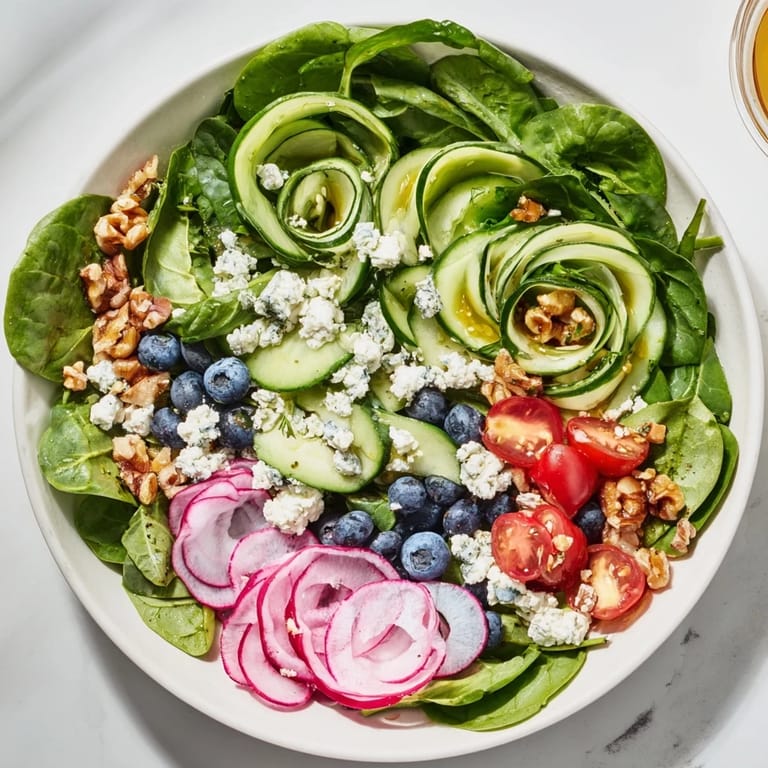
Save I stumbled onto the Fibonacci spiral while scrolling through old math articles on a rainy Sunday afternoon, and something clicked—why not bring that elegant pattern into the kitchen? The idea of arranging a salad like nature's own blueprint felt almost too clever, but when I actually did it, arranging each ingredient in those expanding sections, I realized it wasn't just about looking beautiful on the plate. There's something about working with a pattern that makes you slow down, notice each color and texture, and suddenly you're creating something that tastes as thoughtfully composed as it appears.
I made this for a potluck where everyone showed up with the usual suspects—casseroles, dips, the same tired appetizers—and setting down this spiraling salad felt like I was gently introducing them to a secret. One friend asked if I'd studied geometry before cooking, and honestly, I hadn't, but watching people's faces light up as they filled their plates from the outside in reminded me that sometimes the most nourishing meals are the ones that make people pause and really look.
Ingredients
- Baby spinach leaves: The tender base that cradles everything else; buy the freshest you can find because they'll wilt quickly once dressed.
- Arugula: A little peppery kick that grounds all the sweetness coming later; don't skip this, it's the backbone of the flavor spiral.
- Cherry tomatoes, halved: Their juice and burst of acidity wake up every other ingredient around them.
- Cucumber, thinly sliced: The cool, crisp voice of reason that keeps this salad from feeling heavy.
- Radishes, thinly sliced: Spicy and bright; they're the surprise element that people notice only after tasting.
- Red onion, finely sliced: Use a mandoline if you have one so they're paper-thin and almost sweet rather than harsh.
- Avocado, sliced: Add this right before serving or it'll brown; think of it as the creamy luxury you're tucking into the spiral.
- Blueberries: A weird ingredient choice in salad until you taste how the tartness plays with the feta and walnuts.
- Toasted walnuts, chopped: Toast them yourself for two minutes—the difference between flat and nuanced is honestly that simple.
- Crumbled feta cheese: Use a good quality cheese; mediocre feta will drag down the whole thing.
- Extra-virgin olive oil: This is half your dressing's personality, so use something you'd actually taste on its own.
- Lemon juice: Fresh squeezed if possible; bottled starts to taste like regret after a few minutes.
- Honey: Just a touch to round out the acidity without making it sweet.
- Dijon mustard: The secret emulsifier that holds everything together and adds a sophisticated bite.
- Salt and pepper: Taste as you go; this salad's beauty is that each component should shine.
Tired of Takeout? 🥡
Get 10 meals you can make faster than delivery arrives. Seriously.
One email. No spam. Unsubscribe anytime.
Instructions
- Start at the center:
- On your largest, flattest round platter, arrange the baby spinach leaves in a soft crescent—think of them as the heart of your spiral. They should overlap slightly and curve gently, forming the innermost arc.
- Build the arugula fan:
- Layer the arugula next, each leaf overlapping the one before it, expanding outward in a wider arc than the spinach. You're mimicking a spiral now, so let each layer grow visibly larger.
- Continue the cherry tomatoes:
- Arrange the tomato halves in the next expanding ring, cut-side up so you can see that inner red glow. Leave small gaps; you're not trying to cover every inch of the platter.
- Add the crisp elements:
- Layer the cucumber and radish slices in their own expanding sections, slightly overlapping and fanning outward. The thinner you slice them, the more they'll catch the light and look intentional.
- Frame with red onion:
- Create a thin accent ring of red onion near the outer edge, almost like you're signing the spiral.
- Nestle the treasures:
- Tuck avocado slices and blueberries throughout the spiral, choosing spots where they'll add color balance and visual surprise. Don't overthink this part; just place them where your eye thinks they belong.
- Crown with walnuts and cheese:
- Scatter the toasted walnuts and crumbled feta across the entire salad, letting them settle into the gaps and crevices. They're the finishing jewelry that ties everything together.
- Make the dressing:
- In a small bowl, whisk together the olive oil, lemon juice, honey, and Dijon mustard until it's emulsified and silky. Taste it, adjust the salt and pepper, and taste again.
- Finish and serve:
- Drizzle the dressing evenly over the spiral just before people start eating, so everything stays crisp and the colors don't dull. Serve immediately while the leaves are still cool and the presentation is perfect.
 Save
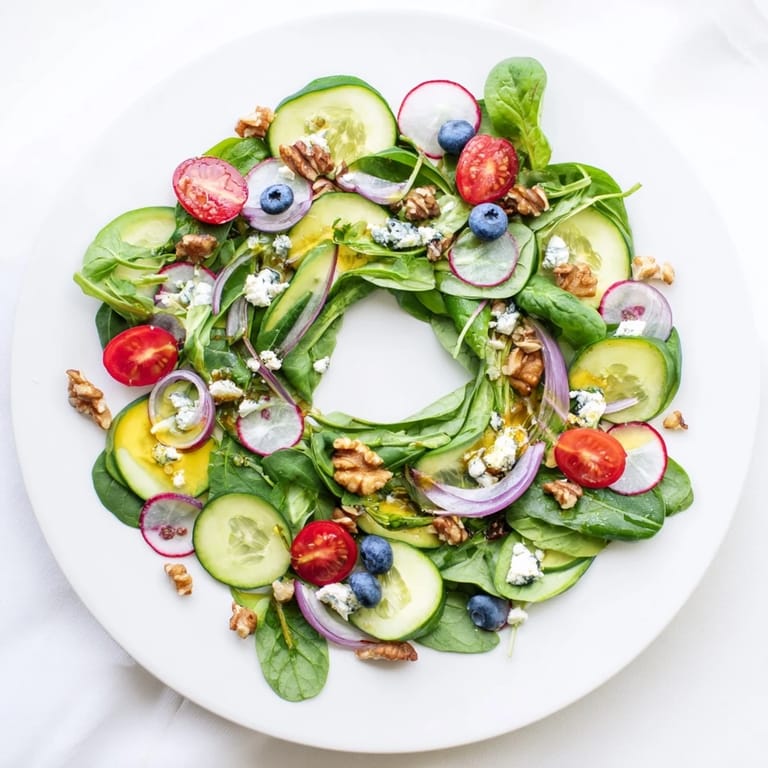
Save The moment I served this salad to my partner, he looked at it for a solid ten seconds without saying anything, and I thought I'd made a terrible mistake with some weird math salad. Then he smiled and said it looked too pretty to eat, which of course meant he immediately filled his bowl. We sat there talking about spirals and patterns, and somehow a salad turned into one of those kitchen moments where you remember why cooking matters—it's not just about hunger, it's about making something that touches people.
The Art of Salad Assembly
There's a Zen to arranging ingredients in sections rather than tossing everything together in a bowl. When you slow down and place each element intentionally, you become aware of colors you might have missed—how the deep green of the arugula next to the pale cucumber creates contrast, how the purple-red of the radish stops your eye and makes you want to taste it. This kind of mindful plating doesn't have to be reserved for fancy restaurants; it's available to anyone with a knife and a platter.
Playing with Substitutions and Add-Ons
The beauty of a spiral salad is that you can rearrange the cast without breaking the structure. Swap the blueberries for pomegranate seeds, trade the walnuts for pistachios, use goat cheese instead of feta—each change shifts the mood slightly but the spiral remains. I've also added grilled chicken or warm chickpeas to make it a complete meal, and having protein in there somehow makes the visual arrangement feel even more generous and thoughtful.
Dressing, Timing, and the Final Touch
The dressing is where a lot of salads stumble, because people either drench it or forget it entirely. This one is balanced enough that you can taste the mustard holding the oil and lemon together in a way that feels almost luxurious. The honey is there as a whisper, not a shout, and it keeps everything from tasting too sharp. Make it fresh every time and drizzle it just before serving for maximum impact.
- If you're making this ahead for a gathering, assemble everything except the dressing and keep it covered in the fridge for up to four hours.
- Toast your walnuts the morning of—they're worlds better than raw, and the smell alone will make you feel like a real cook.
- Trust the spiral; even if it feels silly at first, your hands know how to arrange things beautifully once you give them permission to try.
 Save
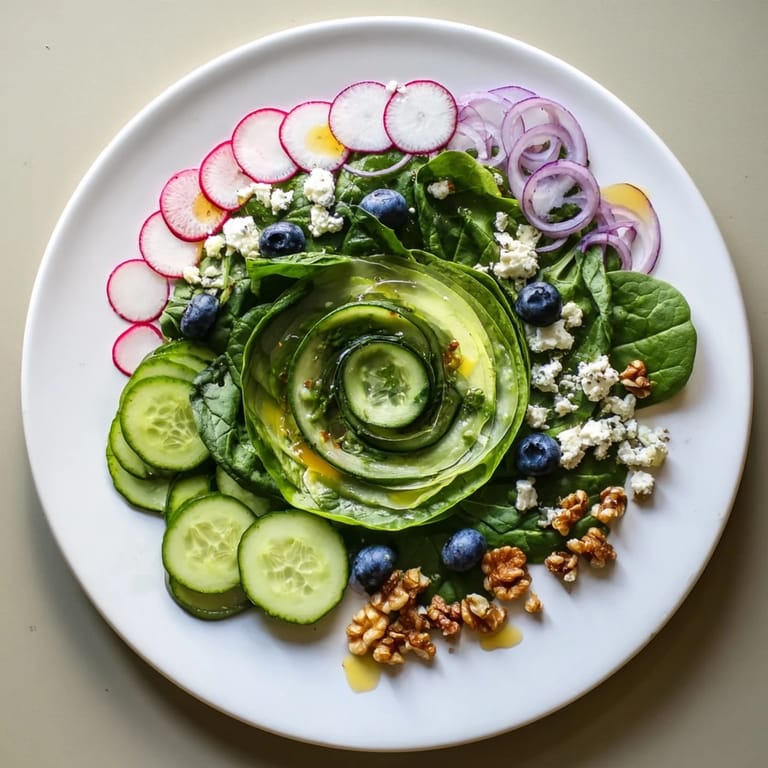
Save This salad reminds me that sometimes the most memorable meals come from slowing down and letting your hands create something with intention. It's not complicated, but it refuses to be invisible.
Recipe FAQs
- → What is the best way to arrange the ingredients?
Arrange the spinach leaves in a crescent shape first, then layer arugula and other ingredients in expanding arcs following the spiral pattern for visual harmony.
- → Can I substitute the feta cheese?
Yes, goat cheese can be used for a different flavor profile while maintaining creamy texture and tanginess.
- → How should the dressing be applied?
Whisk dressing ingredients and drizzle evenly over the salad just before serving to preserve freshness and flavor balance.
- → Are there any allergen considerations?
The salad contains dairy from feta cheese, tree nuts from walnuts, and mustard in the dressing; check for sensitivities accordingly.
- → Can this dish be made vegan or gluten-free?
It's naturally gluten-free; to make it vegan, substitute feta with a plant-based cheese alternative or omit it altogether.