 Save
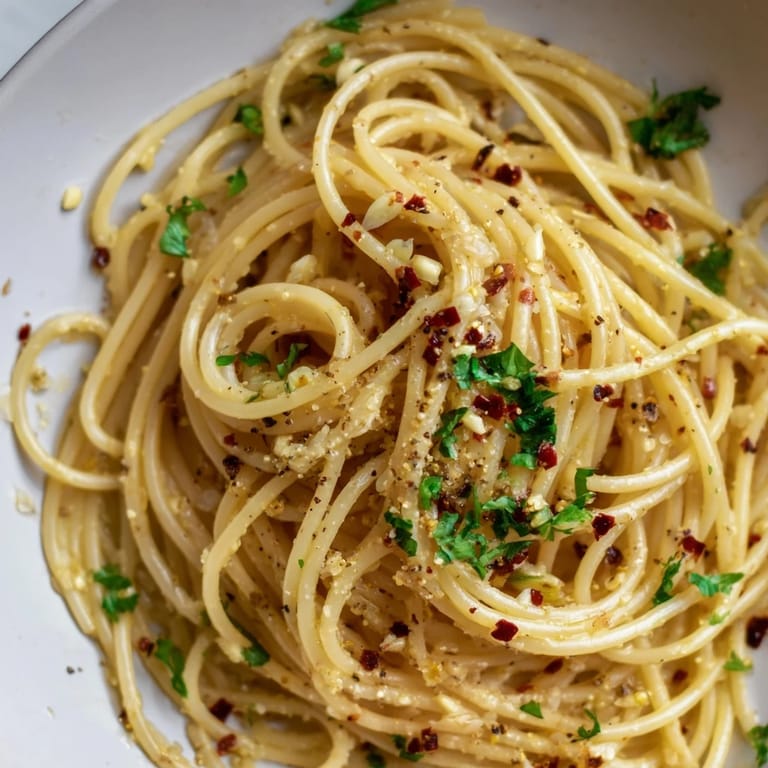
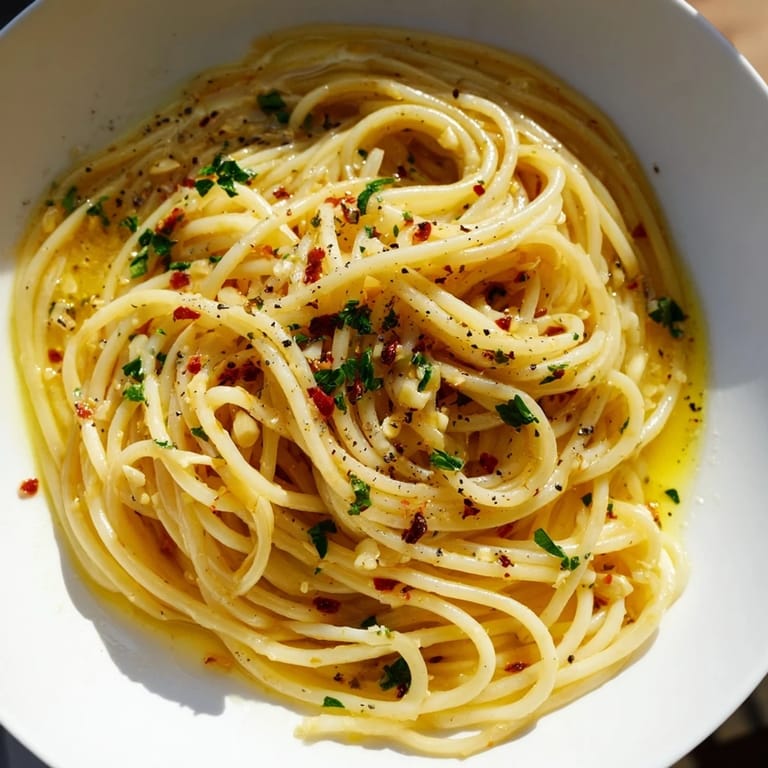
Save There's something almost meditative about aglio e olio—the way the kitchen fills with that unmistakable perfume of garlic hitting warm oil, how it can transport you straight to a Roman kitchen even if you're making it on a Tuesday night after work. I discovered this dish during a chaotic phase when I had about ten minutes and an empty fridge, and somehow those three ingredients became the most satisfying thing I'd cooked in weeks. It's the kind of pasta that doesn't need much to be remarkable, just your attention and a little patience with the garlic so it doesn't burn.
I made this for someone who claimed they didn't like simple food, that pasta needed cream or meat or complexity to be worth eating. Watching their face shift after that first bite—when they understood that those three elements in harmony could be enough—that's when I knew this recipe belonged in my regular rotation. Now I make it whenever I want to remind myself or someone else that good cooking isn't about showing off.
Ingredients
- Dried spaghetti (200g): The shape matters here because those thin strands catch and hold the oil beautifully, unlike thicker pasta that would feel heavy with this sauce.
- Extra-virgin olive oil (4 tbsp): This is where your ingredient quality shows up most; buy the best bottle you can afford because it's literally the star of the dish.
- Garlic cloves (4 large, thinly sliced): Slicing rather than mincing gives you control and visible pieces that won't disappear into bitter dust if you're distracted for a second.
- Red chili flakes (1 tsp): Start here and adjust upward if you like heat; a little goes a long way, and you can always add more at the table.
- Fresh parsley (2 tbsp chopped): The bright green finish cuts through the richness and adds a fresh note that makes everything taste lighter.
- Freshly ground black pepper: Coarse and freshly cracked tastes dramatically different from pre-ground, so don't skip this detail.
- Sea salt: For seasoning both the pasta water and the final dish; it's gentler than table salt.
- Parmesan cheese (2 tbsp grated, optional): If you use it, grate it fresh; the aged nuttiness adds depth without heaviness.
Tired of Takeout? 🥡
Get 10 meals you can make faster than delivery arrives. Seriously.
One email. No spam. Unsubscribe anytime.
Instructions
- Get Your Water Ready:
- Fill a large pot with water and salt it generously—it should taste like the sea—then bring it to a rolling boil. This is your foundation, and good pasta water is the secret ingredient most people overlook.
- Cook the Pasta:
- Add spaghetti and stir it immediately so nothing sticks to itself. Start checking for doneness around 7 minutes; you want it tender but with just a whisper of resistance when you bite. Before draining, scoop out about half a cup of that starchy water and set it aside.
- Start the Oil Magic:
- While pasta cooks, pour olive oil into a large skillet and set the heat to medium-low—this is crucial because high heat will turn your garlic acrid and bitter within seconds. Add sliced garlic and listen for the gentle sizzle, stirring often so every slice gets kissed by the heat.
- Watch for the Moment:
- After about a minute, the garlic will shift from raw to fragrant to golden; you want to catch it right at that sweet spot before it darkens. This is a 30-second window, so stay close and keep stirring.
- Build the Heat:
- Once garlic is golden, add chili flakes and stir for just 10 seconds—enough for the heat to open up and blend with the oil, not long enough to scorch anything. The kitchen will smell incredible at this point.
- Bring It Together:
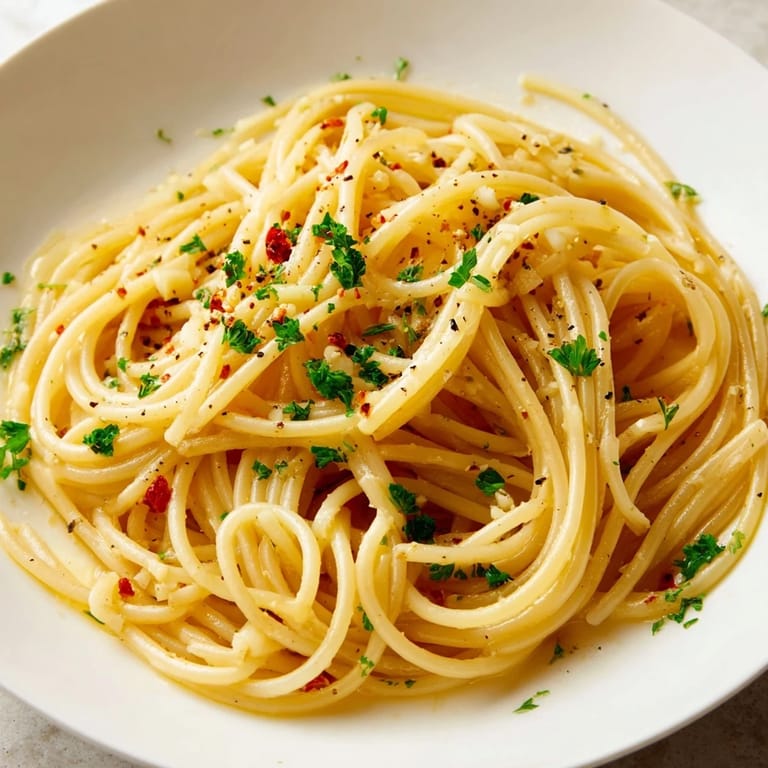
- Add drained spaghetti directly to the skillet and toss everything with tongs, using that reserved pasta water a little at a time to create a light, glossy coating. The starch in the water helps the oil cling to every strand instead of pooling at the bottom.
- Season and Finish:
- Taste, add salt and pepper to your preference, then toss with fresh parsley off the heat so the green stays bright. Plate immediately and top with Parmesan if using.
 Save
Save There was an evening when someone asked if this recipe felt too minimal, if I ever felt like it was missing something. I served it with crusty bread and a simple salad, and by the end of the meal they were quiet—not because they didn't like it, but because they were fully present for it. That's when I realized this dish wasn't about being basic; it was about being honest.
The Ritual of Garlic
Garlic is usually a background player, but here it's the whole performance. The way it transforms from raw to fragrant to golden teaches you something about timing and attention that you'll carry into other cooking. I've learned that good garlic—fresh, not shriveled—makes an enormous difference, and slicing rather than mincing gives you more control and better texture.
Pasta Water as an Ingredient
Most home cooks drain their pasta and throw away the water without thinking, but that liquid is liquid gold for simple sauces. It's starch-rich and helps the oil emulsify around the pasta strands instead of just pooling at the bottom. Once you understand this, you'll stop thinking of pasta water as waste and start thinking of it as essential.
Building Flavor from Nothing
This dish proves that you don't need a long ingredient list to create something memorable—just excellent ingredients in proper balance. The heat from chili flakes, the richness of olive oil, the sweetness of garlic, and the brightness of parsley create complexity through conversation rather than accumulation. It's a philosophy that changed how I cook.
- Taste constantly and adjust the chili level to your preference; spice should enhance, not overpower.
- Use the best olive oil you can find because it's the foundation and the finish here.
- Serve immediately because this dish is at its peak the moment it comes together, steaming and aromatic.
 Save
Save This ten-minute pasta taught me that speed and quality don't have to compromise with each other. Sometimes the best meals are the simplest ones, made with full attention and ingredients you believe in.
Recipe FAQs
- → How can I prevent the garlic from burning?
Cook garlic on medium-low heat, stirring often and removing from heat as soon as it turns light golden to avoid bitterness.
- → Can I adjust the spiciness of the dish?
Yes, simply increase or decrease red chili flakes according to your preferred heat level.
- → Is it possible to make this dish vegan?
Omit the Parmesan cheese or substitute it with a plant-based alternative to keep it vegan-friendly.
- → What pasta type works best for this preparation?
Traditional dried spaghetti is ideal, but gluten-free versions can be used to accommodate dietary needs.
- → How can I enhance the flavor without altering preparation time?
Adding a squeeze of fresh lemon juice before serving brightens the dish without extra cooking time.